What Happens Now, After NC Supreme Court Reversed Leandro Ruling?
Decision reshapes decades‑long fight over education rights.
By Cash Michaels –
Does the state of North Carolina have a constitutional duty to ensure that every child is provided with a “sound, basic education?”
And, does the state Supreme Court have the authority to order the state legislature on how to spend funds if the court has determined that lawmakers have been derelict in their constitutional duty?
Those two questions were answered last week by the Republican-majority NC Supreme Court when it reversed its own ruling of 2022. That ruling, by a previous, Democratic-led state Supreme Court, held that the state historically had not ensured the “sound, basic education” of every school student in North Carolina, and ordered the NC General Assembly to enact a comprehensive remedial plan by making required eight-year phased-in expenditures that would amount to billions to fix the problem.
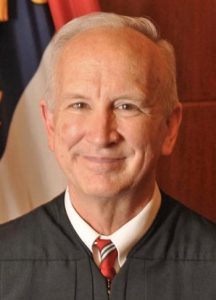
In what has become known for more than thirty years as the Leandro case—named after the first plaintiff family to join with the Hoke County Board of Education to file suit against the state in 1994—Republican Chief Justice Paul Newby led the mostly party-line 4-3 split decision to reverse the 2022 ruling.
Newby wrote for the Republican majority, “What began as modest, as-applied challenges to the allocation of educational resources in the named school districts became a full-scale, facial assault on the entire educational system enacted by the General Assembly. When this case ceased to be about the as-applied claims raised in the complaints and refined by this Court’s decisions, the trial court’s authority to hear the case likewise ceased.”
Translation—because of separation of powers, state courts have no authority telling the state legislature how to spend taxpayer money, and thus, should not have directed lawmakers to spend billions of dollars to improve the state’s poorest schools, even if it was to ensure a constitutionally guaranteed “sound, basic education” for poor children.
A spokesperson for Republican House Speaker Destin Hall (R-Caldwell) said in a statement, “Today’s decision rightly recognizes the constitutional role of the North Carolina General Assembly, since the state Constitution entrusts sole appropriations authority to the legislature.”
Outgoing Senate Majority Leader Phil Berger (R-Rockingham) also celebrated the ruling.
“For decades, liberal education special interests have improperly tried to hijack North Carolina’s constitutional funding process in order to impose their policy preferences via judicial fiat.”
But Gov. Josh Stein, a Democrat, was not pleased with the state Supreme Court decision, and vowed to continue to fight for better teachers’ pay and more education improvements to help especially poor students learn.
“Education opens doors of opportunity for children, but today the Court slammed them in the face of students who deserve the right to a sound basic public education,” Stein said in a statement. “The Supreme Court simply ignored its own established precedent, enabling the General Assembly to continue to deprive another generation of North Carolina students of the education promised by our Constitution.”
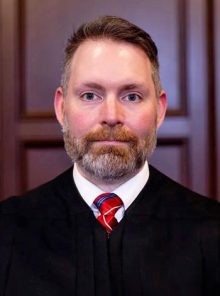
The ruling—in which one Republican justice, Richard Dietz, joined the two Democratic justices Allison Riggs and Anita Earls in dissent—means public schools across the state will not receive an additional hundreds of millions in education funding from the state. In the years since a Union County Democratic judge ruled in 2021 that the state must transfer $1.7 billion to public schools, subsequent litigation has ensured that not a dime of that $1.7 billion was ever distributed.
As a matter of law, experts say, the Leandro case is now considered dead and cannot be resurrected.
Editor’s Note: Why Associate Justice Richard Dietz, a Republican appointee, voted in favor of the Leandro plaintiffs is subject to speculation; his biography, however, may hold clues. A native of mountainous north central Pennsylvania, he was the first person in his family—blue-collar, Pennsylvania Dutch railroad and telephone workers—to attend college. Additionally, both his undergraduate studies at Shippensburg College in SC and law school at Wake Forest were funded by full academic scholarships. It may well be that he understands the importance of a good public education better than one might have anticipated.