Blacks Mobilize to Combat Supreme Court Ruling That Crippled Voting Rights Act
Historic setback triggers renewed determination to protect hard‑won representation.
By Cash Michaels –
Like an electric shock to the system, the US Supreme Court decision striking down Louisiana’s voting map and effectively crippling the last vestige of the 1965 Voting Rights Act has energized African American communities across the country—including here in North Carolina—to redouble efforts to maximize its voting power or else lose Black political representation.
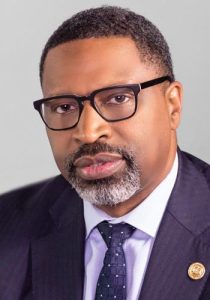
“Today’s decision is a devastating blow to what remains of the Voting Rights Act, and a license for corrupt politicians who want to rig the system by silencing entire communities,” national NAACP President/CEO Derrick Johnson said in a statement from the civil rights organization right after the April 29 ruling. “This ruling is a major setback for our nation and threatens to erode the hard-won victories we’ve fought, bled, and died for.”
“But the people still can fight back,” Johnson continued. “Our best defense and offense is the ballot box, and we’re going to turn out voters for the midterm elections to make sure we can elect representatives who look out for us.”
By a 6-3 decision in the case known as Louisiana v. Callais, the conservative majority of the nation’s highest court ruled Louisiana’s second predominantly Black voting district was an unconstitutional racial gerrymander because it violated the equal protection clause of the US Constitution.
For decades, under Section 2 of the 1965 Voting Rights Act (VRA), state legislatures have drawn so-called “majority-minority” voting districts to allow and protect African Americans’ ability to elect candidates of their choice and prevent diluting their voting power.
But in the conservative majority opinion, Justice Samuel Alito said that because of “vast social change,” particularly in the South, along with greater Black voter registration and participation, majority-minority voting districts were no longer necessary.
Alito added that in order to now successfully challenge voting maps under the VRA, plaintiffs should have to present evidence of “a strong inference” that a state ”intentionally drew its districts to afford minority voters less opportunity because of their race.”
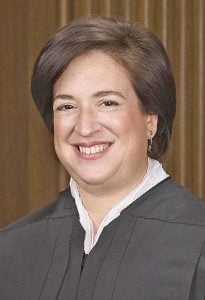
One of the court’s three liberal justices, Elena Kagan, representing the minority dissenting opinion, wrote that the conservative majority opinion now made it nearly impossible to use race as a remedy to ensure fair representation when drawing future voting maps, making maps now much harder to legally challenge.
The result is expected to be less Black representation in Congress.
Reaction to the conservative majority ruling has been seismic, with Republicans, including Pres. Trump, praising it as untying the hands of state legislatures who were previously restricted in redrawing voting districts by the VRA. Two Republican states, Alabama and Tennessee, are already redrawing their maps as a result. Louisiana is also in process, and Florida did so within hours of the decision.
Rep. Richard Hudson (R-NC-9), chair of the National Republican Congressional Committee, said the court’s decision” restores fairness, strengthens confidence in our elections, and ensures every voter is treated equally under the law.”
Meanwhile, Democrats and Black leaders condemned the ruling, saying it will dilute Black voting strength by either packing Black, mostly Democratic, voters into one district, or spreading them out so their numbers can’t influence tight races involving Republicans. While at least seven states are now rushing to redistrict under the new Supreme Court ruling before the November elections, North Carolina, considered a swing state, already did in October 2025.
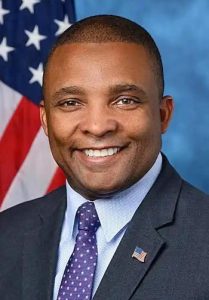
The Republican-led NC General Assembly, in an effort to create another seat to maintain control of Congress and claim 11 of 14 NC districts, redrew the First Congressional District in the northeast. Historically a 40% Black voting district currently represented by two-term incumbent Democratic Rep. Don Davis, the move reduces the district’s Black voting strength to 32%.
In November, Congressman Davis will need a strong African American and Democratic turnout to keep his seat.
“These maps are a political weapon,” said Sen. Kandie Smith at the time, “…and Black voters are the target.” NC Republican legislative leaders maintain they did not use race to redraw the First Congressional District, only party affiliation. Gov. Stein, a Democrat, could not veto it.
If Davis loses, that will leave the 12th Congressional District in Charlotte-Mecklenburg, represented by six-term incumbent Democratic Congresswoman Alma Adams (who is also up for reelection), as the only majority-minority congressional district in the state.
African American leaders in North Carolina joined others across the nation in sounding the alarm for what the Supreme Court VRA ruling now means, and what the community must do about it.
Bishop William Barber on the Supreme Courts VRA decision
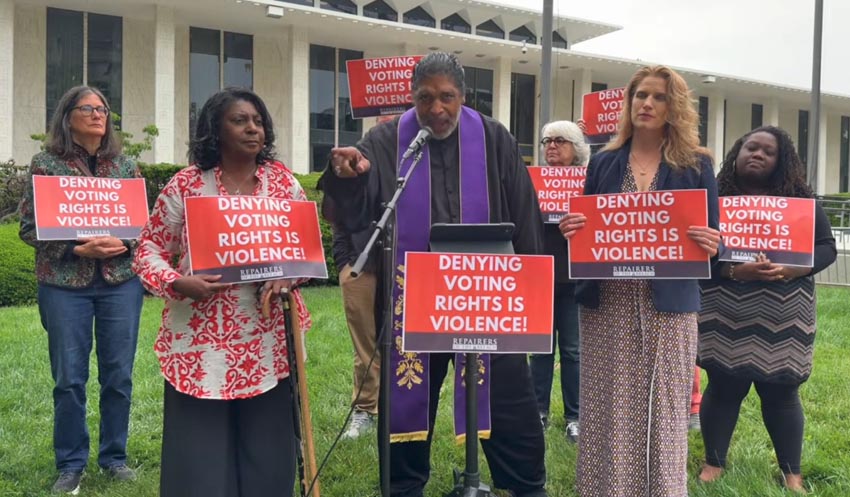
Bishop William Barber blasts US Supreme Court VRA decision at a press conference in front of the NC Legislative Building in Raleigh, NC on April 30, 2026.
“As Frederick Douglass said after the Dred Scott decision, this [judicial] overreach must serve to intensify and embolden our agitation,” Bishop William Barber, president of Repairers of the Breach, said in front of the NC Legislative Building April 30th. “Today must be a catalyst for the most massive turnout of Black, brown, and white voters who believe in justice and equal protection under the law.”

“The simple response to these actions must be a robust organizing campaign within our communities to maximize and utilize our voting powers to protect our political existence within this democracy,” declared civil rights Attorney Irving Joyner. “No one is going to save us if we don’t seek to save ourselves.”
“In North Carolina, we have seen the real and harmful consequences of voter suppression, and this decision will only embolden those efforts,” said NC NAACP President Deborah Dicks Maxwell in a statement. “But this fight is not over. When the courts fail the people, the people must respond.”
“Our power remains at the ballot box,” Maxwell continued. “We will organize, mobilize, and turn out voters to protect our communities and elect leaders who believe in fair representation and justice. Our democracy’s under attack, and we will not be silent.”