It’s All Over There, Isn’t It?
The war abroad feels distant—until you count North Carolina’s military.
Legislative News by Nelda Holder –
Writing a political column is an opportunity that pushes me to analyze more carefully and to question my own leanings and/or prejudices.
I enjoy exploring political topics and the foibles and fancies of politicians. And I’ve done this for a number of years, always fancying that if we analyze it and write about it we will see some improvement in our politics.
But lately we have been in a brand-new war involving this country’s flesh and blood—not to mention its purported ideals, and not to mention the flesh and blood we as a nation have been pounding with explosions on foreign soil … so poignantly/painfully beginning with murdering some 70 young girls who were guilty of going to school in a building the United States of America decided to bomb—evidently thinking it contained Iranian soldiers.
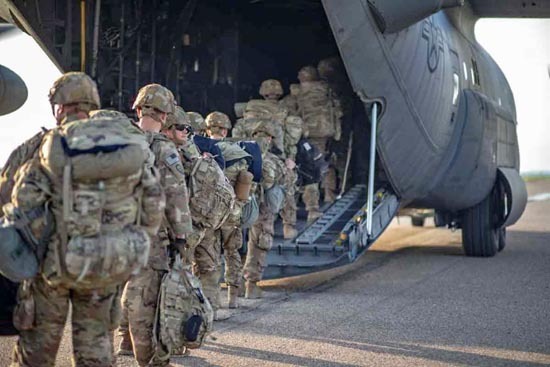
And what does that have to do with us, living in the beautiful state of North Carolina and going about our lives quite normally while death rains down in our name thousands of miles away from the skies over Iran? For one thing, there are some 100,000 active-duty military personnel living in this state. Have you ever stopped to count the concentration, which—according to the Department of Military and Veterans Affairs—is one of the largest military footprints in the country?
Here are the concentrations, for those who were not aware, gleaned from the Department of Military and Veterans Affairs:
Marine Corps Air Station New River: Approximately 7,000 Marines, Sailors, Airmen, and 1,000 civilian employees operate the only East Coast rotary wing and tiltrator Air Station. New River is home to two Marine Aircraft Groups and several premier training units. Marine Corps Air Station New River provides aviation support, force protection, infrastructure and community services which promote the readiness, sustainment, and quality of life for the military forces, personnel, and their families.
Seymour Johnson Air Force Base: The host unit is the 4th Fighter Wing, with training andoperational missions using F-15E Strike Eagles. Two of four fighter squadrons here are capable of deploying worldwide on short notice; the other two train all F-15E aircrews for the Air Force. The 916th Air Refueling Wing is a tenant here, capable of global deployment to support joint military initiatives. The base is 3,300 acres with over 530 active-duty officers and almost 4,000 enlisted members and families in residence.
Fort Bragg: Major units of combat and support forces here include the 82nd Airborne, XVIII Airborne Corps, FORSCOM, USART, 18th Aviation Brigade, 4th Medical Command and the US Army Special Operations Command. Fort Bragg is the only Joint Strategic Deployment Platform that provides the National Command Authority to respond in hours versus days. Fort Bragg is one of the largest military complexes in the world. The base is one of the largest military complexes in the world, spanning 160,700 acres or 251 square miles.
Air Station Elizabeth City: In the heart of northeastern North Carolina, Base Elizabeth City provides a wide variety of mission support services including general administration and personnel management, medical/dental, supply, procurement and warehousing, industrial services, computer/electronics support, and supports activities within the Fifth Coast Guard District.
Marine Corps Camp Lejeune: Occupying about 153,439 acres with 14 miles of beach, Lejeune is the largest Marine Corps base on the East Coast. It houses several training schools and maintains a mission of supporting various Marine Corps commands, a major Navy command, and a Coast Guard command in addition to the base itself.
US Coast Guard Aviation Logistics Center: The ALC is the hub for Coast Guard Aviation Logistical Support, including Depot Level Maintenance, Engineering, Supply Procurement, Information Services and Acquisition Project Execution; sustaining and maintaining the airworthiness of the USCG Base Elizabeth City Fleet.
Air Station Cherry Point: The station is a 13,164-acre military reservation north of the Town of Havelock, in southeastern Craven County. Commissioned in 1942, Cherry Point currently provides support facilities and services for the Second Marine Aircraft Wing, houses facilities for training and supporting the Atlantic Fleet Marine Force aviation units and is designated as a primary aviation supply point. It is also home to the Fleet Readiness Center East. Units at the station include:
1) Combat Logistics Company 21;
2) Marine Transport Squadron One (Search and Rescue support); and
3) Center for Naval Aviation Technical Training Unit (CNATT) which provides specialized training in aviation maintenance to operate and maintain weapons systems.
United States Coast Guard Sector North Carolina: Primary missions include Search and Rescue, Marine Safety, Ports and Waterways Coastal Security, Marine Environmental Law Enforcement, and Recreational Boating Safety. USCG Sector has Cutter Diligence, a 210-foot medium endurance cutter with a crew of around 76, performing Counter Drug and Migrant Interdiction, Enforcing Federal Fishery Laws, and conducting Search and Rescue Operations.
Military Ocean Terminal Sunny Point: The largest military terminal in the world. Operated by the 596th Transportation Brigade, Sunny Point is on a 16,000-acre, Army-owned site. It opened in 1955 and is the key ammunition shipping point on the Atlantic coast for the Department of Defense. MOTSU is the largest ammunition pot in the nation, and the Army’s primary east coast deep-water port. It provides worldwide trans- shipment of DOD ammunition, explosives, and other dangerous cargo.
Pope Army Airfield: The 440th air Reserve Wing with its C-130E Hercules aircraft provides total forces mission ready combat airlifter and equipment anywhere and anytime to the Fort Bragg community. The 440th Airlift Wing works side by side with the 43rd Airlift Group. Pope field is home for approximately 2,100 active-duty members and their families plus some 500 plus civilians plus 500 civilians contract personnel supporting the mission of the 43rd Airlift.
145th Airlift Wing Charlotte: Oversees mobilization of operational units, maintaining an optimal force structure of over 1400 members, over 300 full-time, between Charlotte and other units in Stanley County. The year 2018 brought many firsts including the NCANG’s First Female Wing Commander, First Female Wing Command Chief, and First Female Chief of the Maintenance Group.
108th Training Command Charlotte: Provides professionally trained Drill Sergeant units, instructors, Leader Trainers, and Command expertise to conduct Initial Entry Training and Cadet Command. Supports Training & Doctrine Command (TRADOC) Five Core function Leads, providing professionally trained and ready drill sergeant units, instructors, Leader Trainers, and command expertise.
North Carolina National Guard: Citizen Soldiers and Airmen sworn to support and defend the Constitutions of the United States and the State of North Carolina. The NC National Guard traces its heritage back to the 1663 Carolina Charter granting authority to levy, muster, and train men.
Army Research Office: The ARO’s 150 personnel mission serve as the Army’s principal extramural basic research agency in the engineering, physical, information and life sciences Developing and exploiting innovative advances to insure the Nation’s technological superiority. Basic research proposals from educational institutions, nonprofit organizations, and private industry are competitively selected and funded. The Mission represents the most long-range Army view for changes in its technology.
That gives you a hint of this state’s role in this country’s military operations. The war is not as far away as it seems on television. Think about it.
Landmark Leandro Case Struck Down
In 2024, I wrote a column here titled “Who Stole the Public from Our State’s Public Schools. I primarily focused on the whisking away of “public” funds into the state’s voucher program, and the arguments involving equity in the now 32-year-old school funding case known as Leandro, which began in 1994. The original case had been brought by individuals and school boards in several low-wealth school districts who were seeking more equitable educational opportunities.
Here’s a quote from that article involving equity:
“This round of funding would apply predominantly to students whose family income previously disqualified them from voucher eligibility. So for those sympathetic to a voucher program that assists lower-income families, that is not where this money lands. Instead, some $463 million state dollars will be going to households whose budgets were previously above the income cap for state assistance.
“And keep in mind that voucher outlay from the state reduces the money available to our public schools, which lost potentially millions in this overall process.”
On April 2, 2026, North Carolina’s current conservative-majority Supreme Court decided in a 4-3 ruling to end a lower court ruling that had awarded billions in funding for public education in the state.

Photo: Tim Barnwell
Thus did Leandro end after 32 years of contention—not with an equitable funding solution for our lower-wealth schools, but with a declaration by Chief Justice Paul Newby that “the trial court officially transformed this case into one addressing matters never pled,” thus in his (and the court majority’s) opinion causing a change in applied claims and removing the trial court’s authority to hear the case.
In addition to Cash Michael’s report above, an excellent initial article on this case, “NC Supreme Court ends 32-year Leandro school funding case,” was published April 3, 2026 in The Carolina Journal.
Nelda Holder is the author of The Thirteenth Juror – Ferguson: A Personal Look at the Grand Jury Transcripts.