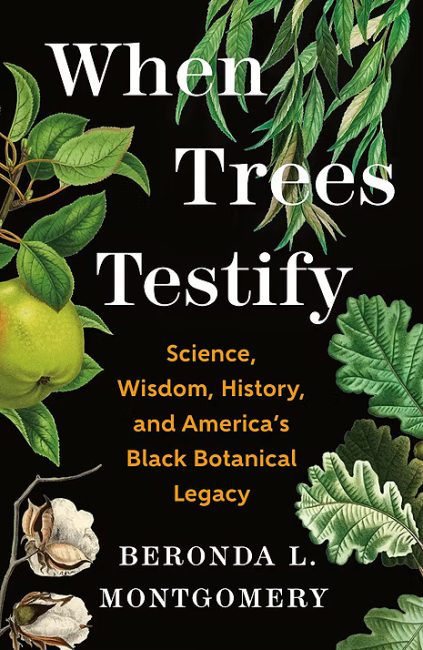
The Trees Remember Us
Every root carries stories the world tried to forget.
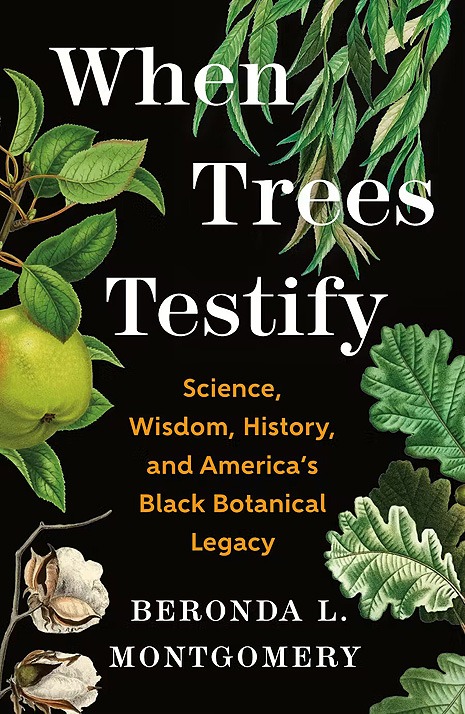 Beronda L. Montgomery’s When Trees Testify asks you to slow down and listen to the land.
She writes with the calm confidence of a scientist and the lived understanding of a Black woman who knows that memory is not only held in our personal stories. It is held in roots, bark, soil, and shade. The result is a work that feels both intimate and expansive, a reminder that the natural world has been keeping record long before anyone thought to record our stories.
Montgomery moves through the history of Black botanical knowledge with a sense of reverence. She brings forward the legacy of Antoine, the enslaved horticulturalist whose pecan grafting reshaped American agriculture.
She pauses at sycamores that once sheltered people fleeing bondage, and at poplars that stood near sites of racial terror. She honors willows whose bark offered healing salves generations before modern medicine acknowledged the remedies found in everyday plants. Each tree becomes a doorway into a story about survival, brilliance, and the ways knowledge travels through time.
One of the most striking moments in the book comes when Montgomery stands before the McLeod Oak at a former plantation in Charleston. She reflects on how trees literally hold breath, how the carbon exhaled by enslaved people remains stored in the wood. It is a powerful reframing. The land is physically remembering events from our shared past. That understanding shifts the way you look at each and every tree.
Montgomery also restores a lineage that has been overlooked for far too long. Black botanical expertise is foundational to American history. From herbal medicine to agricultural innovation, from land stewardship to plant science, Black knowledge shaped this country in ways that deserve full recognition. Her writing brings that truth forward with clarity and pride, offering a better image of who built and sustained the landscapes we now inhabit.
The tone throughout is warm and steady. Montgomery invites us into her world of botany, opening space for us to consider how the trees in our neighborhoods, parks, and rural roadsides might be carrying stories too. Her work reminds us that history is not only what happened, but what endured.
When Trees Testify is a reclamation and a call to attention. It asks us to look again at the natural world and understand that it has been testifying all along.