James “Jimmy” Walker, Jr.
Skyview Golf Association 1968 Champion and PGA Pioneer.
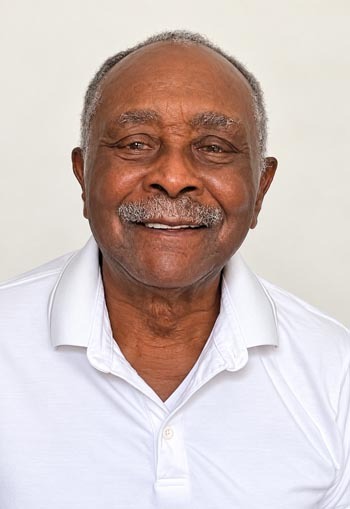
James “Jimmy” Walker Jr. was born in November, 1938, in Rocky Mount, NC, where he first learned the game that would carry him to national prominence.
As a young boy, he watched older neighborhood boys caddie at Benvenue Country Club, and he soon joined their ranks. In 1945, still too small to carry bags, he worked as a shag boy, picking up balls during lessons. By age eight, “Junior,” as he was known, was caddying regularly at Benvenue and teaching himself the game with borrowed clubs. Those early years on segregated fairways shaped the discipline and determination that later defined his professional career.
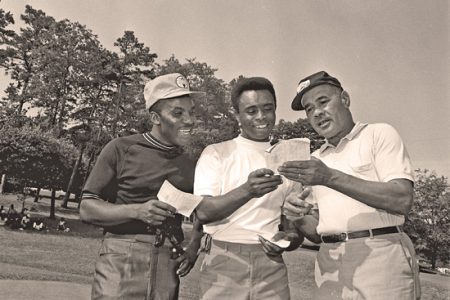
In 1959, Walker traveled to New York, reconnecting with former neighbors and earning an invitation to the Select Golf Club, a respected group of Black golfers and businessmen who played at courses open to African Americans. His reputation grew quickly, even as the PGA still barred Black golfers from membership. When the PGA finally removed its “Caucasian only” clause in 1961, Walker was among that first generation of Black players positioned to push into the professional ranks—despite ongoing discrimination and limited opportunities.
As an amateur, Walker competed against and learned from the nation’s leading Black golfers, including Charlie Sifford, Pete Brown, Cliff Brown, Rafe Botts, and Willie Brown. He won a pro-am with Teddy Rhodes, one of the most influential Black golfers of the era. His growing skill and visibility placed him among the small but determined group of Black golfers striving to break into the PGA Tour and earn national recognition.
Walker’s connection to Asheville deepened in the 1960s, when he traveled with Eldoraro “Tarzan” Long, Jimmy Taylor, and Herman Duboise to compete in the very first Skyview Golf Association Tournament—now one of the country’s most important Black-run golfing events. In 1968, Walker won the Skyview Open, a championship that became a defining moment in his career. The victory linked his rising national profile to Skyview’s legacy and cemented his place in the tournament’s history. For decades, Skyview golfers and organizers pointed to Walker’s win as proof that their tournament produced players capable of competing at the highest levels of the sport.
Walker continued to build his professional résumé, playing in PGA events and earning respect as one of the few Black golfers of his era able to make a living in the game. His national prominence grew, culminating in his induction into the African American Golfers’ Hall of Fame in 2011 and the National Black Golf Hall of Fame in 2012—recognition of both his competitive achievements and his role in expanding opportunities for Black golfers nationwide.
In 1995, Walker returned to Rancho Park Golf Club in Los Angeles, the site of his first professional tournament, and spent 25 years there as a teaching pro. During those years he married his wife, Carolyn, who passed away last year. In November, he moved to Asheville to be near his sister, Shirley Walker Whitesides and brother-in-law Al Whitesides, and other family members.
Reflecting on his long career—from the tobacco fields and makeshift parks of Rocky Mount to Skyview championship and PGA fairways—Walker noted that he had achieved what remained rare for Black golfers of his generation: he made a life in golf.
Remembering his good times at the Skyview Golf Tournaments, Walker chose to settle in Asheville, where his 1968 Skyview Golf Association Pro/Am Championship still resonates. He will turn 88 on Thanksgiving Day.
The Muni
A love letter to the game of golf, told by the African American caddies-turned-players who, despite Jim Crow laws and the lasting effects of racism, built a rich and vibrant golf culture on the historic Asheville Municipal Golf Course. Watch this 45 minute documentary now at www.skyviewgolfasheville.com/muni.