Democracy Depends on Citizens Who Refuse to Give Up
Obama reflects on citizenship, press freedom, and public responsibility.
At a recent public conversation with historian Doris Kearns Goodwin, former President Barack Obama reflected on democracy, press freedom, civic engagement, and the role ordinary people play in shaping history.
His message was both timely and familiar: progress depends on citizens who believe their actions matter.
Obama began with a simple observation. People are more likely to trust government when they see leaders paying attention to real problems and making an honest effort to address them. Government does not have to be perfect, he argued. What matters is that people feel heard. When they do, participation grows. People vote, volunteer, organize, and stay engaged. When they feel ignored, frustration can create openings for more divisive and destructive movements.
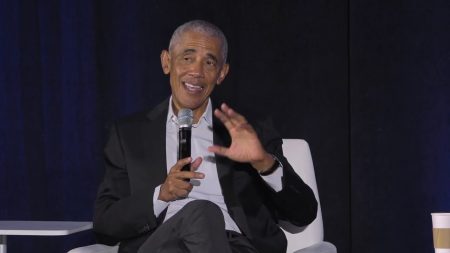
Salem State Series: A Conversation with Barack Obama
President Barack Obama at the Salem State Series on September 21, 2026; moderated by Doris Kearns Goodwin.
Much of the discussion focused on freedom of the press. Obama described a free press as one of the nation’s foundational democratic principles, alongside the right to debate public policy and hold leaders accountable. During a September 2026 appearance, he criticized the reported exclusion of CNN, Politico, and MS NOW from White House access, arguing that governments should not punish news organizations for criticism.
The broader point was not about any single politician or administration. It was about democratic norms. Obama expressed concern that too few elected officials are willing to challenge actions they would oppose if carried out by their political opponents. Democracies, he suggested, depend on citizens and leaders who defend principles even when it is inconvenient.
The conversation then turned to the Obama Presidential Center in Chicago. Obama spoke about the center as more than a library dedicated to preserving history. He described it as a place designed to help develop future leaders and strengthen civic participation. Leadership, he said, is not limited to people born with extraordinary gifts. It can emerge from many different backgrounds and life experiences.
One of the most memorable parts of the discussion centered on Selma and the struggle for voting rights. Obama recalled a speech he delivered on the fiftieth anniversary of the Selma march and said it remains one of his favorites because it captures his core beliefs about America. The story of Selma, he argued, raises a question that appears again and again throughout our nation’s history: Do we truly mean “We the People,” and does that promise include everyone?
For Obama, citizenship is not defined by ancestry, religion, race, or family name. It is defined by a commitment to democratic ideals and a belief that everyone belongs. He acknowledged that many of today’s political arguments are still rooted in that ongoing struggle over who gets to participate fully in American life.
At the same time, he offered a hopeful perspective. He believes most Americans today embrace broader ideas of equality and inclusion than previous generations did. Yet he also noted that periods of progress often trigger resistance from people who feel unsettled by social change. That tension, he suggested, has accompanied nearly every major movement for justice in American history.
Throughout the conversation, both Goodwin and Obama returned to the idea that meaningful change rarely begins in government offices. Instead, it usually starts in neighborhoods, churches, schools, community organizations, and grassroots movements. They pointed to the abolition movement, labor organizing, women’s suffrage, civil rights, and LGBTQ rights as examples of citizens creating momentum that political leaders eventually followed.
Obama argued that politicians often receive credit for changes that ordinary people made possible. Effective leaders matter, he said, but they are usually responding to energy that was already building among the public. What made leaders such as Abraham Lincoln significant was not perfection. It was their willingness to listen, learn, and adapt as circumstances changed.
The conversation also addressed a challenge many of us recognize in our daily lives: distraction. Obama expressed concern that smartphones and social media can leave people feeling powerless while rewarding outrage and division. He joked about enjoying animal videos like everyone else, but warned that constant distraction can weaken civic engagement if it pulls people away from their communities and from one another.
Even so, he remains optimistic about the human spirit. He shared examples of neighbors helping neighbors during times of crisis and described those acts of care as reminders that people still have a strong instinct to support one another. When citizens step forward to meet needs, he said, they often awaken the conscience of an entire community.
As the discussion came to a close, Obama emphasized the importance of making room for younger voices. He argued that societies can become stagnant when older leaders refuse to let go of power. Future leaders, he said, will need to address major challenges such as artificial intelligence, climate change, and economic inequality.
Yet he believes technical solutions alone are not enough.
What many people are searching for, he suggested, is a moral story about how we live together. They want leaders who can speak about responsibility, dignity, belonging, and our obligations to one another. Those questions have long been explored through faith communities, civic organizations, and cultural traditions. They remain just as important today.
The heart of the discussion was surprisingly simple. Democracy is not something that happens somewhere else. It is built through everyday acts of participation, care, and responsibility. History may remember presidents, legislators, and famous activists, but lasting change begins when ordinary people decide they matter and act accordingly.