Why John Stewart Matters, Even When We Disagree About “Lanterns”
The debate surrounding “Lanterns” has become almost as interesting as the series itself.
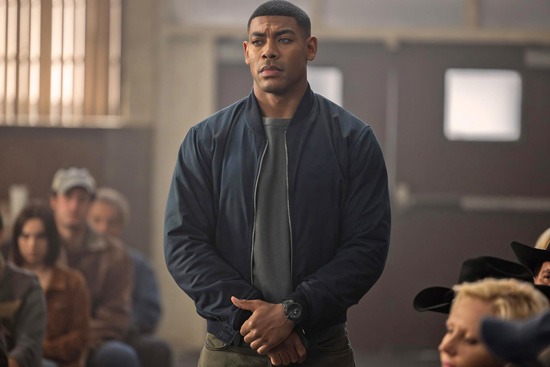
Starring Aaron Pierre as John Stewart and Kyle Chandler as veteran Green Lantern Hal Jordan, Lanterns follows two intergalactic peacekeepers investigating a murder that unfolds into a much larger mystery.
Kelly Macdonald plays Sheriff Kerry Kane, a character whose role becomes increasingly important as the story progresses.
Some viewers see a thoughtful character-driven mystery that finally places John Stewart where he belongs: at the center of the story. Others see troubling messages about authority, accountability, and how Black characters are written. Both reactions are understandable. What makes the conversation worth having is John Stewart.
For many Americans, especially younger viewers, Lanterns may be their introduction to the character. For longtime comic book readers, however, Stewart has been an important figure for more than five decades. He was one of the first major Black superheroes in mainstream comics and became a symbol of intelligence, discipline, and leadership at a time when Black characters were often denied that complexity.
That legacy explains why reactions to the HBO series have been so passionate. This is not just another superhero adaptation. For many of us, John Stewart represents something larger than a television series. He represents the possibility of seeing a Black man portrayed with dignity, depth, and humanity. The challenge is that representation alone is never enough.
A character can be visible and still raise difficult questions. A show can place a Black hero at its center while telling a story that leaves viewers divided. That tension sits at the heart of the conversation surrounding Lanterns. Some critics have praised the series for bringing Stewart into the spotlight, while others have questioned the decisions the writers made with the character and the values the story appears to endorse.
We have spent generations asking for greater representation in film, television, publishing, and other forms of media. As those opportunities have expanded, our conversations have become more nuanced. The question is now much larger than whether Blacks are present; we are also asking how they are portrayed, what stories they are given, and what messages those stories leave behind. That is a sign of progress.
When audiences care enough to debate a character’s choices, motivations, and meaning, they are treating that character as worthy of serious consideration. For many years, Black characters were excluded from those conversations because they rarely occupied central roles. John Stewart’s prominence creates space for a deeper discussion about what we hope to see from our heroes and the stories built around them.
The performances contribute significantly to that conversation. Pierre brings a quiet authority to John Stewart, while Chandler gives Hal Jordan the confidence and weariness of a veteran who has seen more than he cares to discuss. Macdonald’s Kerry Kane has become one of the show’s most debated characters, particularly as viewers wrestle with the choices she makes and their consequences.
Lanterns Official Trailer
No evil shall escape their sight.
The series may not satisfy everyone. Some viewers connect with its themes and its portrayal of Stewart. Others find aspects of the story frustrating or even troubling. There is room for those differences because art has always sparked disagreement, especially when it touches on questions of identity, power, family, and justice.
What should not be lost in the debate is Stewart’s enduring importance.
Long before Lanterns, John Stewart inspired readers who recognized something familiar in his character. He was thoughtful without being passive, confident without being arrogant, and strong without being defined by violence. He offered a vision of Black manhood that felt grounded, responsible, and fully human. That is why he matters.
Whether viewers ultimately love Lanterns or reject it, the conversation surrounding the series reflects the significance of the character at its center. We are not debating John Stewart because he is a superhero. We are debating him because he has become a cultural figure whose story carries meaning for many of us.
The questions raised by Lanterns are worth exploring. The disagreements are worth having. And John Stewart as a Black super hero is worth the conversation.