Education is a Public Good
Some goods and some risks are shared.
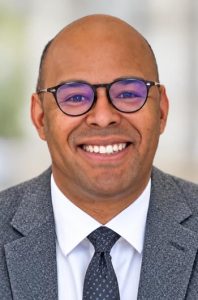
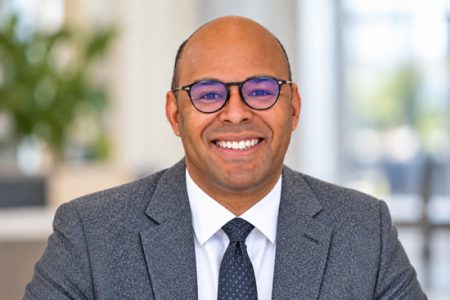
By Andrew G. White IV, PhD –
America just stopped treating it like one.
Every debate about American education—over funding, standards, admissions, or debt—is downstream of a question that is rarely asked aloud: Is education a public good or a private commodity? For roughly half a century, the United States has answered that question by default rather than by decision, and the default has been the market. Reform after reform has adjusted the machinery of schooling while leaving the classification untouched, which is why so many reforms feel like treatments for symptoms. Until the country decides, deliberately, what education is, it cannot decide what education is for.
The classification was not always so. When the unregulated markets of the laissez-faire era collapsed into the Great Depression, President Franklin D. Roosevelt’s New Deal established that the federal government could pull a nation back from economic cataclysm—that some goods and some risks were, in fact, shared. Those who regarded that intervention as interference eventually rebranded themselves as neoliberals, and with the elections of Ronald Reagan as president and Margaret Thatcher as UK Prime Minister, their program prevailed: optimize the conditions for markets, extend competition into every sphere of life, and remake the citizen as homo economicus—a being oriented primarily toward economic gain.
Education was not spared. Once a degree became an investment owned by the individual, the consequences followed with quiet logic. Learning for its own sake came to be priced as an indulgence. The humanities—the disciplines that cultivate judgment, imagination, and the capacity to see a life whole—were curtailed in favor of curricula that promised measurable returns. Students were recast as customers, professors as service providers, and the university as a firm whose product happened to be credentials. None of this was voted on. It arrived as an atmosphere, and atmospheres are difficult to argue with.
But the market answer has a defect that no amount of efficiency can repair: it cannot say what education is for. Martha Nussbaum can. Education, by her account, develops the capabilities that make a life fully human—the trained intellect, the ethical judgment, the awareness of cultures beyond one’s own, and the critical habit of refusing to take the world at face value—and it treats economic gain as a means to human ends rather than as an end in itself. This is not a rejection of employment or prosperity. It is a claim about their proper place: work serves a life; a life does not serve work.
John Rawls reached a compatible conclusion from another direction. Education, in his framework, functions as a primary good—something every citizen requires in order to develop a sense of their own worth, whatever else they may want from life. And the classification carries an obligation, because primary goods are precisely what a just state must secure—adequately, and equally—for all its citizens. A society may debate how that obligation is met. It may not, if it wishes to call itself just, debate whether the obligation exists.
Skeptics will object that this is nostalgia—that education must answer to the economy that funds it. But the liberal tradition never opposed economic life; it opposed the inversion of ends and means. Nussbaum’s own argument is that the capacities cultivated for citizenship—critical thinking, historical perspective, the imagination to understand lives unlike one’s own—are the same capacities a dynamic economy requires. The choice between producing workers and producing citizens is a false one. A system that aims at the citizen gets the worker as well. A system that aims only at the worker, the past fifty years suggest, eventually gets neither.
A classification is a decision about what a thing is and who must answer for it. Call education a commodity, and its unequal distribution is simply the market clearing. Call it a public good, and unequal distribution becomes what it has always felt like to the families living it: a broken promise. The United States made the first call by drift. It can make the second by choice—and once it does, two further questions come due: who coordinates the system, and what, exactly, is guaranteed. Those questions have answers, too.
Andrew G. White, IV, PhD, is Dean of Enrollment Management at NYADI College of Transportation Technology. He can be reached at [email protected].
NOTE: The views and opinions expressed here, as well as assertions of facts, are those of the author. They do not necessarily represent the views or opinions of The Urban News.