Idlewild’s Legacy
Why Black communities must build and fund their own spaces.
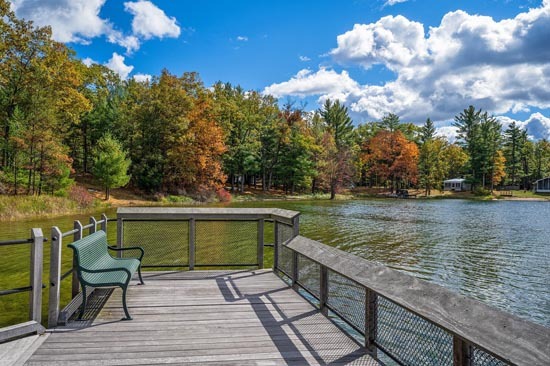
More than a century ago, in the thick of Jim Crow segregation, Black families carved out a sanctuary in the northern Michigan woods.
Idlewild, known nationwide as the “Black Eden,” became a thriving resort town where African Americans could vacation, own property, and build businesses at a time when most of the country denied them basic access.
Today, as rising costs, gentrification, and persistent racism continue to shape the economic landscape, Idlewild’s story offers more than nostalgia. It offers a blueprint.
Idlewild flourished because Black people invested in themselves. They bought land. They opened hotels, restaurants, nightclubs, and shops. They created a self-sustaining economy that circulated dollars within the community long before “Buy Black” became a hashtag. At its height, the resort supported more than 300 Black-owned businesses and drew thousands of visitors each summer.
That success was not accidental. It was intentional—a collective response to exclusion.
Now, more than 60 years after the Civil Rights Act opened doors to previously segregated spaces, many of those same doors are closing again through subtler means: skyrocketing prices, discriminatory lending, predatory development, and the steady disappearance of Black-owned establishments in cities across the country. The result is a familiar one: fewer places where Black families can gather, rest, and feel fully at home.
Idlewild’s rise and decline remind us that access alone is not enough. Without ownership, communities remain vulnerable to the shifting tides of the broader economy.
If we want spaces that reflect our culture, protect our dignity, and circulate our dollars, we must build them, and sustain them, ourselves.
That means supporting Black-owned resorts, restaurants, bookstores, farms, and creative spaces. It means choosing to spend money in establishments that reinvest in Black workers, Black neighborhoods, and Black futures. It means recognizing that economic power is not just about individual success but about collective infrastructure.
Idlewild was once a refuge because Black people made it one. Its legacy challenges us to do the same today: to create places where our families can gather without fear, where our artists can perform without compromise, and where our dollars strengthen our own communities rather than disappear into someone else’s profit margin.
The “Black Eden” may have been created in another era, but its lesson is timeless. In the face of rising costs and persistent racism, the path forward is the same one our ancestors walked: build our own, support our own, and ensure that our money funds our future.
Videos Focusing on Idlewild
A number of worthwhile videos and documentaries about Idlewild can be found on YouTube.
The Forgotten Resort of Black Eden
Black Eden was the Town of Idlewild, Michigan, from 1912 through the mid-1960s. Idlewild had an active year-round community and was visited by black entertainers and musicians from all over the country. At its peak, it was one of the most popular resorts in the Midwest and as many as 25,000 would come to Idlewild in the height of the summer season.
Live at Idlewild Music Festival 2024 Recap
More than just a concert, this event was a powerful tribute to Black excellence, music, and history—and the beginning of what we envision as one of the largest music and cultural festivals in the country.
The New Story of Idlewild
Black Folks Reconnect and Support “Black Eden”
What would you want to experience in the historically Black resort town of Idlewild, Michigan?
Mr. Joe Lindsey, Mr. Warren Thomas, and Lydia Hicks ask this very question. Ride shotgun with Lydia through the historic town of Idlewild, Michigan otherwise known as “Black Eden.” Current and former residents talk about outdoor recreation, the culture of Idlewild, and what it takes to maintain community in a historically Black town.
Idlewild, Michigan: The Effects of This Historic City
The effect of Idlewild is life changing.