The Last Message of W.E.B. Du Bois
A final request from a man who refused to surrender his belief in life.
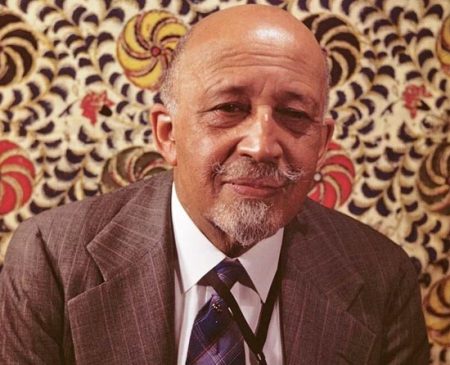
Yale University.
When W.E.B. Du Bois wrote his final message in 1957 at the age of 89, he intended it to be opened only after his death.
What emerged six years later was not a farewell steeped in nostalgia, but a directive; clear, urgent, and startlingly contemporary. Today, as Black communities confront renewed battles over history, democracy, and dignity, Du Bois’s last words read less like a relic and more like a roadmap.
In the letter, Du Bois reflects on a lifetime of scholarship, struggle, and global advocacy. He writes of rest not as resignation but as transition, trusting that the unfinished work of justice would be carried forward by others.
“What I have done well will live long,” he wrote, “and what I have done ill or never finished can now be handed on to others… while I rest.” It is a reminder that the long arc of Black freedom has always depended on collective effort, not individual heroism.
At the heart of his message is a single charge: “Live and believe in life.” For Du Bois, belief was not sentimental. It was a discipline—a refusal to surrender to despair even when progress moved at a glacial pace. He warned that the only true death was losing faith in humanity’s capacity to grow “simply because this greater end comes slowly—just because time is long.”
That warning resonates sharply today. Across the country, Black history is being challenged in classrooms, voting rights are under pressure, and public narratives about race are being reshaped in ways that threaten to obscure hard‑won truths. Yet Du Bois’s directive insists that the measure of the moment is not the speed of progress but the persistence of those who continue the work.
To honor his message now is to defend the integrity of historical memory, to protect democratic participation, and to build institutions that safeguard Black life. It is to practice joy and creativity as acts of resistance. It is to recognize that each generation inherits both the burdens and the possibilities left by the last.
Du Bois did not write his final words as a closing chapter. He wrote as though he was passing us the baton. Nearly seven decades later, the baton remains in motion. His last message calls on Black people not only to endure, but to believe—actively, stubbornly, and together—in a future that is “greater, broader and fuller” than the present.
Time is long, he reminded us. But so is the work. And so is our capacity to continue it.
Du Bois’s Last Words, June 1957
“It is much more difficult in theory than actually to say the last good-bye to one’s loved ones and friends and to all the familiar things of this life.
“I am going to take a long, deep, and endless sleep. This is not punishment, but a privilege to which I have looked forward for years.
“I have loved my work. I have loved people and my play, but always I have been uplifted by the thought that what I have done well will live long and justify my life; that what I have done ill or never finished, can now be handed on to others for endless days to be finished, perhaps better than I could have done.
“And that peace will be my applause.
“One thing alone I charge you. As you live, believe in life! Always, human beings will live and progress to greater, broader, and fuller life.
“The only possible death is to lose belief in this truth simply because the great end comes slowly, because time is long.
“Good-bye.”