Update on the Canadian Wildfires
More than 900 active fires and a nation on alert.
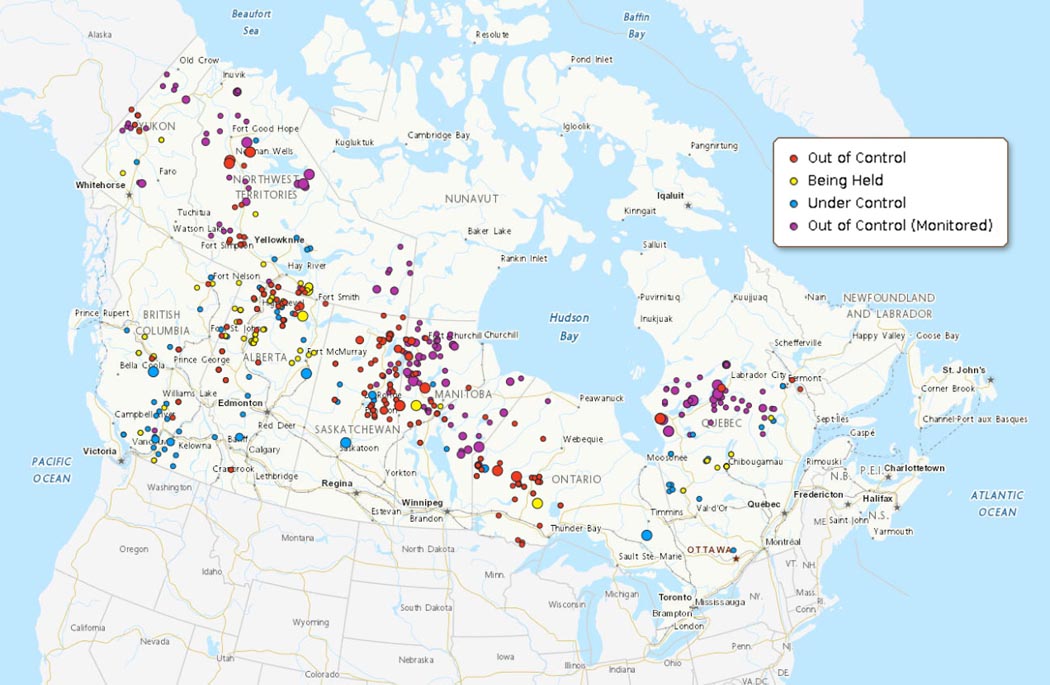
Canada’s wildfire season, which began in early spring, has touched communities from British Columbia to northern Ontario, traveling deep into the Northwest Territories.
The national numbers are large, but the real story lives in the places where people are breathing the smoke, watching the skies, and waiting for updates from local authorities.
The season began slowly but under high risk, with hundreds of fires already active by mid-summer. Since then, wildfire activity has increased dramatically, with hundreds of active fires burning across Canada. Hot, dry conditions could keep the wildfire threat elevated for weeks, especially in northern and central regions.
Many of these fires started in forested areas, places often referred to as forest regions or forest management zones. Alberta, British Columbia, Saskatchewan, and northwestern Ontario have carried much of the burden, with fires spreading through boreal forest, mixed woodlands, and remote northern terrain.
Some communities have faced direct disruption. Residents of Shellbrook in Saskatchewan, West Kelowna in British Columbia, and Mattagami First Nation in Ontario were forced to evacuate as nearby fires grew too unpredictable to manage safely. In the Northwest Territories, communities such as Fort Good Hope have navigated repeated smoke events and emergency planning as fires move across the region’s vast forested lands.
Indigenous communities in particular have carried a heavy share of the impact, responding not only to the physical danger but also to the cultural and emotional strain of seeing familiar lands burn.
The origins of these fires vary. Some began with lightning strikes during dry spells, especially in northern and western regions where thunderstorms pass over parched forest floor. Others were accidentally caused by people, fires that found fuel in drought‑stressed vegetation. Once a fire begins, it can move quickly, especially in areas where winds funnel through valleys or across open forest.
Current Wildfires in Canada
Managing these fires is a layered effort. Provincial and territorial wildfire agencies lead the response, supported by federal resources when needed. Fire crews work on the ground with hoses, pumps, and hand tools, while aircraft drop water or fire retardant to slow the spread.
In remote areas, crews sometimes use controlled burns to steer a fire away from homes or critical infrastructure. When a fire is too large or too dangerous to fight directly, agencies shift to protecting communities and letting the fire burn within natural boundaries until conditions change. With dozens of fires spreading across Canada, full response is required.
Smoke has become one of the most widespread challenges. Fires in northwestern Ontario have pushed thick smoke southward, giving Toronto some of the worst air quality of any major city on Earth on July 15, 2026. The smoke traveled far beyond Canada’s borders, drifting into the United States and even reaching Mexico. For many families, elders, and people with respiratory conditions, the smoke has been as disruptive as the fires themselves.
Communities are responding with resilience and care. Local governments are coordinating evacuations, Indigenous nations are leading culturally grounded emergency planning, and neighbors are checking on one another as conditions shift.
This season is still unfolding, and the numbers will continue to change. But the heart of the story remains steady: people across Canada are navigating a landscape reshaped by fire, leaning on one another, and working with determination to protect their communities and the lands they call home.