100 Years of Black History Month
Honoring our heroes while confronting a new wave of historical revisionism.
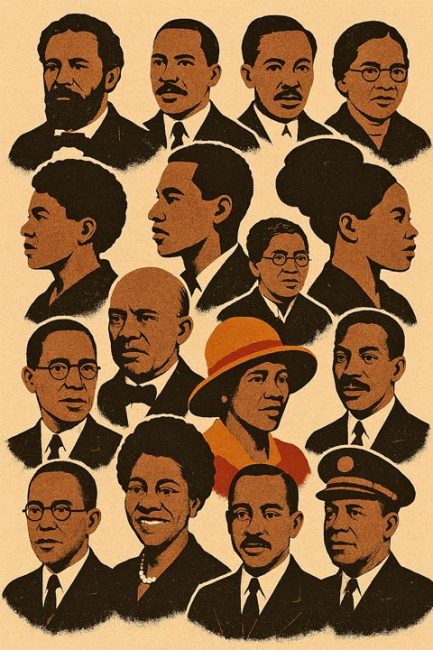 By Ebony Emerson –
Honoring our heroes while confronting a new wave of historical revisionism.
As the nation marks the centennial of Black History Month, the milestone arrives with both celebration and urgency. What began in 1926 as “Negro History Week,” created by historian Carter G. Woodson to ensure that the achievements of African Americans would not be erased, has grown into a month‑long observance recognized across schools, institutions, and communities. One hundred years later, the mission remains as vital as ever—perhaps even more so.
A Century of Preservation and Pride
For generations, Black History Month has served as a cultural anchor, a time to honor the scientists, artists, organizers, educators, and everyday citizens whose contributions shaped the nation. It has been a corrective to centuries of omission, a reminder that Black history is American history.
From the Harlem Renaissance to the Civil Rights Movement, from the brilliance of Black inventors to the leadership of Black women who sustained grassroots change, the month has offered a platform to uplift stories too often pushed to the margins. Schools expanded curricula, museums curated exhibitions, and families passed down traditions that affirmed identity and resilience.
A New Era of Resistance to the Record
Yet the centennial arrives at a moment when the very history Black History Month seeks to preserve is under renewed pressure. Across the country, debates over curriculum, book bans, and the teaching of race have intensified. Scholars and educators warn that these efforts amount to a modern form of historical revisionism—one that risks distorting or erasing the realities of slavery, segregation, and the long struggle for civil rights.
Some states have restricted how teachers discuss systemic racism. Libraries have faced challenges to books by Black authors. Even long‑established historical facts have become targets of political dispute. For many historians, this climate echoes the very conditions that motivated Woodson a century ago: a fear that the truth could be reshaped or suppressed.
Communities Respond With Resolve
In response, communities, cultural institutions, and educators are doubling down on the work of preservation. Grassroots organizations are hosting public lectures, oral history projects, and intergenerational storytelling events. Universities are expanding African American studies programs. Museums are digitizing archives to ensure public access regardless of political climate.
Black History Month’s 100th anniversary has become not only a celebration but a call to action: to protect the integrity of the historical record, to uplift voices that have long been silenced, and to ensure that future generations inherit a truthful account of the past.
Honoring the Past, Defending the Future
The centennial invites reflection on how far the nation has come—and how far it still must go. It is a reminder that history is not static; it is shaped by what we choose to remember, teach, and honor.
As communities gather this February, the spirit of Woodson’s original vision endures. Black History Month remains a testament to resilience, scholarship, and the power of truth. One hundred years later, the charge is clear: celebrate the heroes who built the path, and stand firm against any effort to obscure the journey.
Freedom February Teach-In
The Movement for Black Lives is celebrating Freedom February with a powerful teach-in on Abolition & the Political Moment. This is a space to honor our history, tell the truth, and sharpen our tools. The free, online event takes place Thursday, February 19, 2026, at 6 p.m. Register by going to m4bl.link/FreedomFeb-Abolition.