Stephen Miller Quietly Advances Hardline Immigration Agenda
Policy shifts broaden immigration enforcement and harden living conditions for undocumented people nationwide.
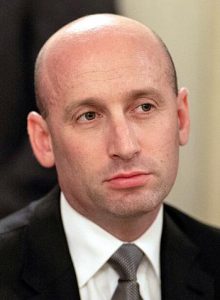
Apparently trying to stay out of the limelight in face of strongly negative public reaction to ICE’s deportation tactics, Stephen Miller continues to exert significant influence over US immigration policy, shaping a far-reaching enforcement strategy largely behind the scenes.
After a year in a highly visible role in the Trump administration, during which he regularly claimed credit for the crackdown on undocumented immigrants, and even former Secretary of Homeland Security Kristi Noem asserted that Miller oversaw her decisions, he has shifted toward a quieter, more bureaucratic approach—one that emphasizes durability and scale over public messaging.
Casting a Wider Net
Recent reporting indicates that he continues to oversee the enforcement capacity of federal agencies and streamline deportation efforts. Since Noem was fired (her final day was March 31) and Tom Homan took over from Gregory Bovino as the head of ICE, Miller has pushed for a lower profile—i.e., less bad publicity—along with increased daily arrest targets and broader coordination between Immigration and Customs Enforcement and the Department of Homeland Security. Miller is apparently also focused on expanding his agenda far beyond individuals with serious criminal records to include anyone in the country who is not a citizen.
A hard-liner against immigrants, and openly racist toward Hispanics since his high school days in California, Miller is also stepping up so-called “self-deportation” tactics—measures designed to make it more difficult for undocumented individuals to live and work in the United States. These include tightening access to public benefits, housing, and financial systems, alongside renewed efforts to revive stricter interpretations of the “public charge” rule.
False Claims
The administration’s accusation that the undocumented leech off the American taxpayer is a frequent excuse, despite the fact that nearly every undocumented worker in housing, hotel work, and farm labor pays more than their fair share. Each has Social Security taxes withheld from his or her pay, and none of them will ever collect a dime in benefits. Employers—including owners of hotels and resorts, like President Trump and his family—often hire the undocumented, assigning them phony SS numbers, to prove they’re in compliance with federal law. Many employers also pay the undocumented lower wages, which the laborers accept because any complaint will lead to their being turned in and likely deported.
Similarly, only American citizens and legal residents, like those with a green card and residency and work permits, may benefit from subsidized housing or medical care, Medicaid, Medicare, or other public services. As a result, the undocumented pay far more into the system than they get in return.
 Fourteenth Amendment
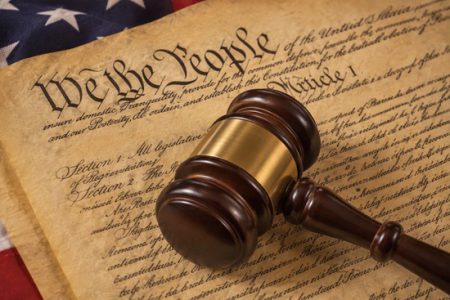
Legal and structural changes also remain a priority for Miller. The Trump administration’s recent attempt to eliminate birthright citizenship, a constitutional guarantee under the 14th Amendment, was heard skeptically by the Supreme Court at the beginning of April. The language of the Amendment is crystal clear: All persons born or naturalized in the United States, and subject to the jurisdiction thereof, are citizens of the United States and of the state wherein they reside. [emphasis added]
Senator Jacob Howard, the author of the 14th Amendment, explicitly stated that this includes all persons born within the geographical limits of the US, except for visiting foreigners and resident aliens, such as ambassadors, because they are not subject to the jurisdiction of American courts.
The amendment was passed 159 years ago in the aftermath of the Civil War. In part it was to overturn the Supreme Court’s Dred Scott decision of 1855, which held that no person of color could be a citizen—including free people of color in the northern states and people who had never been enslaved. It has been interpreted the same way by every Supreme Court that’s heard a case about it since 1899—127 years ago.
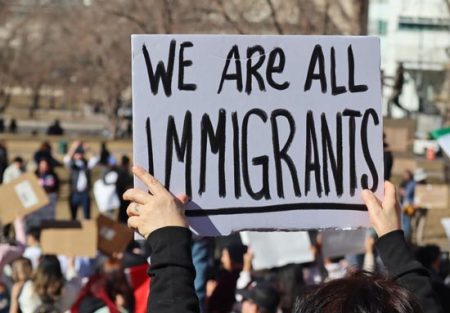
Nonetheless, Miller and Trump want to end birthright citizenship, arguing that such measures are necessary to reinforce immigration control and national sovereignty. But not only are we “a nation of immigrants,” as stated by President Kennedy (he wrote a book with this title), but Trump himself killed the 2024 bipartisan border bill (Border Act of 2024) designed to tighten asylum standards, increase detention capacity, and trigger border closures.
Trump, still a candidate, demanded that the Republican senators, who had originated the $20 billion proposal, vote it down. He stated openly that he preferred to use border security as a campaign issue than to actually improve border security.
Cutting the Rungs off the Ladder
Miller was tapped as Deputy White House Chief of Staff in large part because of his unyielding anti-immigrant credentials. Even his own family, including relatives of survivors and victims of the Holocaust, have denounced his racism and anti-immigrant stances. They point out that they would not be Americans had they not been able to immigrate in the face of Nazi terror. But their opinion has not swayed him; like many others who share his mindset, now that he’s got his—his family are Americans with all the benefits of citizenship—he wants to deny everyone else even the opportunity to apply. As the saying goes, “Instead of helping pull people up the ladder he has climbed, he wants to cut the rungs off behind him.”
Now, observers note, rather than relying on high-profile announcements, he is focused on embedding policies more deeply within federal systems, aiming to ensure their longevity regardless of political transitions. His continued involvement in interagency coordination and policy design underscores a sustained commitment to a hardline immigration agenda, even as public attention shifts elsewhere.
As the national debate over immigration persists, Stephen Miller’s influence—though less visible—remains a defining force in shaping the direction and scope of the administration’s anti-immigration policy.