A Clear‑Eyed Love Letter to a Complicated Country
Essays that still speak to the heart of American life today.
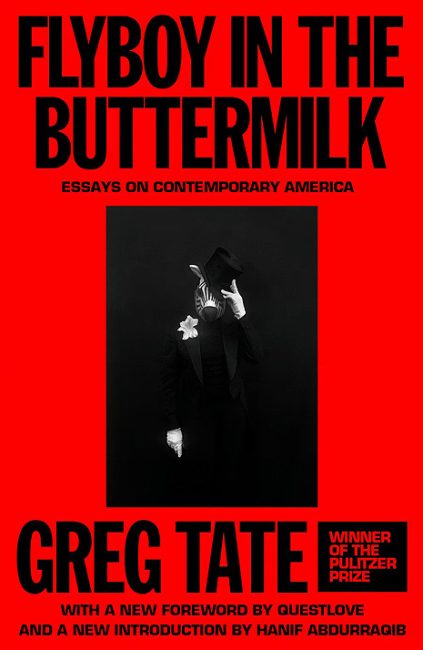 Flyboy in the Buttermilk, Greg Tate’s landmark 1992 collection of essays, returns to us at a moment when its voice feels newly urgent.
Tate wrote about Black art, music, and culture with a kind of fearless tenderness—never soft, never detached, always rooted in the belief that our stories matter and deserve to be told with care. This reprint brings that spirit back into the room, reminding us how much he shaped the way many of us learned to see America.
Tate had a gift for naming what others only sensed. He wrote about hip‑hop as a living, breathing force long before the mainstream understood its power. He treated Black creativity not as a side note but as a central engine of American culture. His essays moved with rhythm and heat, but they also carried a steady moral clarity. He understood that art is never just art. It is memory. It is resistance. It is a way of surviving a country that often refuses to see the people who built it.
Reading these essays today feels like sitting with an elder who refuses to let you shrink yourself. Tate challenges, but he also affirms. He reminds us that Black brilliance has always been here, shaping language, reshaping sound, and reimagining what freedom could look like. He writes about musicians, writers, and thinkers with the same respect he gives to the communities that raised them. His work honors the everyday people who keep culture alive.
What makes this reprint so meaningful is not nostalgia. It’s recognition. Many of the tensions Tate wrote about—race, power, representation, the struggle to be seen fully—are still with us. But his voice offers something rare: a way to face these truths without losing our sense of possibility. He invites us to look closely at America, not to despair, but to understand the depth of what we’re up against and the strength we carry.
For readers discovering Tate for the first time, this book is a doorway into a world where criticism becomes a form of love. For those returning to it, the essays feel like an old friend who still knows how to speak plainly about hard things. Either way, Flyboy in the Buttermilk stands as a reminder that culture is not just entertainment—it is a record of who we are and who we hope to become.