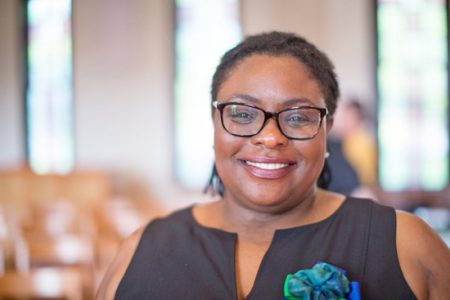
Marshan Camese Brings Unflinching Truth to Louisiana Lawmakers
Community Activist Calls Out the Machinery of Power
Marshan Camese gave a fiery testimony before Louisiana lawmakers during a state Senate hearing on redistricting on Monday, May 12, 2026.
Standing before Louisiana lawmakers, Camese delivered the kind of testimony that doesn’t just enter the record — it enters the bloodstream of a community. His remarks cut through political choreography and forced the room to confront the lived consequences of policy, power, and the narratives that shape public life.
His testimony was not the polished language of a lobbyist or the cautious phrasing of a political insider. It was the voice of someone who has lived inside the systems he was describing — someone who understands how legislation lands on real bodies, real families, and real futures.
Camese called out the modern MAGA movement, the legacy of the Confederacy, and the political forces still working to strip people of power, dignity, and basic rights.
Speaking plainly and directly, he challenged lawmakers to reckon with the forces he sees eroding dignity and democratic participation. His words named the modern political currents — including the rise of MAGA extremism and the lingering legacy of the Confederacy — that continue to shape the state’s political landscape. In doing so, he refused to sanitize the truth for the comfort of those in power.
Camese’s testimony underscored a central theme: the struggle for political voice in a state where many residents feel their rights are increasingly under threat. He spoke to the ways political actors use fear, misinformation, and historical revisionism to maintain control, and he urged lawmakers to confront the real-world impact of these tactics.
His remarks resonated because they articulated what many Louisianans — and many Americans — feel but rarely hear acknowledged in official spaces: that democracy is not an abstract ideal but a daily practice, one that requires courage, clarity, and accountability.
Observers in the room and online described the speech as “fearless,” “blistering,” and “the truth spoken without apology.” The video quickly went viral, amplified by viewers who recognized the urgency of his message and the rarity of such candor in a legislative chamber.
Camese’s testimony also served as a reminder that public comment periods — often treated as procedural formalities — can become powerful civic interventions when people speak from conviction rather than calculation.
While Camese did not shy away from naming the political forces he believes are undermining democratic participation, his testimony was ultimately a call to action. He urged lawmakers to legislate with integrity, to protect the rights of marginalized communities, and to resist the temptation to govern through division.
His message was clear: the future of Louisiana depends on leaders willing to confront hard truths and reject the politics of fear.
In a state grappling with debates over voting rights, representation, and the role of history in public life, Camese’s testimony arrives at a critical time. It reflects a broader national struggle over who gets to shape the narrative of American democracy — and whose voices are dismissed or diminished.
By speaking plainly about the stakes, Camese reminded lawmakers and residents alike that democracy is strongest when people refuse to be silent.