Artemis II Returns
The crew traveled over 1.2 million miles in 10 days.

NASA’s Artemis II crew returned safely to Earth on April 10, 2026, completing the first human journey into outer space in more than fifty years and marking a defining moment for a new era of exploration.
The 10‑day mission tested the Orion spacecraft’s life‑support, navigation, and communication systems while carrying four astronauts farther from home than any crew since Apollo 17.
For many watching around the world, the mission’s technical success was only part of the story. Pilot Victor Glover Jr. emerged as a historic figure, becoming the first Black astronaut to travel around the Moon, a milestone that resonates across Black communities. Glover’s presence in the crew carries profound cultural weight, expanding a lineage of achievement that has long shaped NASA’s progress—even when recognition lagged behind contribution.
Glover himself has emphasized that his journey is not a solitary one. His achievement follows the legacies of pioneers like Guion Bluford, Ronald McNair, Mae Jemison, Frederick Gregory, and Stephanie Wilson, whose work helped open doors that Glover now expands. Each of those trailblazers pushed against structural barriers while advancing the science, engineering, and operational excellence that made missions like Artemis II possible. Their stories—of brilliance, persistence, and often quiet courage—form the foundation on which this moment stands.
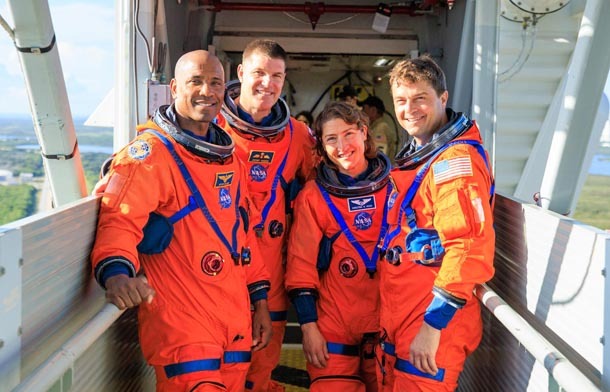
The Artemis II crew—Commander Reid Wiseman, Mission Specialist Christina Koch, Canadian Space Agency astronaut Jeremy Hansen, and Glover—completed a sweeping lunar flyby that brought them within thousands of miles of the Moon’s surface. From that vantage point, they captured images of Earth that echo the iconic photographs of the Apollo era while signaling a future shaped by broader participation and more inclusive leadership.
NASA officials hailed the mission as a critical step toward Artemis III, which aims to return astronauts to the lunar surface later this decade. Artemis III is scheduled for launch in 2027. Engineers will now analyze data from Orion’s heat shield, propulsion systems, and deep‑space communications to refine the spacecraft for future landings and long‑duration missions.
But for many observers, the cultural significance of Artemis II is inseparable from its scientific goals. Glover’s role represents a shift toward a space program that more fully reflects the nation it serves. Community leaders, educators, and STEM advocates have already noted the impact on young people who saw someone who looks like them navigating one of humanity’s most ambitious frontiers.
As the capsule’s parachutes unfurled and the crew splashed down in the Pacific, applause erupted not only at Mission Control but in living rooms, classrooms, and community centers across the country. Artemis II returned with more than data—it returned with a renewed sense of possibility, carried home by a crew whose diversity mirrors the future NASA says it is committed to building.