Malcolm‑Jamal Warner’s “Art in Motion”
A poetic demand for historical clarity.
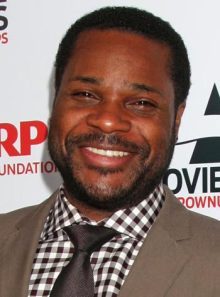
When Malcolm‑Jamal Warner wrote Art in Motion, he wasn’t simply delivering a poem, he was offering a cultural reckoning.
The piece moves with the urgency of testimony, blending spoken‑word cadence with a sharp critique of America’s selective memory.
Warner had long navigated the intersections of acting, music, and poetry, but Art in Motion stands out as one of his most incisive meditations on race, truth, and the power of narrative. At the center of the poem lies a line that has become a touchstone in conversations about history and identity: “Slavery is white history. How we survived it is Black history.”
In twelve precise words, Warner reframed the national conversation. He separated the violence that was inflicted from the resilience that emerged in response. It’s a distinction that is not accusatory but clarifying—one that insists on historical accuracy while honoring the agency of those who endured.
The poem’s title is literal: art is motion, and motion is survival. Warner’s imagery refuses to sit still, pushing the audience to confront truths that are often softened or avoided.
One of the poem’s most powerful contributions is its insistence that Black history is not solely defined by suffering. Warner refused narratives that reduce Black identity to trauma alone. Instead, he highlighted creativity, community, joy, and ingenuity as equally essential parts of the historical record.
By distinguishing the act of slavery from the response to it, Warner restored narrative power to Black people. He reminded us that survival was not passive—it was inventive, communal, and deeply human.
Art In Motion
Writer, poet, actor, and musician Malcolm-Jamal Warner performs his original poem titled Art In Motion as part of the Minnesota Orchestra’s 2023 Juneteenth Celebration concert.
Warner’s work sits in a lineage of Black poets and thinkers, from Langston Hughes to Sonia Sanchez to Nikki Giovanni, who use art to expose the gap between America’s ideals and its realities. Yet Art in Motion feels distinctly contemporary. It speaks to a generation navigating both the digital age and the aftershocks of centuries‑old systems.
The poem acknowledges trauma without centering it. It honors survival without romanticizing it. And it calls out the ways historical revisionism continues to threaten the integrity of Black memory.
Art in Motion is a living archive of Black resilience. Warner used his platform to ensure that the stories of survival, creativity, and community were not overshadowed by the brutality that necessitated them. His poem insists that Black history is expansive, dynamic, and rooted in brilliance.
In doing so, he offered us a blueprint for how art can function as both resistance and restoration. His poem reminds us that history is not just something we inherit; it is something we actively shape, protect, and carry forward.
In a time when the nation is wrestling with who gets to define history, Art in Motion is a reminder that truth is not a threat, it is a foundation.