At the Vanguard
Making and Saving History at HBCUs
The National Museum of African American History and Culture has launched a powerful new exhibition celebrating the legacy of historically Black colleges and universities (HBCUs).
At the Vanguard: Making and Saving History at HBCUs can be viewed online at no charge.
Historically Black Colleges and Universities (HBCUs) stand as pillars of academic excellence, artistic expression, and collective activism. These institutions were pioneers in collecting and preserving the art, historical objects, and cultural ephemera produced through the lived experiences of African Americans.
At the Vanguard features works preserved primarily in HBCU museums and historical archives. Without an enduring commitment to their care and display, these works and the stories they tell might otherwise have been forgotten.
For more than a century, HBCUs have been at the forefront of documenting and preserving African American history, often filling gaps left by other institutions. Nearly two-thirds of HBCUs house museums, art galleries or archives.
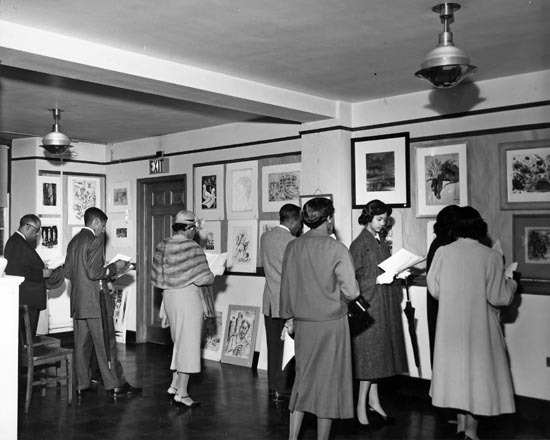
The exhibition draws from Clark Atlanta University, Florida A&M University, Jackson State University, Texas Southern University, and Tuskegee University, highlighting their deep collections and roles in cultivating future artists, museum professionals and scholars. At the Vanguard presents a remarkable selection of artifacts, artwork, historical documents and multimedia.
Historic materials include first editions of acclaimed writer Margaret Walker’s novel Jubilee and poetry collection For My People, and examples of Tuskegee Institute pottery, which showcase student craftsmanship in the decorative arts. A rare highlight includes early scientific journals from Tuskegee researchers, a nod to the institution’s legacy in agricultural and medical sciences.
Archival photographs by HBCU-trained and/or staff photographers, including Doris Derby, Chester Higgins, Earlie Hudnall Jr., and P.H. Polk, document student activism, campus life and African American cultural movements. The exhibition also features a selection of artwork collected by HBCUs, including works from John Biggers, Elizabeth Catlett, Robert Pruitt, and Renee Stout.
One of the few known color videos of George Washington Carver, whose scientific ingenuity at Tuskegee revolutionized agricultural practices, will also be on display.
HBCUs’ records of achievement, resilience and creativity represent defining moments in American history. As stewards of culture and innovation, their museums and archives ensure that future generations can access these invaluable stories.
To learn more, please visit www.searchablemuseum.com/at-the-vanguard.