The Second Trauma
What is it like to experience our systems on the worst day of your life?
“Your son is back there. They’re working on him.”
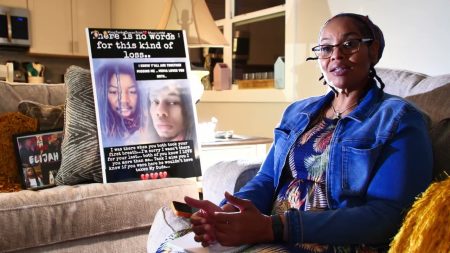
Those words gave a mother hope. She waited. She prayed. She believed that every minute she was not allowed through those doors meant there was still a chance. Hours later, she learned her son had never been at the hospital. He was still at the crime scene.
The last memories she has of fighting for her son are not at his bedside. They are in a waiting room, holding onto hope that had already been taken from her. No mother should have to carry that memory. And yet, as I listened to the experiences of families after the July 19 shooting in Asheville, I kept hearing different versions of the same story: people experiencing unimaginable trauma and then encountering systems that added another layer of trauma on top of it.
I have come to think of it as the second trauma. The first is the moment your world changes forever. The second is what can happen when the systems you encounter afterward forget that, before anything else, they are dealing with human beings. I am writing this as someone who has spent years working with young people and families, including in violence prevention. But I am also writing this as a mother.
My daughter is nearly the same age as some of the young people involved in this tragedy. I am also raising a son who will one day be their age. So when I look at these young people, I don’t see statistics. I see somebody’s baby. And some of the young people we lost were my babies, too. I watched them grow. I knew them before their names appeared in news stories and police briefings. I knew their personalities, their struggles, their families and the people who loved them.
They were not case numbers. They were not crime statistics. They were not evidence. They were human beings.
That should not need to be said. But apparently it does. Because almost immediately, assumptions began. People heard that young Black people had been shot and began speculating about gangs and criminal activity. Let me be clear: Being shot is not evidence of criminality.
Victims should not have to prove they lived perfect lives before we decide their deaths matter. Their mothers should not have to present résumés of their children’s goodness before we decide their grief deserves compassion. They were victims. They deserved dignity in life. They deserved dignity in death. And their families deserved dignity while trying to survive the hours and days that followed.
One aunt told me she stood near her nephew and his friends as daylight came because she felt she needed to protect them even in death. The shooting had happened around 2 a.m. Their bodies remained at the scene into the morning. She watched over her nephew. At one point, she told me, a man attempted to take photographs.
Even then—after everything that had already happened—she felt someone needed to protect the dignity of these young people. Think about that. An aunt had just lost her nephew, and somehow she found herself feeling responsible for protecting him one last time.
Another father drove roughly two and a half to three hours from Greensboro trying to get to his son. My husband was at the hospital and witnessed his anguish when he was not permitted to see him.
Other family members were desperately trying to determine where their loved ones were. And the mother I described at the beginning spent hours at a hospital believing her son was being treated there, only to learn he had never arrived.
These aren’t inconveniences. These aren’t communication glitches that grieving families should simply be expected to understand. These experiences become part of the trauma. They become part of the story families will tell themselves for the rest of their lives about the night they lost someone they loved. And that makes me angry.
There is another mother whose experience I cannot stop thinking about. She lost one son in the shooting. Then, within days, another son was arrested in connection with an earlier, separate shooting. According to his family, he had already been questioned about that earlier shooting before his brother was killed. He was not arrested at that time. He was arrested on July 23.
The next day, I watched the police press briefing myself. As police discussed their belief that the earlier shooting was connected to the violence that killed his brother, his photograph was displayed. So I have a question: Why then? Why was he arrested weeks after the earlier incident but one day before a press conference connecting that incident to the shooting that killed his brother?
I do not know the answer, and I will not manufacture one. But his family deserves one. According to the family, officers also entered their mother’s home with guns drawn. Think about the totality of what this mother was being asked to absorb. One son was dead. Another son was under arrest. Police had entered her home. Then, while the public was searching for answers about the violence that had taken one son’s life, she watched her other son’s photograph become part of the public conversation surrounding it.
Systems may view those as separate events. A mother cannot. A police department can separate an arrest from a homicide investigation. A hospital can separate its policies from law enforcement procedures. A medical examiner can focus on the responsibilities of that office. Each institution can point to its own policies, procedures, and jurisdiction. A mother experiences all of it as her life. She doesn’t get to separate her trauma by agency. Neither should we.
Nothing prepares you for standing over the body of a child you watched grow up.
At another funeral, I had to stand over the body of another one of my babies. When I looked at him lying there, he did not look like himself. I was told by the funeral director that the condition of his body had been affected by how long his body remained outside on the pavement after his death. I cannot independently determine the medical reason for his appearance. I can tell you what I saw. And I can tell you how it felt.
I have spent years trying to keep young people alive. Nothing prepares you for standing over the body of a child you watched grow up. I was angry. I am still angry. I am angry because dignity should not disappear when someone’s heart stops beating. I am angry because families should not have to fight for information while trying to comprehend that their child may be dead.
I am angry because vulnerable families so often seem to encounter systems at their most rigid precisely when those families are at their most fragile. And I am angry because we can do better. Eventually, the crime scene disappears. The cameras leave. The press conferences end. The systems move on to the next step. But a mother doesn’t. This past weekend, I sat in the pulpit during Mark’s funeral.
From where I sat, I could see his mother’s face throughout the entire service. She sobbed. She kept looking up at the screen as photographs of her son played across it. She would shake her head over and over, as if her heart and her mind still could not agree that this was real. There is something about a mother looking at pictures of her child that changes you. Those weren’t just photographs. They were birthdays. Family gatherings. Ordinary moments that had suddenly become everything she had left.
I found myself watching her more than I watched anything else. Because in that moment, she wasn’t a victim’s mother. She was simply a mother whose child was gone. Then another one of my babies stood to speak. The Director of My Daddy Taught Me That. One of Mark’s closest friends. Someone who loved him like a brother. He tried to finish his remarks. He couldn’t. His grief caught up with him. The words stopped. The tears didn’t.
Watching these young men try to carry one another through unimaginable loss reminded me of something our systems often overlook. When a young person is murdered, we don’t lose one life. The grief ripples outward. It reaches mothers. Fathers. Brothers. Sisters. Children. Friends. Mentors. Entire neighborhoods. The death certificate records one death. It will never capture the thousands of pieces of broken hearts left behind.
That is why I refuse to let these young men become statistics. They were loved. They mattered. And every system that encountered their families had a responsibility to honor that love with dignity, compassion and humanity. Systems tend to evaluate themselves by asking: Did we follow policy? Did we secure the scene? Did we preserve evidence? Did we complete the investigation correctly?
Those questions matter. But there is another question that matters just as much: What was it like to experience our system on the worst day of your life? Ask the mother. Ask the father who drove through the night. Ask the aunt who stood watch over her nephew. Ask the families who searched for information. Ask them whether they knew whom to call. Ask whether information was timely and accurate.
Ask whether someone explained what was happening. Ask whether their loved one’s dignity was protected. Ask whether the systems they encountered helped carry their trauma—or added to it. And then have the courage to listen to the answers. No system can promise tragedy will never happen. Every system can choose whether it responds with dignity, honesty and compassion.
That choice matters because families will remember these interactions forever. The July 19 shooting is the reason I am writing this. It should not be the boundary of the conversation. Families encounter systems after homicides, suicides, overdoses, deaths in custody, unexpected hospital deaths and countless other tragedies. The circumstances change. The fundamental question does not: How do our systems treat people when they are at their most vulnerable?
Too often, the people with the least power to design these systems are expected to navigate their most complicated rules during the worst moments of their lives. Then, when they become angry, confused, loud, emotional or desperate, their trauma itself can become something the system responds to as a problem. That must change.
Grief is not disorder. A desperate mother is not an inconvenience. A father trying to reach his child is not a problem to manage. A family’s demand for answers is not an attack on an institution. These are human beings trying to survive moments that will divide their lives forever into before and after. Our systems should know how to meet them there.
I am not pretending one op-ed can redesign these systems. But it can start a conversation. And that conversation should begin with families. We should develop a family-centered response standard for traumatic deaths—one that coordinates law enforcement, hospitals, medical examiners, victim services and other institutions around the experience of the family, not simply the responsibilities of each individual agency.
Start simply. Give families one trained point of contact. Provide accurate and timely information. Coordinate communication across systems. Train people in trauma-informed responses to grieving families. Protect the dignity of the deceased. And afterward, ask families: What was it like to experience us? Then use their answers to make the system better.
This is not about asking systems to abandon investigations, policies or procedures. It is about refusing to accept the idea that professionalism requires us to abandon humanity. I want justice for these young people. But justice is bigger than an arrest.
Justice also means honoring their humanity. It means honoring the mothers who raised them. The fathers who drove hours trying to reach them. The aunts who stood watch. The siblings who will carry their absence. The children who will grow up hearing stories about them. And all the people who loved them before the rest of the world learned their names.
These were our babies. We cannot change what happened to them. But leaders can decide whether their deaths teach us anything. So I am asking every leader responsible for a system that encounters families in crisis to sit with one uncomfortable question: If this were your child, your brother, your sister, your nephew—would the way these families were treated have been good enough for you?
If the answer is no, don’t defend the system. Change it. Listen to these families. Bring them to the table. Review what happened. Build a coordinated, trauma-informed family response. Measure dignity alongside operational success. And make sure the next grieving mother does not have to survive the system while she is trying to survive the loss of her child.
We owe these families that much. And we owe it to the babies we could not bring home.
NOTE: The views and opinions expressed here, as well as assertions of facts, are those of the author. They do not necessarily represent the views or opinions of The Urban News.