Purpose in the Storm
Small Business Resilience After Hurricane Helene
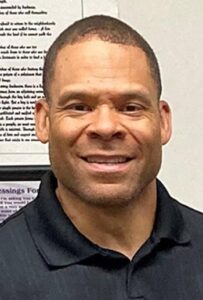
By Duane Adams –
September 27 marked a year since our community was impacted by Hurricane Helene.
We have all been inundated with the adjectives used to describe this event, many of them unsettling at the very least. Words like devastation, catastrophic, debilitating, crippling, and violent haven’t done a lot to put us at ease. We all know someone who has been impacted by Helene in some way.
On the other hand, we’ve also witnessed an outpouring of community support. Some would argue that the level of support has reached epic proportions. People have been forced out of their comfort zones and tried things that have been foreign to them, sometimes out of curiosity and many times out of necessity. This allowed them to acquire new skills and gain confidence, often with the sole reward being a genuine smile and thank you from a person who truly appreciated it.
Small business owners were no different. Helene forced them to address infrastructure issues. It also made them scrutinize their financials and learn how to budget. Many businesses also have become more efficient in their operations, because trimming the fat is seldom a bad thing.
At the A-B Tech Small Business Center, we see hundreds of clients each year, and almost all of them were impacted by the storm. Some didn’t survive, but the ones that prospered had several things in common—vision, a clear mission, and resilience.

Asheville Tea Company
Last February, on A-B Tech’s No Limits radio show, I asked Asheville Tea Company owner Jessie Dean about her initial reaction to Helene. Her response: “I don’t think that frustration is my ‘go to’ emotion. For me, I was in crisis management mode. I was trying to figure out and strategize what we needed to do to move forward as a brand. I felt an overwhelming amount of support from our community.”
Mind you, Asheville Tea lost its brand-new building and equipment—equipment that still had debt on it. The company was in no position to repurchase it. But Jessie didn’t panic. She spoke profoundly of doubling down on the company’s mission and vision. She and her team pressed forward and continue to support sustainability and reducing the negative impacts of climate change. She said that now there is an even greater sense of urgency to forge ahead.
The storm has also made Jessie see the need to continuously advocate for larger-scale state and federal funding. Asheville Tea Company survived because it has a much deeper purpose: selling tea is the mechanism for accomplishing a much larger goal.

Auntie M’s
Another Small Business Center client, this one in Black Mountain, was also able to weather the storm. Mary Beth Benton, founder of Auntie M’s Pet Care, has had a love for animals her entire life. Caring for and protecting animals is in her blood, and she earned an Animal Science degree from Ohio State University.
After Helene, Mary Beth initially thought that she would have to pivot her business to address a shift in community needs. She felt that she owed it to her community, but she was concerned that no one would need pet care at that time. I agreed—and boy, were we wrong!
Mary Beth soon started getting calls from clients who had left their pets behind. She even got a phone call from someone who needed help with their chickens. We spoke about grant opportunities and other forms of capital. Just as she had done during the Covid-19 pandemic, Mary Beth forged ahead and was able to push through without any subsidies. The business had its challenges, but Mary Beth and her team are a family, and they do the work because they have a deep love for animals. By the end of the year, they had regrouped and were able to add dog training to Auntie M’s scope of services.
What we both learned is that Auntie M’s Pet Care provides an essential service and that it should be granted essential status in our state. Events like Covid-19 and Hurricane Helene can actually provide a boost to an essential business, as they did for hers.

Skills Academy for Women
Quetzal Jordan’s Skills Academy for Women (S.A.W.) is another example of a business that leads with purpose. Quetzal utilizes her business as a mechanism that, as her website states, “bridges the gender gap in trade skills by providing women the tools and opportunities they need to succeed.” It is a hands-on educational initiative focused on empowering women and marginalized communities through trade skill training and community engagement.
Quetzal’s background includes prior work for an initiative providing a different menu of trade skills, with a particular focus on earth skills, permaculture, and natural living. S.A.W.’s model is different in that it reaches a different target audience using a different training format. One can feel Quetzal’s passion for what she does just by learning about her history. From day one, her vision was clear. I knew that she was going to do her business, with or without me.
Before the storm, Quetzal had some struggles finding community partners and space. That didn’t stop her. She spoke at community events, met with resource providers and community leaders, registered for and participated in programs, reached out to potential sponsors, and explored ways to access capital. There was nothing that I suggested Quetzal do that she didn’t try.
Once the storm hit, S.A.W. had to regroup and lean into doing more philanthropic work. Since the team had necessary skills that were now critical, they were put on the front end of helping local communities with clean-up—not because they were told to do so, but because Quetzal knew it was the right thing to do. As a result, people were able to realize how useful these skills are to those who haven’t had access to them. Her experience gives even more credence to the saying, “People don’t know what they need until they need it.”
Now, many of the day-long workshops offered by S.A.W. are sold out. What Quetzal didn’t know was that Helene would provide the impetus for folks reaching out for personalized training in skills like chainsaw and power tool operation and safety. S.A.W. has since added personalized trainings, which take place at the client’s location. Serendipitously, one of the problems that she Quetzal had faced prior to Helene—finding a location to train her clients—is now solved.
Cornerstones of Recovery
As we reflect on the year since Hurricane Helene, it’s clear that resilience, purpose, and community have been the cornerstones of recovery. The stories of Jessie, Mary Beth, and Quetzal remind us that adversity often reveals the strength and depth of our commitments, not just to our businesses, but to the people and values that drive them. These entrepreneurs didn’t just rebuild; they reimagined, adapted, and grew. Their journeys serve as powerful examples of how purpose-driven work can thrive even in the face of crisis, and how community support can transform challenges into opportunities for lasting impact.
Duane Adams is the Associate Director of the A-B Tech Small Business Center and host of the college’s No Limits radio show on WRES 100.7 FM.