YMI Cultural Center Receives Art Collection
The Legacy of James C. McMillan: North Carolina Artist, Educator, and Cultural Voice
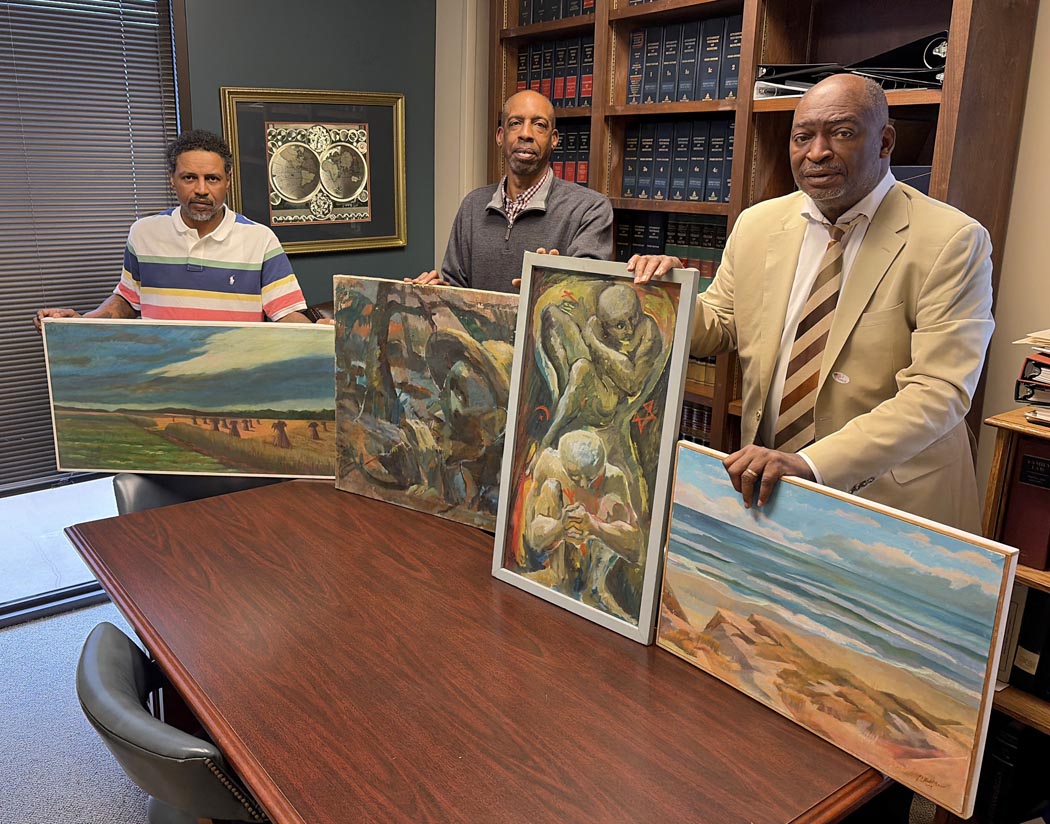
James C. McMillan (1925–2022) was a distinguished African American painter, printmaker, sculptor, and educator whose work and teaching career left a lasting imprint on North Carolina’s artistic landscape and beyond.
Known for his commitment to documenting African American history and identity through visual art, McMillan’s career bridged both academic excellence and cultural advocacy.
Born on December 23, 1925, in Sanford, North Carolina, McMillan grew up during the Jim Crow era in a working-class African American family. From an early age, he showed strong artistic talent and academic promise, which would later guide him into a lifetime of creative and educational achievement.
McMillan pursued formal art training at Howard University in Washington, DC, where he earned a Bachelor of Arts in Art in 1947. While at Howard, he studied under some of the most influential African American artists and scholars of the time, including Lois Mailou Jones, James A. Porter, and James Lesesne Wells—figures who helped shape his artistic foundation and commitment to cultural expression.
His education continued at several prestigious institutions, including the Skowhegan School of Painting and Sculpture in Maine, where in 1947 he became the first African American recipient of a fellowship. He also advanced his studies at the Académie Julian in Paris, France, broadening his exposure to European artistic traditions. Later, he earned a Master of Fine Arts in Sculpture from the Catholic University of America in 1952 and pursued additional graduate study at Syracuse University.
McMillan went on to build a significant teaching and leadership career in the arts. He served on the faculty of Bennett College and later became a longtime professor at Guilford College in Greensboro, NC, where he eventually chaired the art department. He remained at Guilford from 1969 to 1988, influencing generations of students as both an instructor and mentor.
Beyond the classroom, McMillan was deeply engaged in promoting African American art and cultural preservation. He co-founded the African American Atelier in Greensboro, an organization dedicated to supporting and showcasing Black artists. His own artwork often explored themes of African American history, civil rights, spirituality, and social justice, reflecting both personal experience and broader cultural narratives.
Through his teaching, artistic production, and community involvement, James C. McMillan became a central figure in North Carolina’s art history and a respected voice in American cultural life. His legacy continues through his work, his students, and the institutions he helped shape.