Affrilachia’s Living Memory
Photographs that honor a people edited out of the frame.
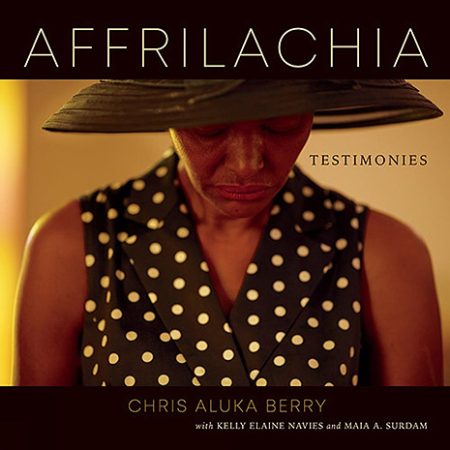 Affrilachia: Testimonies is a book that feels like someone opening a long‑closed door and inviting you to step inside.
Chris Aluka Berry spent six years traveling through western North Carolina, northeast Georgia, and eastern Tennessee, listening to Black families whose histories have shaped the mountains even when the wider world refused to see them. His photographs and the voices gathered alongside them offer a quiet, steady reminder that Appalachia has always been more than one story.
Berry’s images carry the warmth of lived‑in spaces—church pews polished by generations, front porches where elders sit in the late‑day light, revival tents filled with song, and family gatherings where memory is passed hand to hand. These scenes are not staged or distant. They feel like moments you could walk into, moments that ask you to slow down and really look.
The book’s contributors, Kelly Elaine Navies and Maia A. Surdam, deepen that sense of presence with poems and essays that offer historical grounding without losing the tenderness of personal truth.
“Affrilachia” is a term coined in 1991 by Kentucky-based poet Frank X Walker to describe the cultural identity and contributions of African Americans native to or residing in the Appalachian region. The word blends “African” and “Appalachia” to challenge the stereotype of Appalachia as exclusively white and to affirm the presence and history of Black Appalachian communities.
What makes Affrilachia: Testimonies so moving is the way it restores visibility. For generations, Appalachia has been imagined as a place defined only by whiteness, even though Black communities have lived, worked, worshiped, and created there for centuries.
Berry’s work pushes back against that erasure with care rather than confrontation. He shows people as they are—proud, complicated, rooted, joyful, grieving, and deeply connected to the land that holds their stories.
The book reads like a family album for a region that has too often been misunderstood. Each photograph and testimony feels like an offering, a way of saying: We were here then. We are still here now. Our lives contributed to the shape of this place. That simple truth carries a quiet power. It invites readers to rethink what they believe about Appalachia and to recognize the fullness of the people who call it home.
In the end, Affrilachia: Testimonies is more than a visual history. It is an act of honoring. It gathers stories that might have been lost and holds them with dignity. It reminds us that community is built not only through shared geography but through shared memory, and that every region is richer when all of its people are seen.
Affrilachia: Testimonies
The Madison County Arts Council presents Affrilachia: Testimonies, a photographic exploration of African American life in southern Appalachia. Chris Aluka Berry’s images document Black families and communities living in these mountains, inviting viewers to consider questions that shaped his work: What has daily life been like for Black Appalachians? What strengthens their ties to one another, to the land, and to their histories? Why are these stories so rarely told?
The exhibit continues through July 25, 2026. The Madison County Arts Council is located at 90 South Main Street, Marshall, NC 28753. Exhibition hours are Monday through Friday from 10 a.m. to 5 p.m., and Saturdays from 11 a.m. to 4 p.m. More information is available at (828) 649‑1301 or online at www.madisoncountyarts.com.
Learn more about Chris Aluka Berry’s ongoing project at www.alukastorytellingphotography.com.