More Than a Game
Dean Lytle on the power of Black athletes beyond the field.
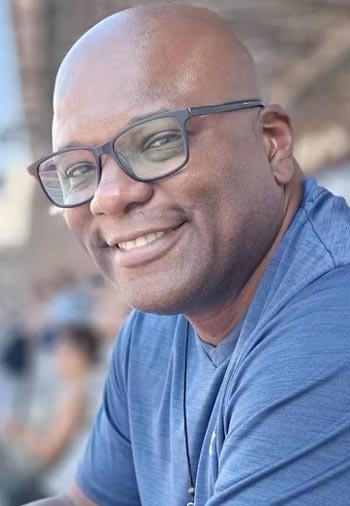
By Dean Lytle –
The NAACP recently launched its “Out of Bounds” campaign, calling on Black athletes, families, fans, and alumni to withhold athletic and financial support from public universities in states where redistricting efforts have reduced Black voting representation.
The campaign encourages recruits to reconsider commitments to those schools and to seriously consider Historically Black Colleges and Universities, or HBCUs, as alternatives.
At first glance, the proposal may seem controversial. Sports fans often want athletics to remain separate from politics. Yet history tells us that sports and social change have rarely been separate. From Jackie Robinson and Muhammad Ali to Colin Kaepernick and today’s athlete activists, sports have often served as a platform for larger conversations about citizenship, equality, and justice.
The NAACP’s argument is straightforward. According to the organization, states that benefit enormously from the labor and talent of Black athletes should not simultaneously support policies that weaken Black political representation. As part of its campaign, the NAACP states that “Profiting off of Black athletes while suppressing their vote is out of bounds.”
NAACP President Derrick Johnson has been even more direct. “What these states have done is not a policy disagreement. It is a sprint to erase Black political power,” Johnson said when announcing the campaign.
Whether one agrees with the campaign or not, it raises an important question: How much power do Black athletes really have?
As an African American who grew up in North Carolina and later played football at the University of Notre Dame, I have thought about this question for much of my life.
I was fortunate enough to receive scholarship offers from multiple universities. Like many recruits, I weighed a variety of factors when deciding where I wanted to spend the next four years of my life.
Graduation rates mattered. Coaching staffs mattered. Winning mattered. But so did something else.
There were schools I was reluctant to consider because of concerns about the racial climate in the state or community where they were located. That reality is not unique to me. For many Black student athletes, choosing a college is not simply about football, basketball, or academics. It is also about determining whether a place feels welcoming, supportive, and safe.
That experience taught me something important. Athletes have always had more power than they sometimes realize. Every recruiting decision is a choice. Every commitment sends a message. Universities compete aggressively for elite talent because they understand that a single player can change the future of a program.
College football is not just entertainment.
It is a multibillion-dollar industry and, in many southern states, a central part of cultural identity. Entire communities rally around their teams every Saturday. Stadiums regularly fill with 70,000, 80,000, or even 100,000 fans. Television contracts generate hundreds of millions of dollars. Podcasts, websites, and media outlets built around college athletics provide livelihoods for thousands of people.
In many of these programs, Black athletes make up a significant portion of the talent on the field. In football and men’s basketball, particularly within conferences such as the SEC, Black athletes often comprise a majority of the players fans pay to watch every weekend. The NAACP specifically targeted major programs in states where athletics generate more than $100 million annually—while lawmakers pursue redistricting plans that the organization argues dilute Black voting power.
That reality has always created a question in my mind.
Why is it that some people enthusiastically cheer for Black athletes on Saturday but show little concern for the challenges facing those same students, their families, and their communities during the rest of the week?
That question is not intended to accuse anyone. Rather, it asks us to think honestly about the relationship between athletics, economics, and civic life.
Critics of the NAACP campaign argue that student athletes should not have to carry the burden of political activism. They point out that many recruits are only 17 or 18 years old and are simply trying to earn an education and pursue their athletic dreams. That concern deserves respect.
History reminds us that young people have often stood at the forefront of social change.
The Greensboro Four were college freshmen when they inspired the nationwide lunch counter sit in movement in 1960. Many of the young men and women who marched during the Civil Rights movement were teenagers or college students.
In the world of sports, Olympic medalists Tommie Smith and John Carlos used their victory podium at the 1968 Olympics to draw attention to racial injustice despite knowing it could cost them personally and professionally. History shows that young people, and athletes in particular, have often played an important role in shaping national conversations.
No one is suggesting today’s athletes face those same dangers. But it is fair to acknowledge that young people have never been too young to influence history.
What makes the current debate particularly interesting is that it may not require every athlete to participate to have an impact.
In sports, a single player can change everything.
One elite quarterback can transform a football program. One dominant basketball player can alter the trajectory of an entire season. One highly ranked recruiting class can determine whether a team competes for championships or struggles for relevance.
That is why the NAACP’s campaign deserves serious consideration, even among those who ultimately disagree with it. The proposal is built on a simple premise. If athletes possess the power to help build billion-dollar athletic brands, they also possess the power to influence conversations that extend beyond the playing field.
Even if the campaign never dramatically changes recruiting patterns, it has already succeeded in sparking a national conversation. Sports fans who may never read a court ruling or follow a redistricting case are now discussing voting rights because the issue has entered the world of college athletics.
That alone is significant.
Reasonable people can disagree about the NAACP’s approach. Some will view it as an effective form of peaceful advocacy. Others will see it as asking too much of young athletes. Both perspectives deserve to be heard.
What should not be debated is whether athletes have influence.
History has answered that question repeatedly. From the Greensboro Four to Tommie Smith and John Carlos, from Muhammad Ali to Colin Kaepernick, athletes and students have often helped move our nation forward by forcing conversations many people would rather avoid. Today’s athletes face different challenges, but they possess a platform and visibility that previous generations could only imagine.
The future of this debate may not depend on every Black athlete making the same choice. It may only require enough athletes to recognize the value of their collective voice.
Athletes are more than performers. They are students, citizens, sons, daughters, neighbors, and future leaders. Their influence does not end when the game clock reaches zero.
The real question is not whether they have power. History has already answered that. The question is what they choose to do with it.
About Dean Lytle
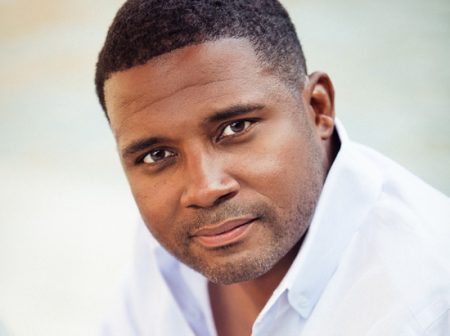
A native of Brevard, North Carolina, Dean Lytle is a member of the Brevard City Council, as well as a business executive, entrepreneur, and former professional football player. A graduate of the University of Notre Dame, he has built a career leading organizations across the sports, technology, and healthcare sectors.
Lytle is deeply committed to community development, expanding opportunities for youth, and advancing the intersection of sports, business, and public service. He resides in Transylvania County with his family.