Nicole Cush Lives Her Work
Asheville educator describes her philosophy on curriculum and instruction.
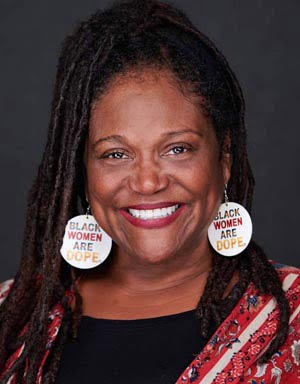
Nicole Cush is the principal of SILSA, the School of Inquiry and Life Sciences embedded at Asheville High School.
She describes how her graduate work at Western Carolina University has broadened her knowledge and her philosophy of curriculum and instruction.
For a large part of her career, she taught American Literature, often beginning with the concept of “rugged individualism,” working through the American Dream, and ending with the Green Light concept—an approach that encourages new ideas and strategies with the potential to transform teaching and learning through removing barriers to broad-based collaboration.
From Teacher to Leader
“As a young teacher,” she writes, “I bought into the notion that anything is possible with hard work, education, and grit. But as Dr. Martin Luther King, Jr., asserted, it is cruel to ask a bootless man to pull himself up by his bootstraps.”
Her graduate studies deepened her understanding of the impact on the American education system of such assumed realities as meritocracy, self-determination, and individualism; the more she learned, the more her philosophy of education took a left turn.
“I’ve gained a fresh perspective and the desire to go deeper with my staff to understand the pitfalls of ideas about what grit and determination look like. As [Harvard Graduate School of Education] Professor Jal Mehta asserts, ‘We will face trouble when we examine the word grit and realize the profound and negative impact the concept can have on Black and brown students.’
The Past is Prelude
“If we don’t concern ourselves with where our students came from, culturally speaking, and what they face on a daily basis,” it becomes far harder to reach them, Cush asserts. “For example, many of our students are descendants of indigenous people who, historically, have demonstrated a tremendous amount of grit. Yet they have not received reparations or even recognition for the grit and determination they and their forebears have shown for generations as enslaved or discounted citizens, as they have literally built our country’s infrastructure. As a result of this understanding, the word grit has become an educational trigger point for me.”
Cush’s high expectations of herself to remain a constant learner lead her to expect that her staff will do the same. She maintains a student-centered approach, and she makes sure her teachers know how essential it is to build relationships before diving into content. She expects them to focus on gaining the trust and respect of their students by pushing their own comfort levels—and by recognizing their own biases while checking them at the door, so that they may guide their students to do the same.
Relationships v. Resources
So she focuses on relationships with students as well as on the realities they face—what Dr. Christopher Emdin, professor of education at University of Southern California, calls “Reality Pedagogy.” That idea, coupled with the broader concept of so-called “meritocracy,” as presented by Yale Law School Professor Daniel Markovits, has taken the lead in discussions on resources, the hoarding of said resources, and the impact on Black and brown students. Cush understands that much of society’s belief in meritocracy is without evidence: “that knowledge impacts my vision on testing: until my students and teachers arrive at the testing site trauma free, we are not prepared.”
For despite having a very good one-to-one technology resource at SILSA, having such technology does not mean equity. If students arrive at a school full of external resources but lack internal resources, they cannot learn simply through “grit” or “merit.” As Emdin emphasizes, resources do not mean equity, nor does equality mean equity.
As a result, says Cush, “Motivating my teachers towards more socially just and equitable practices in the classroom has become my passion.”
First, Educate the Educators
One of her role models in that effort is Dr. Gloria Ladson-Billings, professor emerita of education at the University of Wisconsin–Madison and former president of the American Educational Research Association. Her expertise in culturally relevant pedagogy and the pernicious effects of systemic racism and economic inequality on educational opportunities helps clearly explain disparities in education and the importance of understanding the true meaning of Critical Race Theory.
The Last Word
“The current political climate has pushed for us to grapple with understanding that racism is truly embedded in the fabric of America. I want my teachers to feel supported as we face the times of Political Action Committees like Moms for Liberty and their never-ending pursuit to keep the truth from students and the dismantling of the American Public Education system.”
Nicole K. Cush MFA, MSA, (EdD candidate-2024) is Principal of the School of Inquiry and Life Sciences (SILSA) of Asheville, NC. She brings decades of academic and educational experience, leading inclusivity in equity initiatives as a trainer and administrator, and placing the needs of the faculty, students, and the community she serves as her paramount goal.
Under Principal Cush’s leadership, the School of Inquiry and Life Sciences has earned the 2019, 2020, and 2021 College Success Award, one of just 1,838 schools nationwide to receive this prestigious recognition from GreatSchools.org. Under Cush’s leadership, the School of Inquiry and Life Sciences was recognized with a 99% graduation achievement rate.