Asheville Protests HB-2

By Moe White
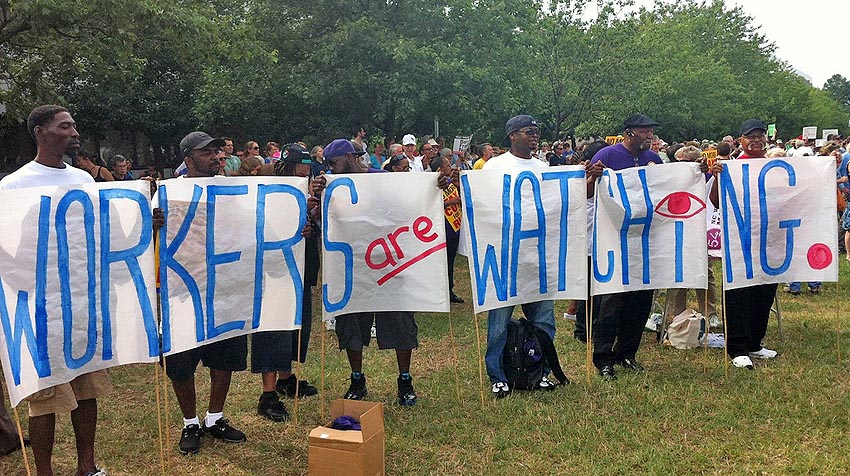
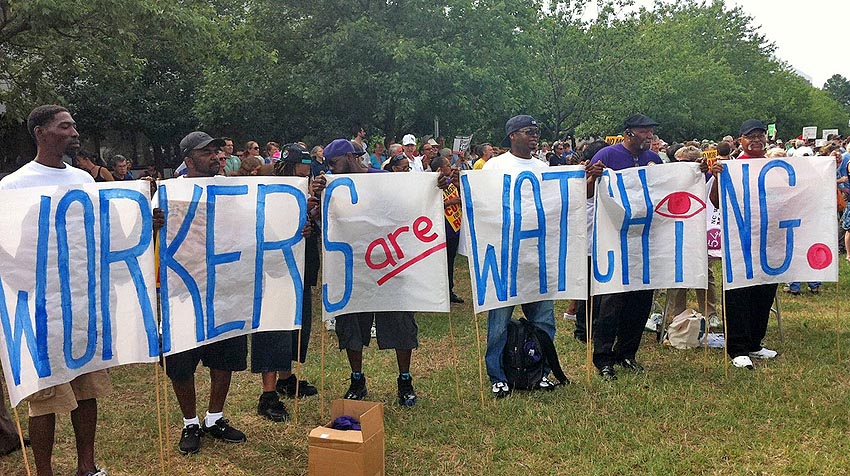
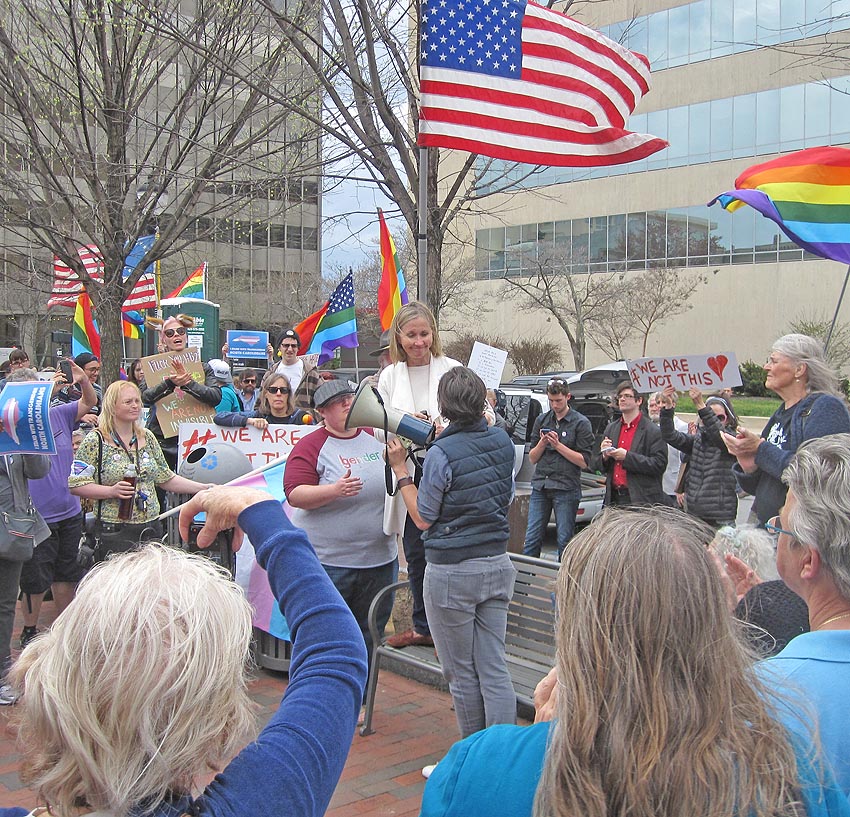
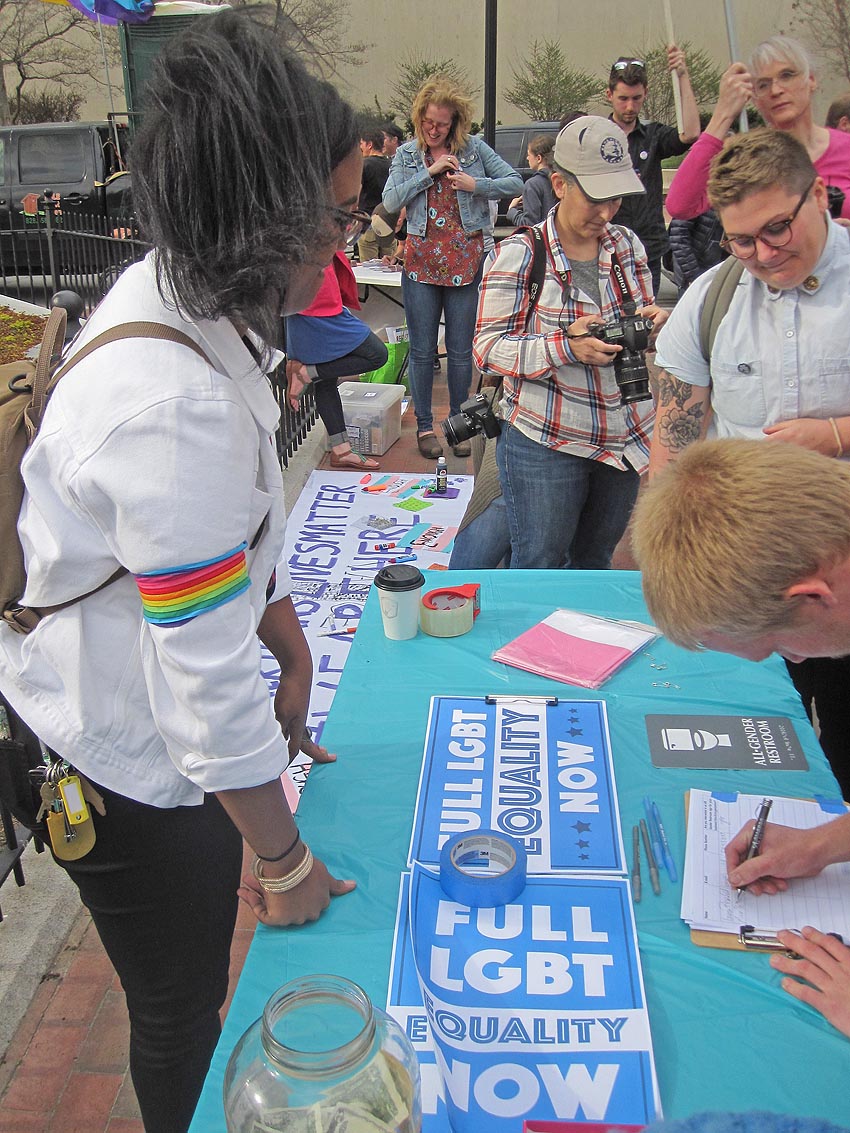
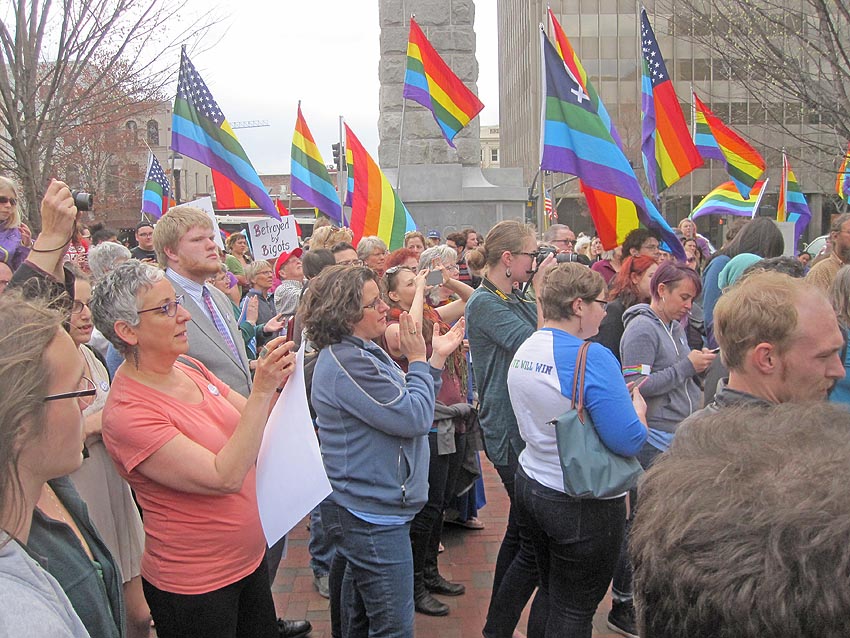
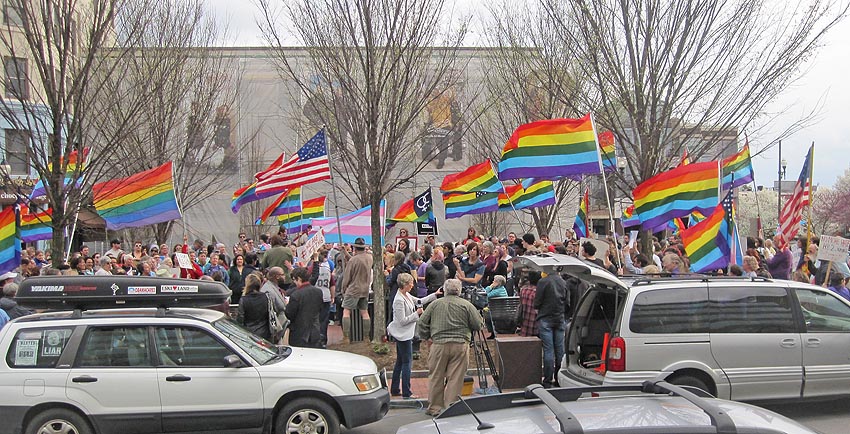
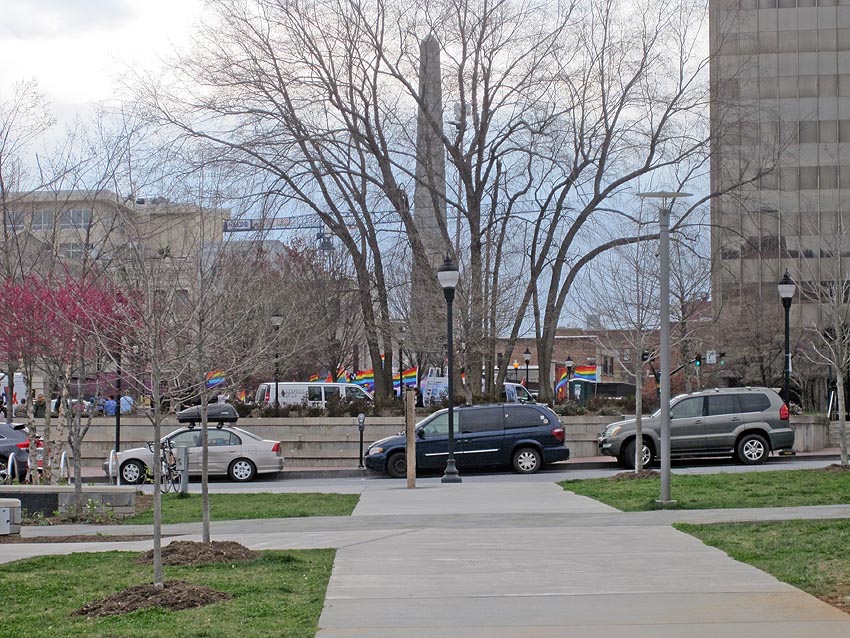
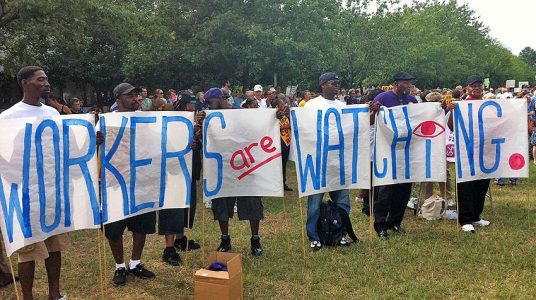
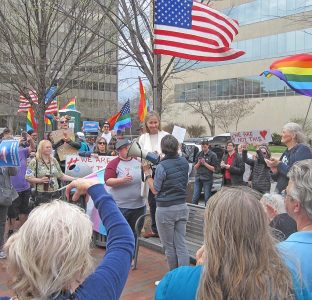
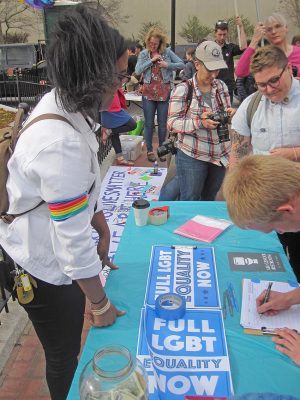
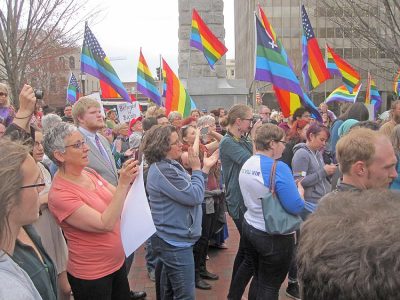
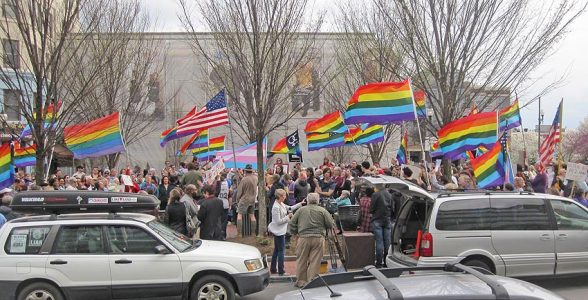
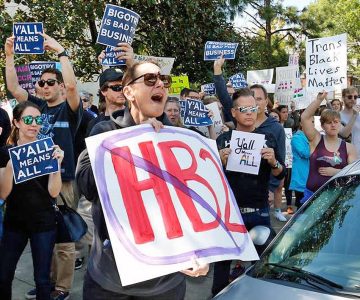
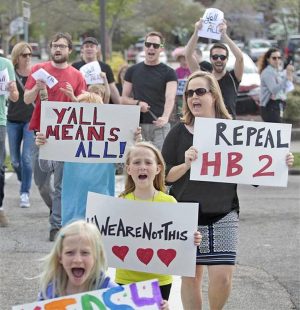
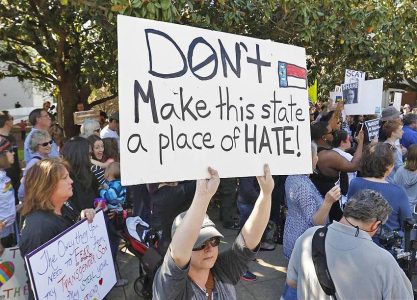
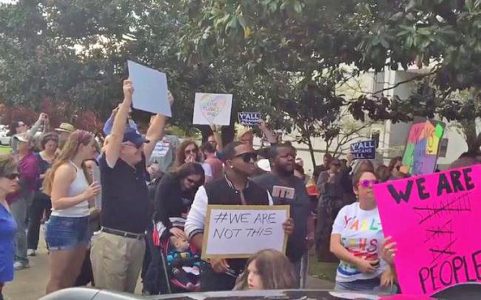
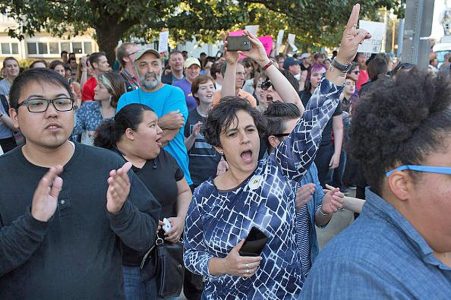
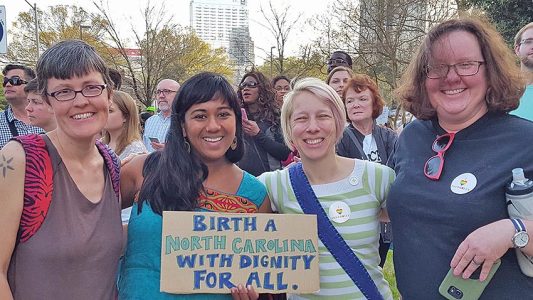
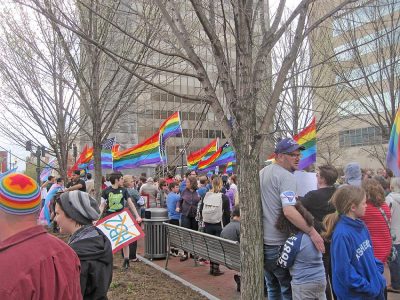
A large crowd gathered at Pack Square on March 24, 2016 in protest against the recently passed HB-2, the legislation passed the day before in a one-day special session ostensibly to overturn Charlotte’s recently enacted protections for transsexual individuals.
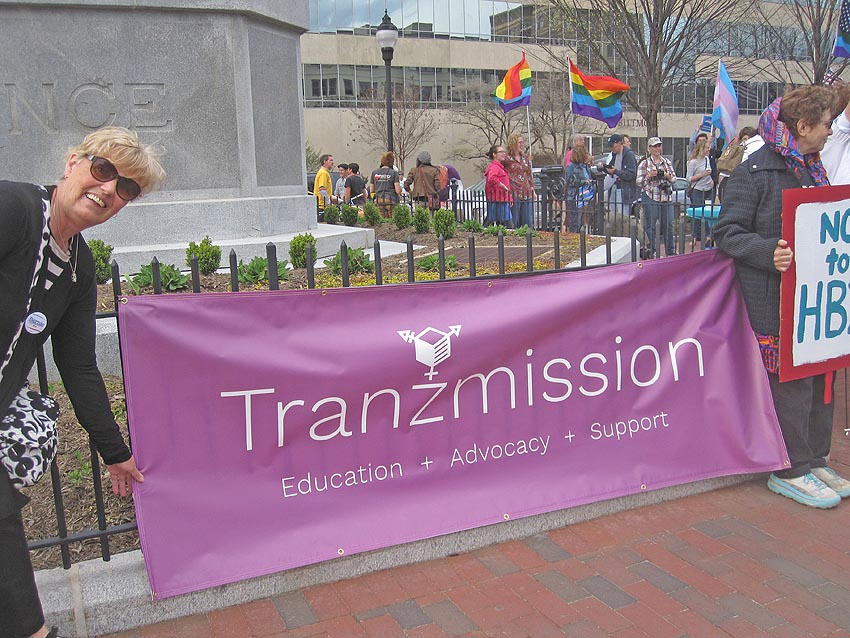
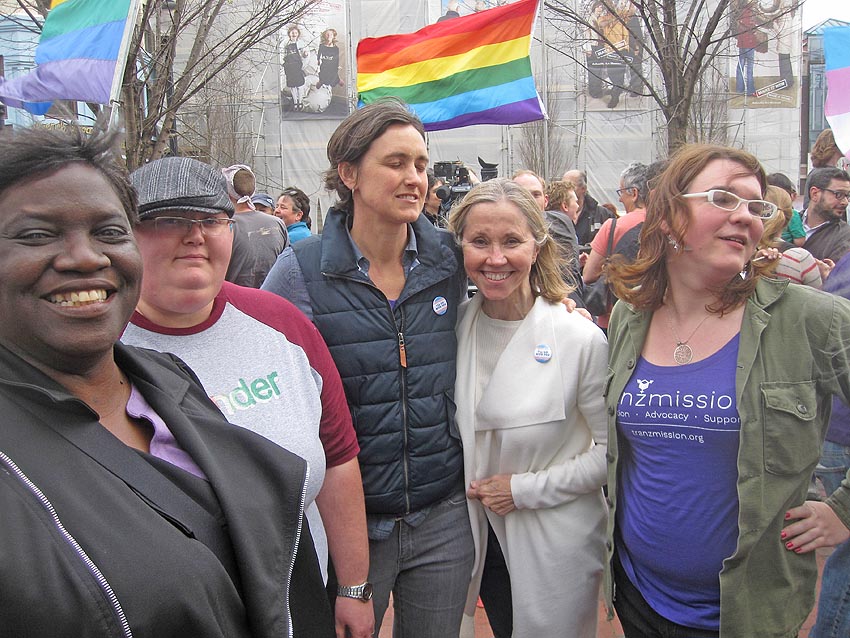
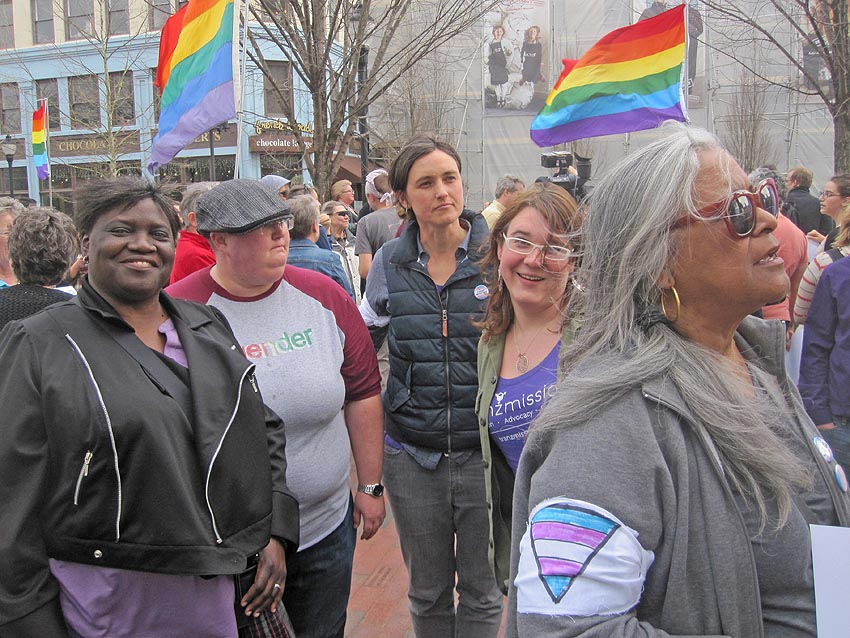
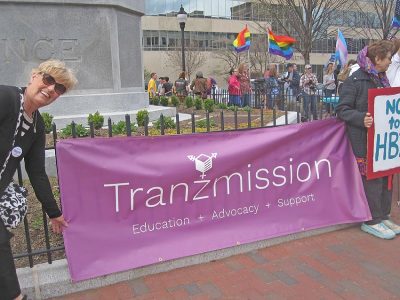
The protest was called by leaders of many of Asheville and Buncombe County’s civil rights organizations, including the Campaign for Southern Equality (CSE), a national pro-GLBT-rights group headquartered in Asheville and led by Buncombe County Commission candidate Rev. Jasmine Beach-Ferrara; the Asheville-Buncombe Branch NAACP; and Tranzmission, which espouses equality for the transgendered community.
Beach-Ferrara, who won the Democratic nomination for the 1st District commission seat in the March 15 primary, faces no opposition in November, and therefore is almost guaranteed to become the Buncombe County’s first lesbian or gay commissioner. In brief remarks she addressed both the success of the CSE movement and the not-unexpected pushback at the state level—not only in North Carolina but in a number of other states, not all of them in the South.
“The fight is not over, and it will be difficult, but we will win,” she declared, acknowledging that “it will be a long struggle” given the determination and resources of the opponents of equality.

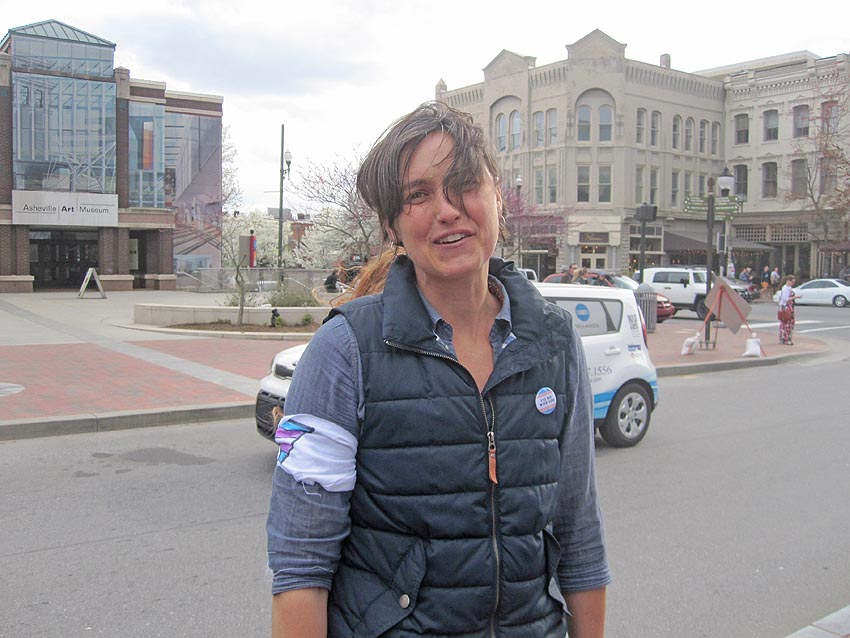
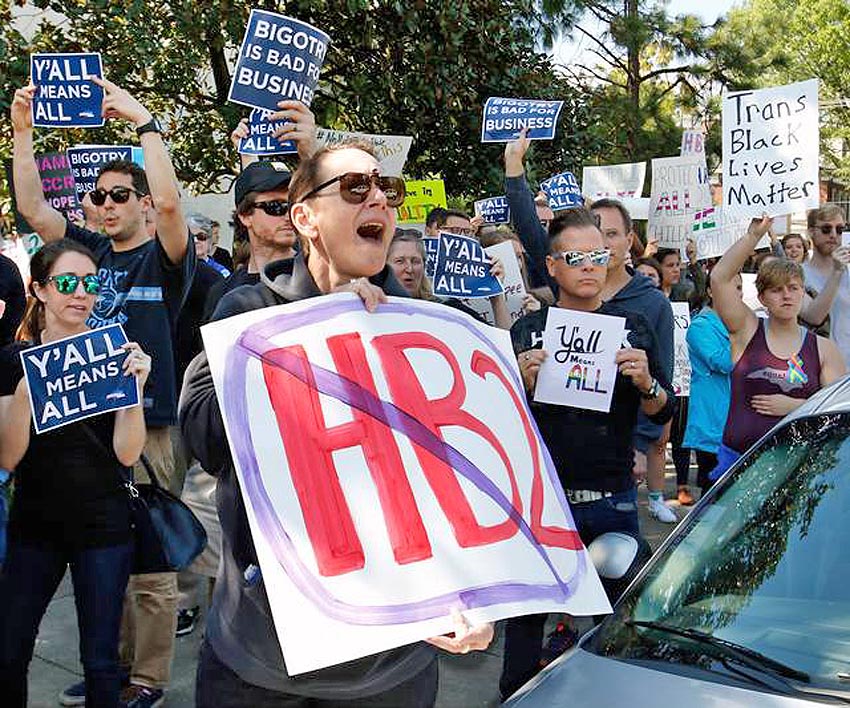
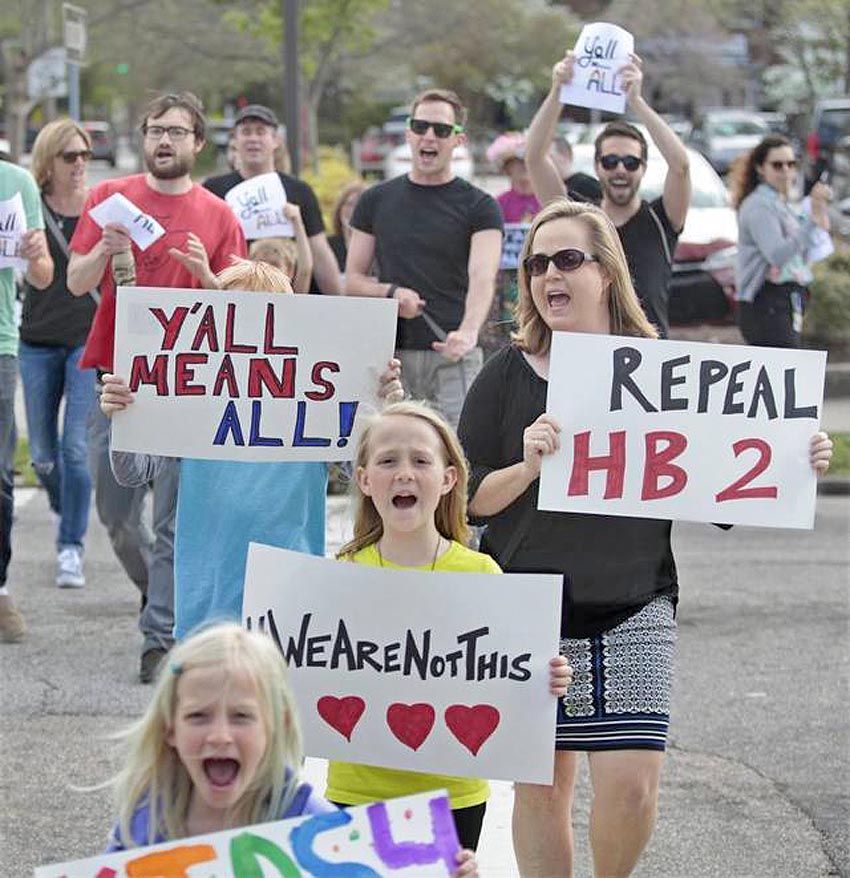
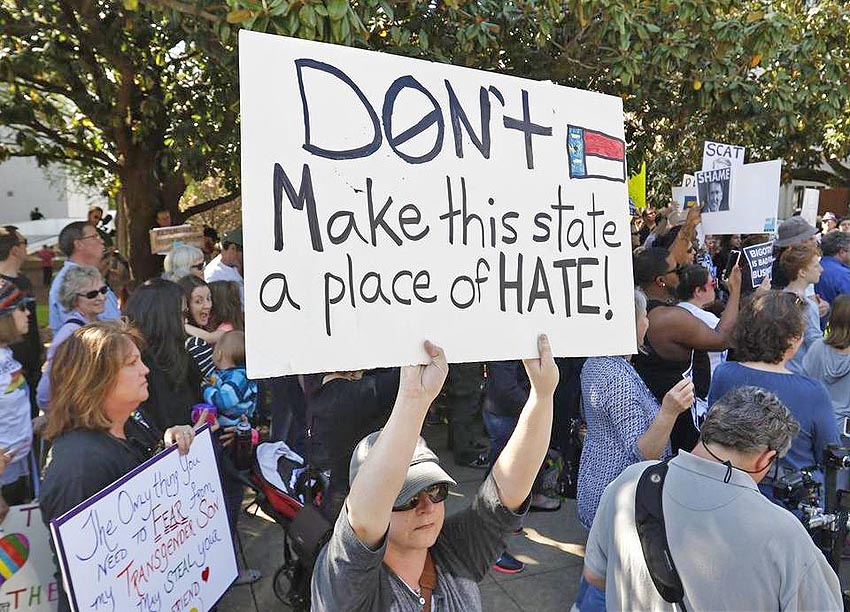
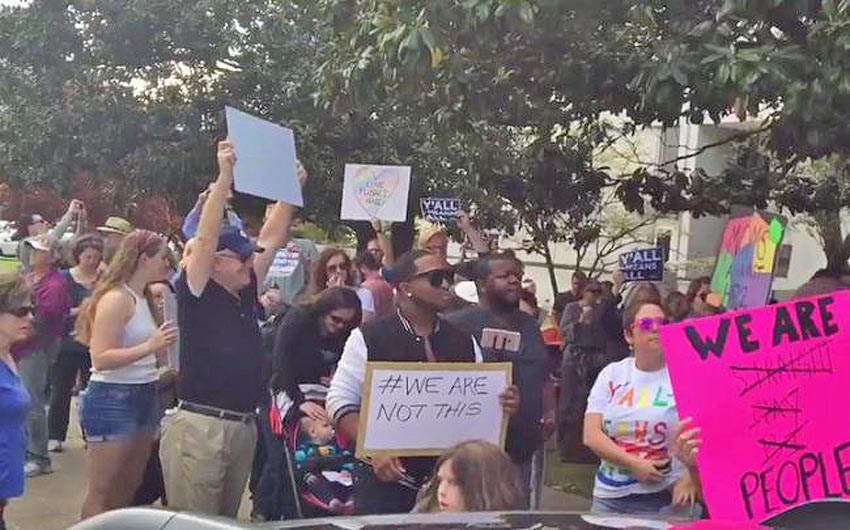
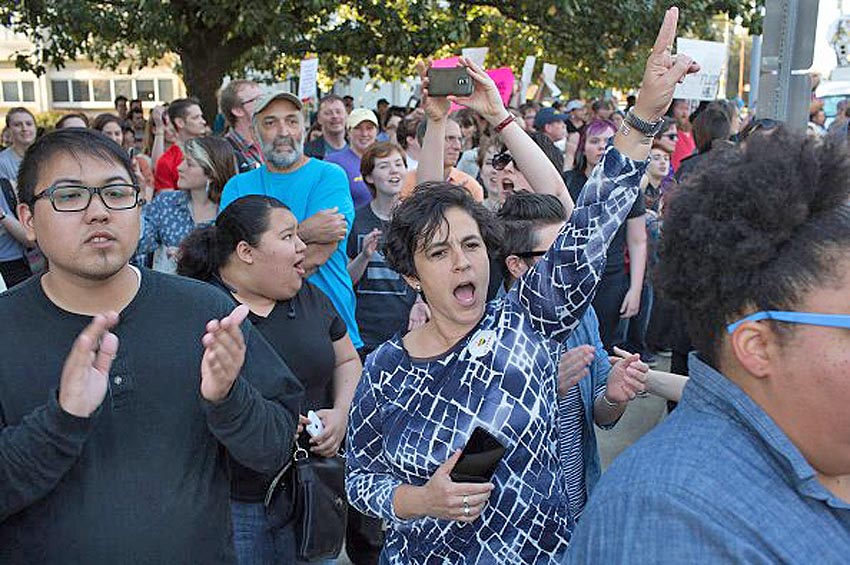
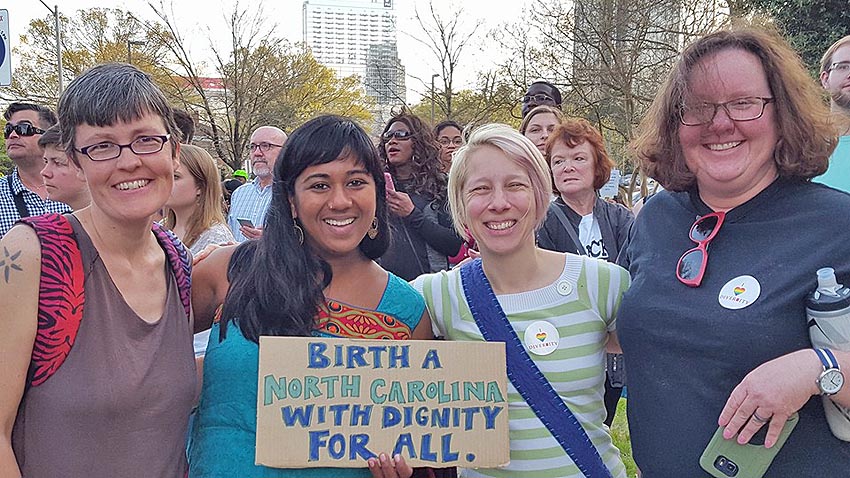
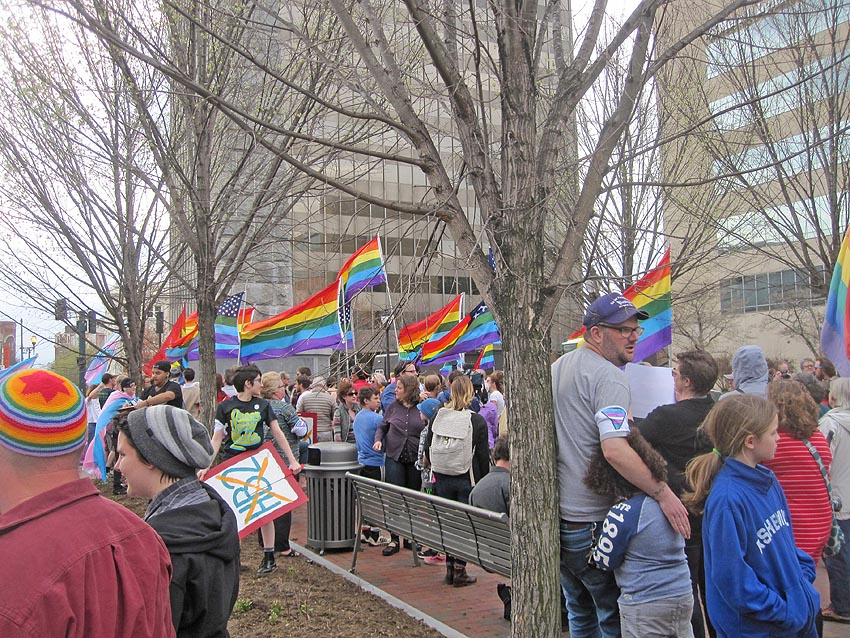
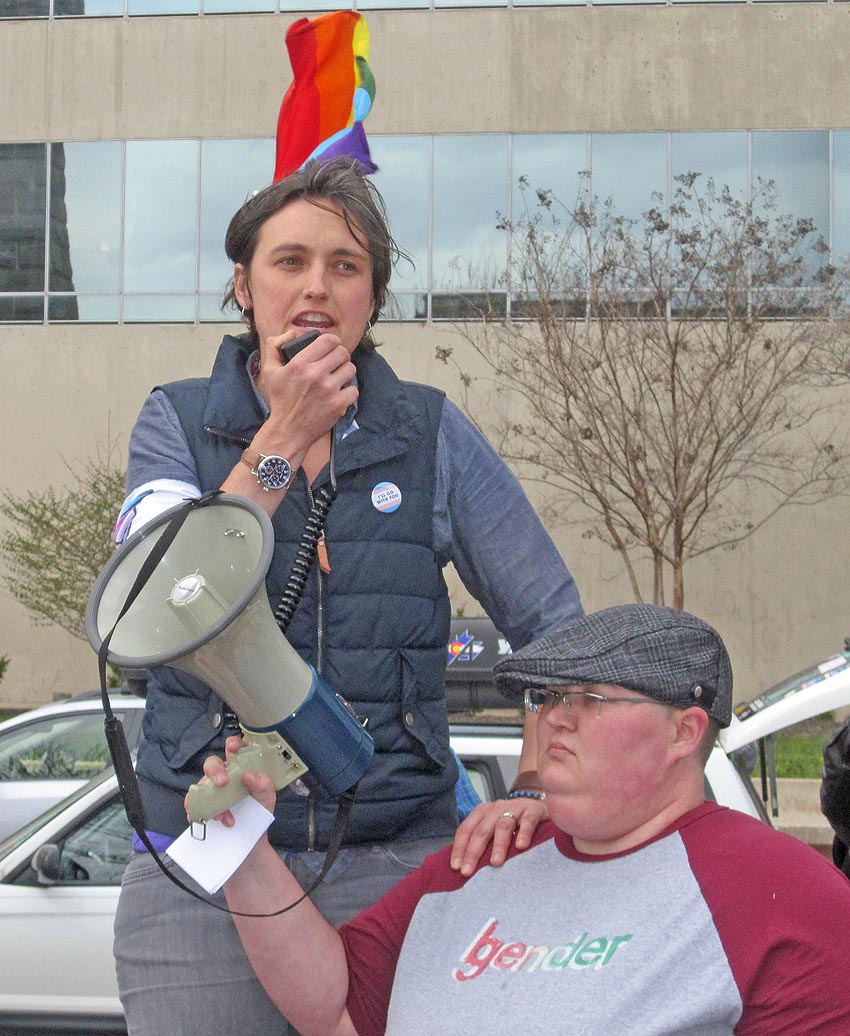
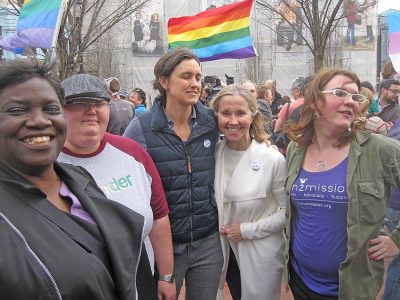
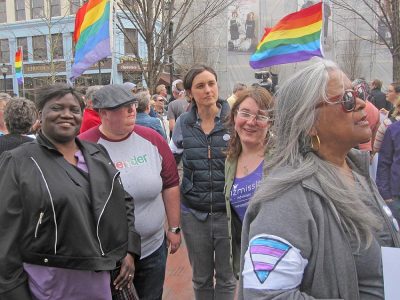
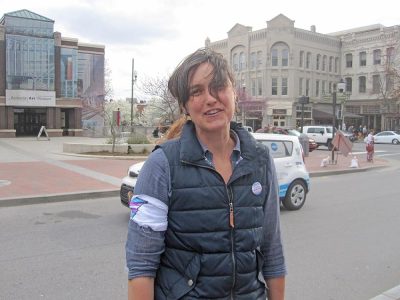
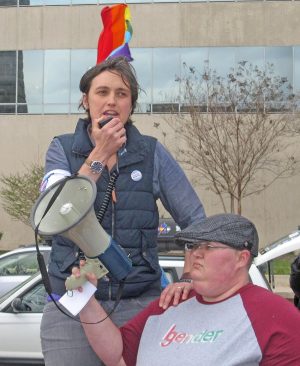
Asheville diva Kat Williams, who sang for the crowd, also spoke briefly about her own recent experience with bias, when the Bishop of the Catholic Diocese of Charlotte cancelled her appearance as a guest star at a fundraiser planned to benefit the Diocese’s Gala for Hope, its program to fight poverty and support families in the Asheville area and Western North Carolina region. Though Williams had headlined the event for two years in a row and introduced her partner last year, Bishop John Jugis asserted that the fact that she had previously been married (legally) to a woman made her persona non grata.
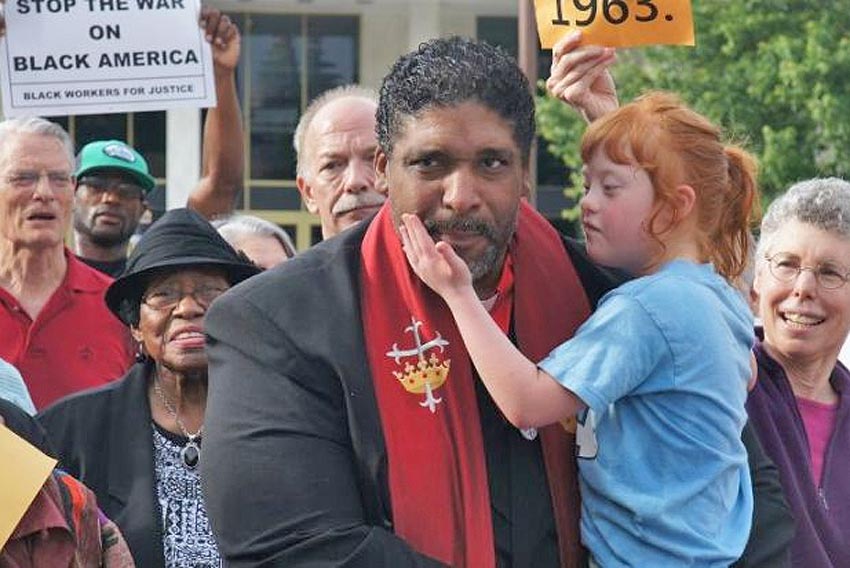
They were joined by Asheville-Buncombe County NAACP president Carmen Ramos-Kennedy, who praised the diverse coalition gathered and urged them to continue to work together, not just out of necessity but because there is strength in diversity that should be celebrated.
Also speaking was State Senator Terry Van Duyn, one of the 30 senators (the entire Democratic caucus) who had stood and walked out of the legislative chamber when HB-2 was to come up for a vote the night before. Her call to repeal the entire bill—not just “tweak” it as a few Republicans have suggested they might be willing to consider—was tempered by her acknowledgement that as long as the legislature includes super-majorities in both houses, even a Democratic governor elected next year would be relatively powerless to change the law. She encouraged the crowd to help ensure that a minimum of five state Senate seats and four House seats change from Republican to Democratic in order to end the ability to override a gubernatorial veto.
Broadly based “Right to discriminate law”
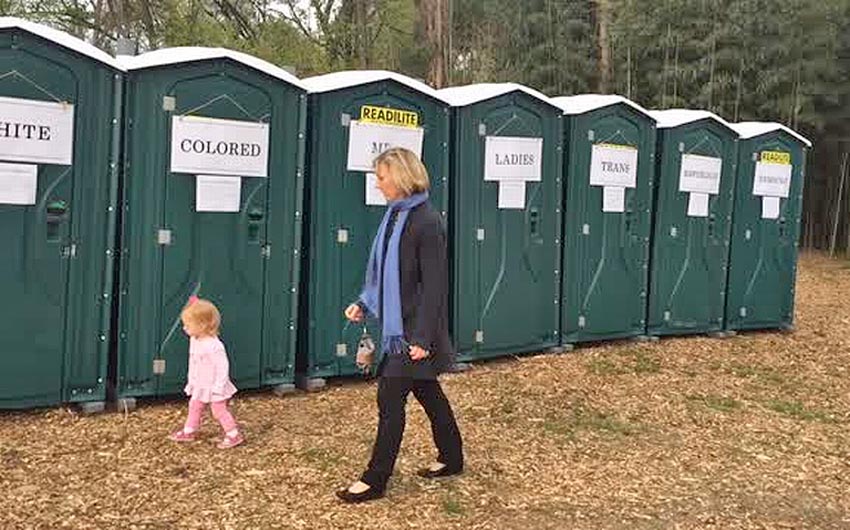
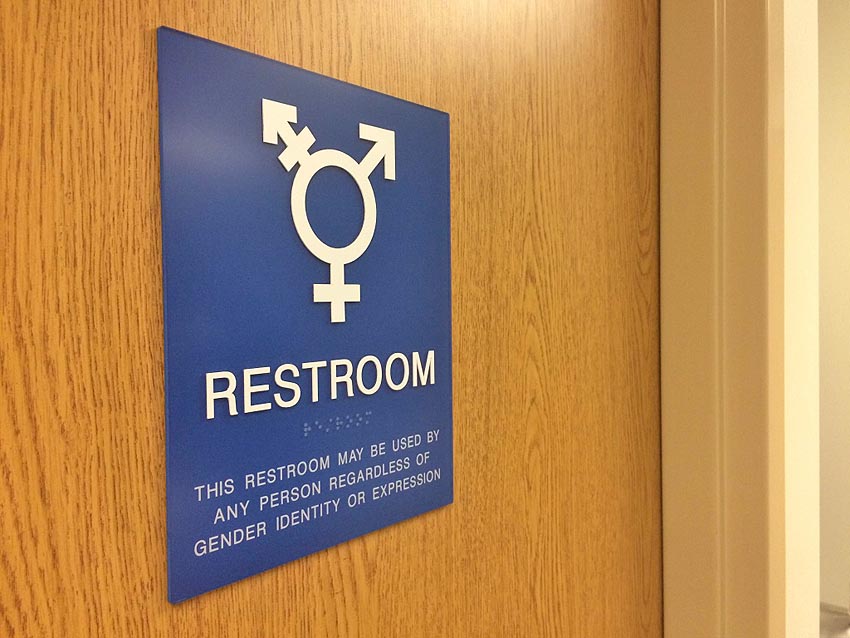
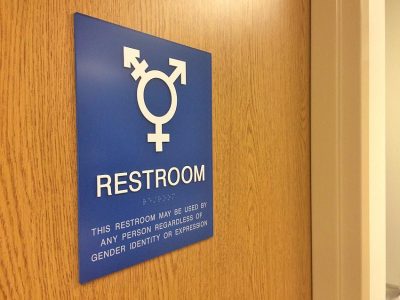
In part the diverse coalition represented much of the coalition of those who will be negatively affected by the new statute. Though referred to by many news organizations and commentators as the “Bathroom bill,” the legislation, as detailed in Nelda Holder’s column in this issue (see p. ???), goes far beyond simply addressing the Charlotte law.
HB-2 is in fact a broadly based anti-gay and anti-worker statute that overturns every North Carolina city, town, or county ordinance protecting GLBT citizens from discrimination; keeps cities and counties from ensuring that their residents are paid more than the $7.25 per hour federal minimum wage, regardless of local cost of living and other conditions; and eliminates NC citizens’ right to go to state court for succor if their grievances are based on claims of discrimination in employment, housing, public access, education opportunities, or other areas in which determined bigots may claim the right to refuse it.
While they may still sue in federal court, with its shorter statute of limitations and higher costs, North Carolina citizens have been stripped of an avenue to pursue justice based not just on anti-LGBT bias, but race-, sex-, or age-based discrimination as well, and opens the door for blatant discrimination based on “sincerely held religious beliefs.”
HB-2 is, fundamentally, a “strip the citizens of their civil rights” law to the maximum extent possible without directly challenging U.S. Constitutional guarantees.
Coalition to work together
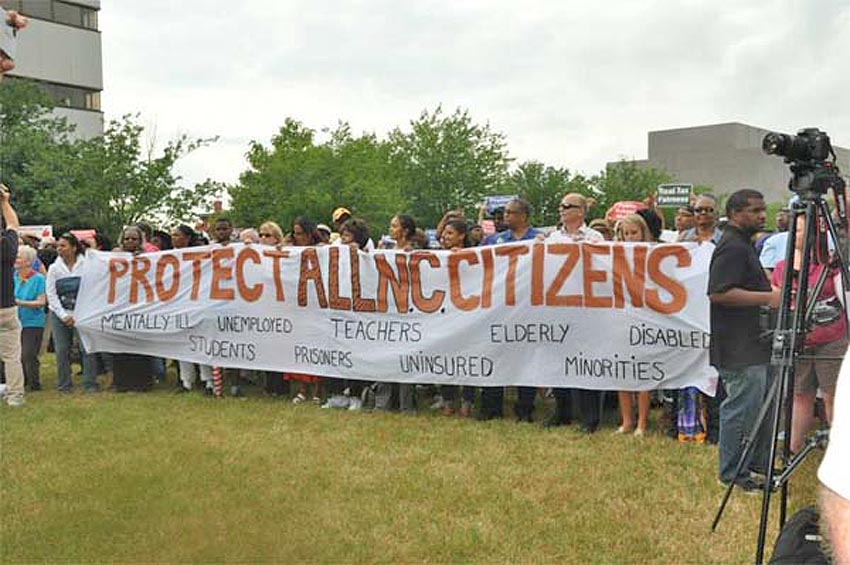
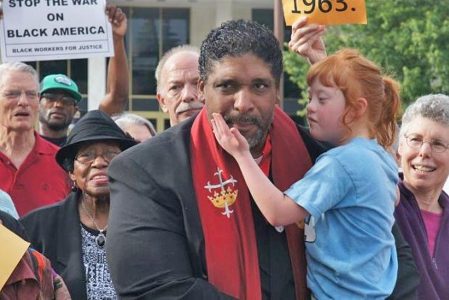
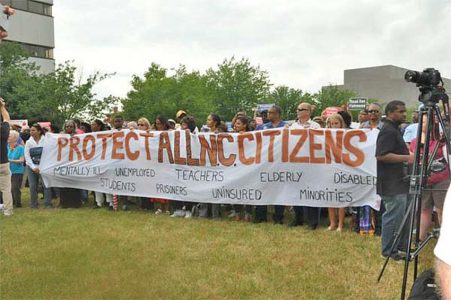
By joining the forces of LGBT citizens, African Americans and Hispanics and other minorities, people of faith who truly support “the least of these,” labor and working people – especially in such low-paying industries as tourism, food service, construction, and landscaping – the groups protesting HB2 hope to pursue their goals using the pattern laid down by the NC-NAACP in its Moral Mondays and HKonJ demonstrations, and historically by other successful civil rights movements.