Growing Divide in Healthcare Access
ACA rollbacks hit hardest in Republican-led states.

As the Affordable Care Act (ACA) faces renewed rollbacks, a predictable trend is emerging: Republican-led states are bearing the brunt of the impact.
Despite years of political opposition to the ACA (Obamacare), many of these GOP-led states now find themselves grappling with the consequences of scaling back federal healthcare support—especially for low-income residents who rely on Medicaid expansion and ACA subsidies.
Recent proposals to reduce ACA funding include eliminating enhanced tax credits and imposing per capita caps on Medicaid. These changes would limit federal contributions “per enrollee,” forcing states to either cut coverage or increase their own spending to maintain current levels. The result? Millions of Americans—particularly in red states—face rising premiums or the loss of coverage altogether.
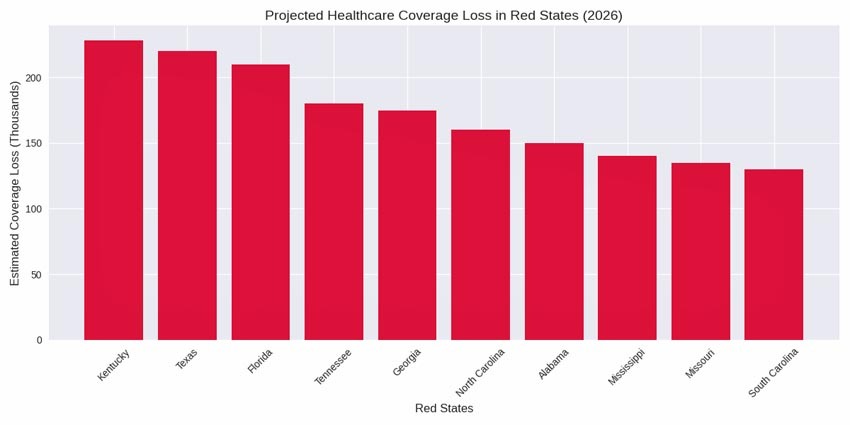
The expiration of Covid-era subsidies and tightened eligibility rules are compounding the problem. Premiums for ACA enrollees could rise by as much as 75%, and estimates suggest that from 4 million to 10 million people may lose coverage, including legal immigrants and those unable to meet new paperwork requirements.
Why Republican States Are Feeling the Pinch
Many Republican-led states opted into ACA Medicaid expansion, extending coverage to low-income adults up to 138% of the federal poverty level. These states now face higher costs and reduced federal support, making it harder to sustain coverage without significant budget adjustments.
Rural communities and small-business owners—common demographics in red states—are especially vulnerable. In Georgia, Rep. Marjorie Taylor Greene warned that premiums for families in her district could double, forcing them to choose between rent and insurance.
The rollback is creating friction within the GOP. Some Republicans, like Greene, are breaking ranks to support extending subsidies due to “the real-world impact” on their constituents. Insurance commissioners from both red and blue states have unanimously urged Congress to extend the subsidies, warning of chaos during open enrollment and a spike in uninsured Americans.
Analysts caution that Republican lawmakers who once praised ACA expansion may face backlash if coverage is reduced, especially in states where ACA benefits are popular. The political calculus is shifting, as healthcare access becomes a kitchen-table issue for millions of voters.
The Road Ahead
As the ACA continues to evolve, the divide between states that embraced its provisions and those that resisted them is becoming more pronounced. With millions at risk of losing healthcare coverage and premiums on the rise, the debate over healthcare reform is far from over—and its consequences are being felt most acutely in places that once opposed it.