Blacks and Strokes
 By Cash Michaels –
Knowing what to watch for and what to do can save a life.
According to the US Dept. of Health and Human Services’ Office of Minority Health, African Americans are 50% more likely to have a stroke, or “brain attack,” than whites. African American men are 70% more likely than whites to die from stroke. And Black women are twice as likely to have a stroke than white women.
The North Carolina Stroke Association concurs, adding that the majority of strokes are preventable, but you have to know the risk factors and be willing to make the necessary changes to your lifestyle. The risk factors include obesity and being overweight, hypertension (high blood pressure), high cholesterol, and cigarette smoking.
Stroke, though treatable, is the third leading cause of death and disability in North Carolina, which is considered part of the 12-state “Stroke Belt.” The state has one of the highest stroke death rates in the nation—sixth highest among 50 states.
Health disparities abound
Those are the plain, unvarnished facts about Blacks and strokes in the US and North Carolina. But it’s not everything we should know.
Strokes tend to occur earlier in life for Blacks than they do for whites, leaving more of a disability. One factor is the prevalence of high blood pressure in the African American community: one in three Blacks suffers from hypertension.
Another stroke factor shared by many in the African American community is the prevalence of diabetes, which puts African Americans at greater risk of a stroke. Add to that being overweight. And, as indicated before, smoking doubles the risk of a stroke.
New research from the Dept. of Neurology at New York City’s Cedars-Sinai Hospital suggests that the stress of racism could be another factor in explaining the wide disparity in strokes between Blacks and whites.
“The body responds to stress by releasing hormones that trigger a “fight-or-flight” response, raising heart rate, breathing rate, and blood pressure,” according to Dr. Jennifer Harris, a Cedars-Sinai neurologist. “The response also elevates the level of infection-fighting white blood cells and blood levels of a protein called albumin, among other inflammatory and endocrine biomarkers.
“In a short-term dangerous situation, this could be advantageous,” Harris says. “But if the stress on the body is chronic, coming from social stressors, research shows that it can lead to disease.”
Another threat
And now there’s news of a new stroke threat. Last October, the American Academy of Neurology published a study revealing an increase in the rate of a type of stroke in older people and men, especially African American men, called subarachnoid hemorrhage.
“A subarachnoid hemorrhage is when bleeding occurs, usually from a burst blood vessel, in the space between the brain and the membrane that covers it. This type of stroke can be caused by a rupture of an aneurysm, high blood pressure, or trauma,” according to the study published in the October 26, 2022, edition of Neurology.
These strokes are increasing, and they’re proving to be deadly, the study found. They comprise 5% to 10% of strokes in older men and women, middle-aged men, and disproportionately in Black people.
Again, researchers point to the risk factors commonly associated with African Americans.
Preventative resolutions
So now that the holidays are over, and a new year has begun, most health specialists say it is time to gradually change eating and health habits to head off the prospect of having a debilitating stroke that could paralyze you, and negatively change your life.
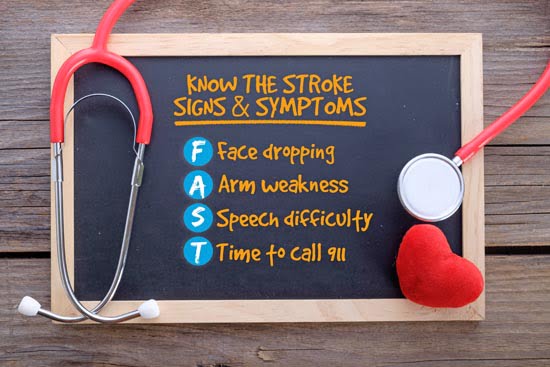
If any of the risk factors above pertain to you and your lifestyle, doctors say you should learn about the symptoms of stroke, and how to deal with them quickly, in order to minimize further damage to your body.
Pay attention to a rapid deterioration in neurological function, numbness, or weakness on one side of your body or loss of language. If any of these symptoms occur, call 911 immediately.
Seeing your doctor, and working to control diet, weight, and blood pressure are key, in addition to controlling stress, say researchers.
Remember, the vast majority of strokes are preventable, and knowing the symptoms of stroke and seeking immediate treatment is key.
Take hold of your life, no matter your age, this year.