Creating Your Go Bag & Home Emergency Kit
Each member of the household will need a go-bag stocked with necessities.
EEVS Neighborhood Assoc. Emergency Preparedness Team –
Go-Bag
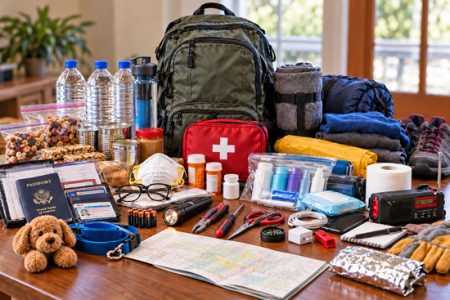
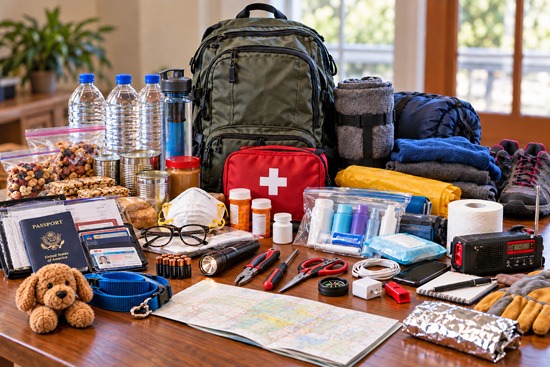
This should contain a portable individual evacuation supply 1) for immediate evacuation if you must leave home, and 2) for a 3-day minimum period with survival material for one person.
You’ll need a go-bag for each member of the household. Go-Bags should include:
Water: 3-day supply for one person (1 gallon per person per day; portable bottles, portable filter)
Food: lightweight, non-perishables like energy bars, trail mix, nuts, dried fruit, electrolyte packets
Medical: medications, prescriptions, glasses, contact lenses, immunization cards, first-aid kit, dust mask(s)
Documents: driver’s license, passport, marriage/birth certificates, auto registrations, insurance policies and title, power of attorney and will, list of emergency phone numbers, household effects inventory
Money: cash, credit/debit cards, safe deposit keys
Communication: cell phone, chargers & cords, battery or hand crank radio, paper/pencil, whistle
Comfort: sturdy shoes, warm layer, rain poncho, toiletries, toilet paper, feminine hygiene products, moist towelettes, hand sanitizer, emergency blanket
Tools: flashlight, multi-tool, compass & paper maps
Other: toys/cards/games, pet leash and carrier
Home Emergency Kit
You also should keep a large, comprehensive stash to sustain your household without utilities if you lose power, lights, water, gas, phone or cellphone service, or access to safe locations. You will use this to shelter in place when leaving is impossible, unsafe, or unnecessary.
Your home emergency kit should contain a two-week supply of food, water, and household needs.
Water: 2-week supply for household (1 gallon per person per day; bulk water, purification filter)
Food: ready-to-eat canned meat, fruits, veggies and manual can opener; MREs, bars, cereal, nut butter, dried fruit, canned juices, non-perishable pasteurized milk, food for special dietary needs, paper cups/plates/towels, disposable utensils
Medical: large first-aid medical supplies
Documents: comprehensive records
Communication: NOAA emergency weather radio
Comfort: sleeping bag or warm blanket for each person, sleeping pads
Tools: portable stove, fire extinguisher, matches in a waterproof container, plastic sheeting, scissors and duct tape, wrench or pliers to turn off utilities, large trash bags, flashlight, batteries (AAA, AA, D, and 9-volt), paper towels, gloves, marker, paper/pen.