The President’s Plan to Extend the Middle-Class Tax Cuts
 Impact for North Carolina
White House Press
“We should not hold the middle-class hostage while we debate tax cuts for the wealthy. We should at least do what we agree on, and that’s to keep middle-class taxes low. And I’ll bring everyone in to sign it right away so we can give folks some certainty before the holiday season.”
~ President Obama, November 14, 2012

President Obama is committed to growing our economy from the middle out by creating jobs and reducing the deficit in a balanced way. That’s how you build a strong and secure middleclass.
Since taking office, President Obama has repeatedly cut taxes for middle-class families to help them to make ends meet. A typical family making $50,000 a year has received tax cuts totaling at least $3,600 over the past four years. Now we face a deadline that requires action on jobs, taxes and deficits by the end of the year.
On January 1, income taxes are scheduled to go up for 3.3 million middle-class North Carolina families, and tax cuts such as the expanded Child Tax Credit, the 10 percent tax bracket, marriage penalty relief, and the American Opportunity Tax Credit all expire.
If Congress fails to act, every American family’s taxes will automatically increase – including the 99% of North Carolina families who make less than $250,000 a year and the 97% of American small businesses that earn less than $250,000 a year.
A median-income North Carolina family of four (earning $63,700) could see its income taxes rise by $2,200. Additionally, if taxes increase on the middle-class then families will have less money in their pockets. That would have an adverse effect on consumer spending, which is 70% of America’s economy.
A report released by the National Economic Council and Council of Economic Advisers estimated consumer spending would fall $200 billion nationwide next year, including $5.8 billion in North Carolina.
If Congress fails to act, retailers from big chains to mom-and-pop small businesses would be affected — which is why even the CEOs of Walmart and Costco have called for a balanced approach that protects the middle-class.
The president believes we must take a balanced approach to reduce our deficit; that’s why he has laid out a balanced $4 trillion deficit reduction plan.
On top of the $1.7 trillion in bipartisan spending cuts he already signed (including $1 trillion the Budget Control Act and additional savings through other legislation), the president’s plan cuts entitlement spending by $600 billion while protecting the investments we need to grow the economy and asking the wealthy to pay a little more. In fact, there are about $2 of spending cuts for every $1 in revenue in the Obama plan.
This is an important moment not just to avoid the fiscal cliff—but to lay the foundation for an economy that will support a healthy middle-class, restore economic certainty, and lead to longterm job growth. Asking millionaires and billionaires to pay their fair share is an essential component of the president’s plan for balanced deficit reduction.
Watch the Video
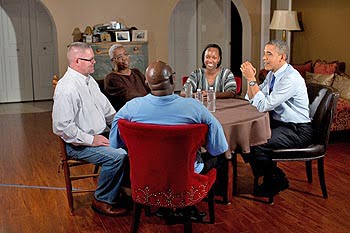
President Obama visits the home of a family who spoke out about how they would be affected by a tax hike next year if Congress fails to extend tax cuts for 98 percent of Americans.
Over the next decade, the president’s plan will save $850 billion relative to continuing the additional tax cuts that go exclusively to households making over $250,000, or almost $1 trillion when taking into account the cost of cuts to the estate tax.
The Senate has passed this bill and the president is ready to sign it. The House should pass it immediately.
While the president is determined to work with Congress to reach a compromise, there is no reason to delay acting where everyone agrees: extending tax cuts for the middle-class.
There is no reason to hold North Carolina’s middle-class hostage while we debate tax cuts for the wealthy; or roughly 1 percent of North Carolina families.
The Stakes for North Carolina’s Middle-Class Families
If the House of Representatives fails to extend the middle-class tax cuts:
• 3.3 million middle-class North Carolina families will see their federal income taxes increase.
• A typical median-income North Carolina family of four (earning $63,700) could see its income taxes rise by $2,200 as a result of losing the combination of the expanded child credit, marriage penalty relief, and the 10 percent bracket.
• North Carolina families will receive a smaller Child Tax Credit, and 1,193,000 of low- and moderate-income working families with children in North Carolina will lose access to the Child Tax Credit altogether, costing them an average $1,010 a year.
• 300,000 middle-class North Carolina families will no longer get help paying for college from the American Opportunity Tax Credit.
• North Carolina small businesses will be able to claim immediate tax deductions for only $25,000, rather than $250,000, of new investment.
The President’s Plan
Under the president’s plan, the 99% of North Carolina families with incomes of less than $250,000 per year would continue to benefit in full from the income tax cuts expiring at the end of 2012:
• Lower tax rates on up to $250,000 of income ($200,000 for single filers).
• The doubling of the Child Tax Credit to $1,000 per child and extension of the credit to working North Carolina families that previously could not benefit from it.
• The American Opportunity Tax Credit, which provides as much as $10,000 of help over four years – the equivalent of a 30% discount on tuition at a typical state university – and thousands of dollars more help with college expenses than many North Carolina families could have received from pre-existing tax credits.
• The 10% tax bracket, which will provide middle-class North Carolina couples with a tax cut of up to $890 next year.
• Expansions to the Earned Income Tax Credit, which gives millions of working families the break they need.
• Marriage penalty relief, which reduces or eliminates marriage penalties for nearly 38 million couples nationwide.
Under the president’s plan, the income tax rates for high-income households would return to what they were under President Clinton, when the economy created nearly 23 million new jobs – including 633,900 new private sector jobs in North Carolina – we went from deficit to surplus, and businesses and investors did very well.