Before Rosa Parks, There Was Sarah Louise Keys Randolph
On September 11, 2021, a group of scholars, students, and filmmakers met in the home of historian Tim Pigford near the historic Keysville AME Zion Church.
By Earl James for NCBPA –
On September 11, 2021, a group of scholars, students, and filmmakers met in the home of historian Tim Pigford near the historic Keysville AME Zion Church.
The church was the first in Washington, NC, incorporated in 1782 in Beaufort County. The purpose was to document and film a significant part of our American history and heritage. A collaboration between the North Carolina Museum of History, the College of William and Mary, and Elizabeth City State University has been formed to help tell the story of the honorable Sarah Louise Keys (Randolph), a key figure in helping to dismantle Jim Crow segregation in transportation in the South.
Goals of the collaboration include interviewing Ms. Randolph to produce an oral history and primary source of her story, as well as identifying additional primary sources like artifacts, documents, and photographs related to that history. The most factual history always derives from the closest source. There is no other source closer than Ms. Sarah Keys Randolph, who can tell the story of integrating interstate travel in the United States.
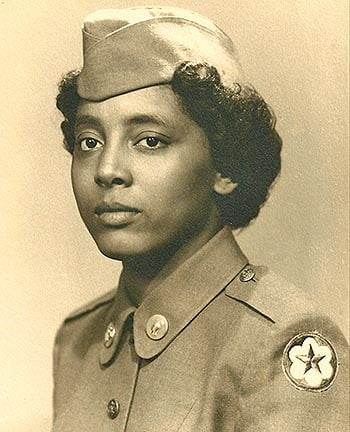
Sarah Keys was born in 1929, during the height of Jim Crow segregation in Clark’s Neck, near Washington, NC. Ms. Keys gained a stout Beaufort County education, and the family attended the historic Keysville AME Zion Church, founded in 1880 in the same community that bears its name. Upon graduation, Keys joined the United States Women’s Army Corps (WAC) in 1947. After basic training at Ft. Lee, VA., Pvt. Sarah Keys received permanent assignment at the United States Army base hospital in Ft. Dix, NJ.
Having earned her first leave from duty in August 1952, Pvt. Keys returned South to North Carolina from New Jersey dressed in full military uniform. When the Carolina Coach Company bus crossed the state line from Virginia into Halifax County, North Carolina, the bus driver ordered Pvt. Keys to move to the back of the bus to make a seat available for a White Marine. With her sound education and awareness from her family, Sarah Keys did not move. because she knew about the 1946 United States Supreme Court case, Morgan v. Virginia, which outlawed segregation on interstate highway travel.
Keys was arrested, jailed, and fined $25 for violating segregation laws in North Carolina. After her release from Halifax County Jail, Sarah Keys was encouraged by her father to return there and file a lawsuit against the bus company. The resulting court case, Keys v. Carolina Coach Company (1955), was the first time that the Federal Interstate Commerce Commission ruled against the “separate but equal” segregation doctrine from the 1896 Plessy v. Ferguson case that helped establish Jim Crow discrimination. The Keys ruling was issued just a few weeks before the heroism of Rosa Parks and the 1955 Montgomery, Alabama Bus Boycott. Thank you, Ms. Sarah Louis Keys Randolph, for helping to make America a “more perfect union!”
An objective of the collaboration between Elizabeth City State University, the College of William and Mary, and the story of Ms. Sarah Keys Randolph is to produce a documentary film to debut at the 2022 African American Cultural Celebration at the North Carolina Museum of History.