Gene Rainey: A Life of Learning, Teaching, Helping Those in Need
by Moe White
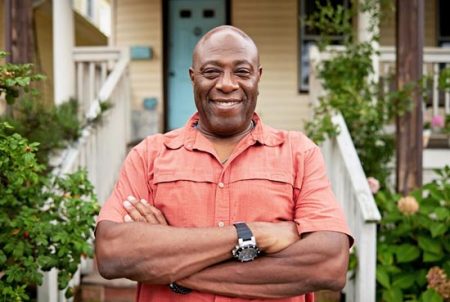
Whether one calls him Dr. Rainey (he has a PhD), Rev. Rainey (he trained to be a minister of the Church of Christ), Chairman Rainey (he chaired the Buncombe County Board of Commissioners from 1988 to 1996), or just plain Gene, Gene Rainey is always recognized as a serious man who has spent his life undertaking important business.
As a young man he earned two bachelors degrees, a BA in Political Science (1957) from George Washington University, Washington, D.C. and a BS in Public Affairs (1958) from Harding University in Searcy, Arkansas. Two years later he had his MA in International Relations from the renowned Fletcher School of Law and Diplomacy at Tufts University, and in 1966 was awarded his PhD in International Relations from American University in Washington. He had also attended the School of Foreign Service at Georgetown University from 1954 to 1957.
Like many leaders before him, teaching has been both a career and a
way of life. As an instructor, professor, dean, department chair, and
professor emeritus, at Universities in Ohio, Washington, DC, and
Asheville; as chair of Asheville’s Model Cities Commission, Land of the
Sky Regional Council (1994-96), and in other civic roles; and as an
elected official for Asheville (City Council, 1975-79) and Buncombe
County (1988-96), he has always led by teaching.
For his professional and civic leadership over many years of
community service, Rainey has been honored with the Governor’s Order of
the Long Leaf Pine (the state’s highest honor), the Distinguished
Senior Professor Award at UNC-Asheville, and the Land of the Sky
Regional Council Campbell Award.
As important as these awards that honor his civic involvement
are, however, he is viewed by many in the Asheville community as a true
leader and mentor in improving black-white relationships. The MLK
Association of Asheville and Buncombe County has given him its Martin
Luther King, Jr. Award, and the Asheville-Buncombe County Community
Relations Council presented him with its Award for Leadership. In many
ways, that focus on community culminated in the nonprofit organization,
Our Next Generation, which he founded in 1996.
“When I was still in the Courthouse,” Rainey says, “business
owners on Patton Avenue came to me to talk about the Cruising Clubs.
Police had tried to organize activities for them at Sams Club parking
lot, but that hadn’t been very successful. So I met with the leaders of
the clubs at Denny’s and asked them what were the problems they needed
us to address.
“They told me there were two problems: they needed a place where
gangs aren’t around, and they needed jobs.” Rainey explains that even
then Asheville had a dozen or more gangs with a total of 200 members.
And in earlier years there had been four community youth centers around
the city, one in the basement of the Thomas Wolfe Auditorium, where he
witnessed youngsters of all races mixing together and where young
people could gather safely. But over time funding disappeared for them,
and by 1996 there were no youth centers left.
So that year Rainey decided not to run for a third term as
Commission chairman; instead he founded Our Next Generation, a
nonprofit corporation to establish youth centers and youth-run
businesses.
Between 1996 and 2008, when it shut its doors, that’s just what
the organization did. Starting with an infusion of Federal funds
(“earmarked” by former Rep. Charles Taylor), ONG trained at least 60
at-risk youth in a variety of building trades – carpentry, plumbing,
etc. – and bought, rehabilitated, and resold a dozen houses around
Buncombe County. The program was meeting two important goals: providing
affordable housing to whoever needed it, and teaching useful skills to
those who needed them most.
And it was self-sustaining. Though similar in some ways to
programs like Youthbuild that rehab publicly owned housing, usually in
center cities, ONG rehabilitated homes all over Buncombe County and
sold them at a profit (though they were still affordable to people of
modest means). That combination of nonprofit philosophy and pure
capitalism (product + added value = profit) was both a key to Our Next
Generation’s success and an integral part of its training. Some
participants went on to study in more advanced programs, such as AB
Tech’s construction program and, in one case, the business program at
Appalachian State.
Our Next Generation also established one youth center, in Black
Mountain, to help meet the other need articulated by the Cruising Club
leaders.
When Dr. Rainey and his wife began Our Next Generation, it was
the fourth organization in the area that focused on maintaining and
increasing affordable housing stock. When they retired (due to health
problems), only Mountain Housing Opportunities and Habitat for Humanity
remained. But he emphasizes that the need is still there, both for
housing, training programs, and youth centers.
Rainey also notes that as a father himself he feels strongly
about the need for every father in the community to reach beyond the
concerns of immediate family and think about the ongoing issues in
Asheville. “There are about 150 homeless young people here, most of
them dropouts from small towns around Western North Carolina. They stay
homeless an average of two years, and when they come back into the
‘real world,’ they bring attitudes that enrich us all. They’re very
anti-violence, anti-war – they’re often preyed on by gangs. Every
father should be concerned about their problems.
“We should be concerned about the gang activity. All along
Patton Avenue on Sunday mornings you find syringes, beer cans, and
condoms – because when the Cruisers drive by the gangs are on the side
of the road selling drugs, alcohol, and their women. Fathers need to be
concerned about that.”
Gene and Dorma Rainey have been married since 1958; they have two
grown children – Cheryl, who earned a PhD at Vanderbilt University, and
Eric, a JD from University of Illinois Law School.
Gene is the author of two books – Contemporary American Foreign
Policy: The Official Voice (1969) and Patterns of American Foreign
Policy (1975) – and has completed the draft of his History of World
Politics.
From 1999 to 2000 he chaired the Buncombe County Juvenile
Crime Prevention Council, and in 1972 was also one of the founders of
Meals on Wheels in Asheville and Buncombe County.