Bill to Build Out National Skills-Training System
Congressmen Evans and Edwards have introduced the LEON Act, designed to build pathways out of poverty and solve our long-term labor shortage.

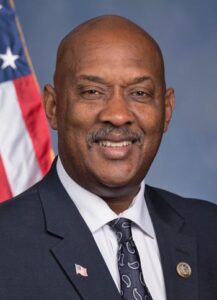
Congressmen Dwight Evans (D-PA-3) and Chuck Edwards (R-NC-11) introduced the Leveraging Educational Opportunity Networks (LEON) Act to build pathways out of poverty and solve the nation’s structural, long-term labor shortage.
Under the bill, the US Department of Labor would provide competitive grants to organizations that partner with local employers to provide no-cost professional certification training to workers for living-wage jobs in construction, disaster recovery, manufacturing, and more.
Work to Be Done, Not Enough Workers
“Too many families—in Pennsylvania’s 3rd District and across the country—have been shut out from employment opportunities that offer them a pathway to the middle class,” said Evans. “The LEON Act would help build a national career technical education system that would break down barriers and prepare low-income people with the skills that employers need.”
“Western North Carolina is still recovering from the devastating effects of Hurricane Helene last fall, and recovery is going to take years. This is in part because we have a shortage of qualified construction workers to help us rebuild,” said Edwards. “The LEON Act would enable us to quickly train the workers we need to help us build stronger, more resilient communities and economies.”
Employers need millions of skilled people. As of April 2023, there were more than 10 million job openings and only 5.7 million people looking for work. At the same time, changes in economic mobility have made it considerably harder for many Americans to get ahead. The LEON Act builds pathways out of poverty into living-wage jobs while solving a structural, long-term labor shortage.
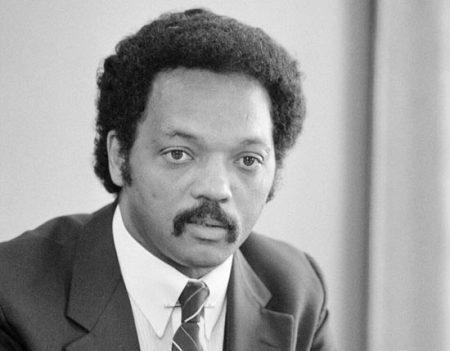
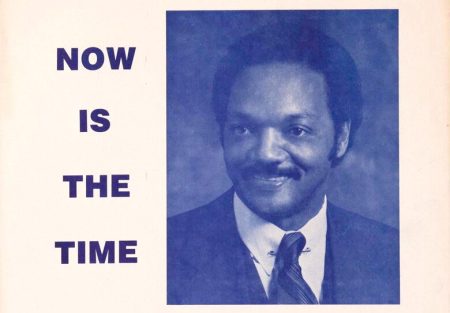
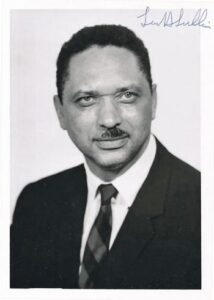
The bill is named for Rev. Dr. Leon H. Sullivan (1922–2001), a pioneering social activist, civil rights leader, and Baptist minister whose reach spanned the globe. He was the first African American to sit on a Fortune 500 board (General Motors); wrote the Sullivan Principles, which helped bring down apartheid in South Africa; and in 1964 founded Opportunities Industrialization Centers (OIC) of America and OIC International, providing job training for millions of people globally.
One of those affiliates, Asheville Buncombe Community Christian Ministry, is a leading faith-based nonprofit organization addressing poverty, hunger, homelessness, and access to healthcare for underserved populations across North Carolina.
“The LEON Act is an opportunity to future-proof tomorrow’s workforce by preparing adults for jobs that provide a pathway to the middle class,” said Louis J. King II, OIC of America’s president and CEO. “With no-cost training, we can transform lives, stabilize and strengthen communities, and address our national labor shortage. In doing so, we create a stronger America.”
Money to Train 100,00 Workers
The LEON Act would authorize $150 million in competitive federal grants over five years to train 100,000 workers a year. The money would be aimed at accredited, nonprofit, post-secondary educational institutions providing training at no out-of-pocket cost to students.
The bill has bipartisan cosponsors because urban, suburban, and rural communities in every state are facing the same poverty challenges, as well as the same labor shortages that generate a need for more skilled workers.
The districts represented by cosponsors Edwards and Evans have virtually the same median household income. Edwards’s district is largely rural and 82% white; Evans’s district is entirely urban and more than 50% Black. But the challenges faced by both districts—along with so many other communities around the country—are strikingly similar.
About OIC of America
OIC of America is a national nonprofit with more than 60 years’ experience building economic power for people. Strategically located in the hearts of forgotten places, OICA transforms the lives of individuals and strengthens communities through meaningful participation in today’s economy. OICA’s 40+ affiliates and partners support communities in more than 20 states. Learn more at oicofamerica.org.