They Came, They Voted, They Left

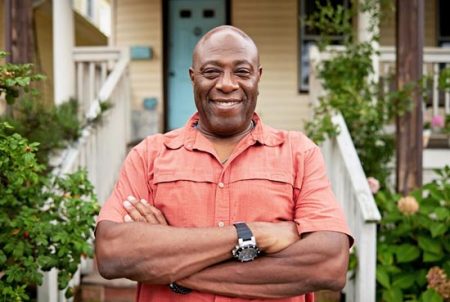
Photo: Tim Barnwell
Legislative News by Nelda Holder –
The North Carolina General Assembly got itself together again in Raleigh for a quick two days (September 2 and 3) to approve a spending plan for the remaining Coronavirus funding, make a handful of appointments to various bodies, and—wait, what’s this one? Championship NC Act? A bill approving $18 million for the purpose of recruiting a “sports championship employer”?
At the time of this writing, no prospective employer has been named, but indications are that an announcement is imminent. The funding would come in the form of state grants through an economic development incentive program over a course of five years. The bill’s stated purpose is to bring a sports championship employer to the state, “increasing the number of jobs and research opportunities in the state and increasing the number of championship-level events occurring here. “
According to the bill (HB 807), the business candidate would have to invest at least $100 million in private funds and employ at least 100 new employees. A sports championship candidate would need to invest at least $5 million in private funds (completed no later than December 31, 2023) and must produce a total economic benefit for the state of at least $800 million over the term of the agreement. Other specific details follow in the bill, so the project is obviously “known” to certain legislators. The rest of us will have to wait.
Coronavirus (partial) relief
The Republican-controlled Legislature saw fit to agree with the governor for school enrollment funding and investments in high-speed internet access as well as disaster relief in the state through the $1 billion HB 1105 (Coronavirus Relief Act 3.0). But despite the ravages of COVID-19, this group refused yet one more time to expand Medicaid in the state and thereby offer medical coverage to roughly half a million people now without it. The leadership and the governor also disagreed on rental assistance and utilities relief as proposed by Cooper, as well as support for small businesses and pay for educators.
“I don’t agree with every provision,” the governor said post-adjournment. “But the funding for pandemic support in this budget is critical and must move forward.”
The 52-page budget bill also made provisions for the utilization of federal relief funds and disaster recovery. The long list of projects and recipients includes $5 million to the State Board of Elections to aid considerations for voting during the COVID-19 crisis; emergency loans to assist small businesses; earthquake and other disaster recovery funding; and additional funding for the state’s voucher program (Opportunity Scholarship Grant Program), even though current funding is not tapped out.
The lengthy list of allocations also includes emergency support for milk producers and farmers market operators; support for the state’s cultural, scientific, and historical attractions; extra funding for children in foster care; support for food banks and health services, and more.
Buncombe County’s representatives voted as follows on the funding bill: In favor, Rep. John Ager (D), Rep. Brian Turner (D), Sen. Chuck Edwards (R); against, Rep. Susan Fisher (D), Sen. Terry Van Duyn (D).
In her September 4 newsletter, Fisher explain her opposition vote as stemming from what she felt were “the many opportunities we missed” in the bill, calling out “millions … diverted away from COVID-19 relief to legislative leaders and their key allies,” and the lack of input from “the public, Democratic legislators, or Governor Cooper” because the bill was drafted by a few GOP leaders. Fisher charged that missing items include Medicaid expansion to increase health care access, jobs, and infrastructure. Also missing, she notes, are “pay increases or bonuses for teachers and public school employees,” as well as assistance to small businesses and “fixing the long-term problem that NC’s unemployment system is the worst in the country.”
Leandro funding plan signed by judge
North Carolina’s now legendary Leandro case, a landmark decision made in 2002 regarding the provision of a “sound basic education” under the state’s constitution, has remained under the court’s oversight regarding implementation. In January 2020, a consent order required the state and the state’s Board of Education to develop a plan of action, with an estimated cost for achievement set at an additional $6.8 billion over the next 8 years. Billion. That would come close to a billion dollars per year (technically, $850 million) to bring the state’s children into a form of educational equity, in the opinion of the court.
In the ongoing saga of this monumental case, a consent order was signed on September 1 by Judge David Lee, requiring an additional $426.9 million in state funds. The first compliance report in the case is due to be issued in mid-December, to be followed by quarterly updates. Beginning in January, discussions of the long-term phase of this court-ordered correction to the education system will begin.
The nearly $427 million allocation would be for the first phase of an eight-year plan. According to a synopsis by Public Schools First NC, much of the money (roughly $237 million) this year would pay for teacher raises; other allocations would go for early childhood education expansion and better funding for at-risk students.
The “Joint Report to the Court on Sound Basic Education for All: Fiscal Year 2021 Action Plan for North Carolina,” which sets forth the continuing denial of the court’s demand for each of the state’s children, is available through Public Schools First NC.
Fear not! Go forth and vote! (Even if it’s from home!)
In the great hullabaloo over voting during “COVID,” specifically having to do with absentee ballots and their mailing prognosis, take comfort. The NC State Board of Elections is operating with a nifty game plan regarding absentee ballots. This year, those mail-in ballots will be tabulated basically as they arrive; they will not be held until after Election Day on November 3. So, unlike many states, this one will have a pretty clear idea on November 4 just who the winners are in all contests. (Note: The absentee ballot count will not be made available until after the polls are closed.)
Here are some basics as we enter voting season:
Voter Registration: You may check your voter registration online or by calling the Buncombe County Elections Services at (828) 250-4209. You must be registered by 5 p.m. on October 9 to vote on November 3.
Absentee Ballot: Instructions for obtaining an absentee ballot are available at Election Services website, or call (828) 250-4200. Return your absentee ballot as soon as possible by first-class mail.
Return absentee ballots in person: You may also deliver your absentee ballot by hand to the Elections office at 77 McDowell St. in Asheville (corner of Choctaw). A dedicated drop-off area for returning absentee ballots has been set up in the parking lot; follow the signs to the side of the building and an absentee specialist will come out to assist you. The drop off will be open through Election Day (Nov. 3), and is staffed Monday through Friday from 8 a.m.-5 p.m.
Whether returned by mail or by hand, you will be able to verify its receipt online through the State Board’s Voter Search Tool. (Remember that if you have voted absentee by mail, you should not attempt to also vote in person—that’s illegal!)
Early Voting (in person): Early voting will be available at a number of sites around Buncombe County from October 15 straight through to October 31. Locations and hours (which vary by days) are available on the Election Services website or by phone (250-4200).
Election Day Voting on November 3: If you wait to vote on Election Day, go to your precinct voting location between 6:30 am and 7:30 pm to cast your ballot.
Sample Ballots: Sample ballots for this all-important presidential, gubernatorial, legislative, state supervisory and judicial, and county election are available from Elections Services by calling 250-4200 or downloading through the SBOE website.
Nelda Holder is the author of The Thirteenth Juror – Ferguson: A Personal Look at the Grand Jury Transcripts.