U.S. House Passes Bill Supporting Triple-Digit Predatory Lending

By Charlene Crowell –
The U.S. House of Representatives broke the hearts of a broad and diverse coalition of advocates after members of Congress passed pro-predatory lending legislation on February 14.
HR 3299, titled the “Protecting Consumers’ Access to Credit Act,” passed the House on a 245-171 floor vote. The bill would override state laws in the majority of states, including the 15 states and the District of Columbia where state interest rate limits prevent payday lending.
“Small-government” advocates would preempt state laws
If passed in the Senate and signed into law by President Donald Trump, the measure will preempt state interest rate caps that now limit the annual percentage rates (APRs) on loans to no more than 36 percent. These rate caps now save consumers an estimated $2.2 billion in fees every year.
Additionally, the bill would also allow high-cost installment loans. Currently 34 states cap interest rates on a $2,000, two-year installment loan at no more than 36%; if the bill is enacted into law, consumers will pay far higher costs.
Republican Congressman Patrick McHenry, who represents much of Buncombe County, co-sponsored the bill with Representative Greg Meeks (R-NY). McHenry insists that the measure “marks an important step towards modernizing our financial system and ensuring financial inclusion for all Americans.”
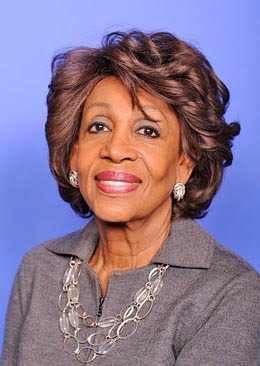
But Representative Maxine Waters (D-CA), ranking member of the House Financial Services Committee, offered a vastly different take. “H.R. 3299 would go much further to allow other third parties, including payday lenders, to evade or outright disregard state-level laws, and collect debt from borrowers at unreasonably high rates of interest if they purchase loans from a national bank. These arrangements are called ‘rent-a-bank’ or ‘rent-a-charter’ agreements,” she said, “and they allow payday lenders to use banks as a front for predatory behavior and the evasion of state interest rate caps.”
More than 150 organizations including consumer advocates, civil rights, and faith organizations across the country, as well as 20 state attorneys general, agree with Waters’s assessment. They remain determined to preserve the ability of their respective jurisdictions to protect consumers by enforcing existing rate caps that were enacted by voter referendum or state legislation.
Another assertion by the bill’s proponents was also strongly refuted.
Bill benefits only predatory lenders
“The claim that this bill will help underserved urban and rural areas by expanding access to credit is false,” said Scott Astrada, Federal Advocacy Director at the Center for Responsible Lending (CRL). “The reality is that it will expand unchecked predatory lending and allow lenders to make high-cost loans, such as short-term and long-term payday loans and car title loans, at rates that exceed existing state interest rate limits.”
As the measure now moves to the U.S. Senate for further consideration, the upper chamber would be wise to remember that this nation was founded as a democracy—and that its actions would be by, for, and of the people. Any loan that charges triple-digit interest rates costing far more than the actual principal borrowed is predatory and could not be construed to be helping anyone other than the lender.
Similarly, just as mortgage rules require lenders to determine a borrower’s ability to repay a loan before approving an application, so should small-dollar loans. Access to credit is one thing, but triple-digit debt traps are something else.
Predatory lending invariably preys on people with the fewest financial resources and options. Across the country, many black and Hispanic neighborhoods lack full-service grocery stores and banks, but a profusion of predatory lenders always seem to be nearby.
Pay-day loans aimed at poor and minorities
Even more disturbing, an updated CRL report on payday lending in Colorado found that even in affluent communities of color, the likelihood of a nearby payday store is greater than in low-income, predominantly white areas. In 2016, high-cost Colorado payday loans took nearly $50 million in fees alone from customers. In some cases, borrowers took out two or more loans simultaneously from two or more lenders.
“There is good reason more than 200 civil rights, consumer, faith-based, housing, labor, and veterans’ advocacy organizations oppose this bill,” noted Rep. Waters. “The type of credit that this bill helps consumers access is the kind that makes it easier for vulnerable consumers to sink into insurmountable debt—like payday and other high-cost loans.”
Charlene Crowell is the communications deputy director with the Center for Responsible Lending. She can be reached at [email protected].