The Fight to “Keep the Change”
 By Jennifer Floyd –
Asheville has gained a reputation for its food scene.
Zagat, the national restaurant review guide, named the city #7 on its list of “Hottest Food Cities of 2016,” and rave reviews can be found in publications across the nation. The hospitality industry has grown into the city’s second largest employer. So when whispers of changing the way tips are handled started leaking out of Washington late last year, a nervous tension spread through the community of those who rely on the generosity of others.
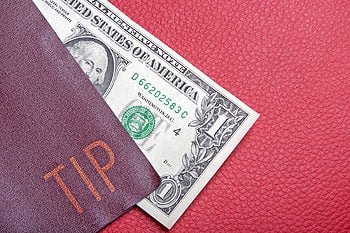
The proposed rule change deals with what is known as tip-pooling, or “tipping out.” Under tip-pooling, tipped employees share a percentage of their tips with other, non-tipped employees. This practice is virtually unknown outside the restaurant industry.
In plain English, it is a subsidy from one employee to another, allowing the restaurant to use those tips as a credit toward the employer’s minimum wage obligation. If you go out to eat at a full-service restaurant, it’s likely that your server will not keep 100% of the tip you add to the bill. And, if you leave no tip, your server may end up paying other employees out of their own pocket.
In 2011 the Obama administration changed the way these pools function, limiting which employees could receive a cut of the tip to those who also receive sub-minimum wages (under $7.25): such as hosts, bussers, and bartenders. Under the Trump administration, however, the Department of Labor is looking to repeal that rule change, allowing employers to distribute the tips to employees who are already paid at or above the standard minimum wage, including cooks and dishwashers. The likely outcome of this will be a reduction in the hourly wage paid by the employer. This is robbing Peter to pay Paul.
The tipped wage in North Carolina is the same as the Federal tipped wage, $2.13 an hour, a figure that hasn’t changed since 1991. At the time the $2.13 wage was set, it was half the standard minimum wage; it is only 29% of today’s $7.25 minimum. This is because, in 1996, the tipped wage standard was separated from the basic minimum wage: when the standard wage is raised, the tipped wage does not automatically follow. The restaurant industry has ensured that the tipped wage has remained stagnant.
According to a 2014 report by the Economic Policy Institute, 18% of tipped-wage workers live in poverty, with almost half of them relying on government assistance to make ends meet. Restaurants lean on our social safety net to beef up their profit margins, much like industry giants such as WalMart. The median wage of tipped workers is $10.22 an hour, compared to the median overall wage of $16.48 an hour.
Tipped employees have recently started raising their voices about such income inequality. If the Department of Labor puts the tip-pooling rule change into effect, that income gap will grow; as an ever-growing service economy, more workers in our city will be impacted.
The restaurant industry as a whole supports this change, but elected representatives who support it are short-sighted. The service industry is one of the fastest-growing industries in the state, so the long-term impact of diluting the spending power of service workers will carry with it significant economic consequences that will bleed into everything from retail to housing.
While the conversation surrounding the concept of tipping rages on, we must ensure that exploitative employees don’t plunge their hands even deeper into the apron pockets of some of the lowest-paid workers in the country.