When It’s Darkness on the Delta
How America’s Richest Soil Became Its Poorest Land.
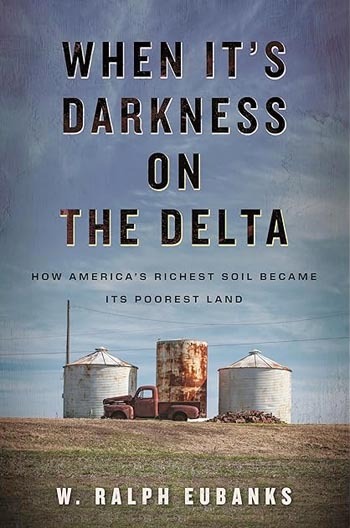 The Mississippi Delta, once a cornerstone of the nation’s agricultural economy, is now more commonly associated with entrenched poverty and decline.
In When It’s Darkness on the Delta: How America’s Richest Soil Became Its Poorest Land, Mississippi native and award-winning writer W. Ralph Eubanks challenges that narrative, arguing that the region’s struggles are not the result of isolation or cultural stagnation, but of deliberate political and economic choices rooted in racism.
Eubanks traces the Delta’s transformation from economic powerhouse to symbol of deprivation, positioning the region as a microcosm of systemic inequality in the United States. Rather than relying on nostalgia or myth, he excavates overlooked histories and examines how policies at the local and federal levels undermined Black landownership, labor protections, and economic mobility.
Central to the book are detailed portraits of figures who shaped—and in some cases sabotaged—the Delta’s future. Eubanks examines the role of segregationist politicians such as Theodore G. Bilbo and William Whittington, Mississippi congressmen who helped block federal assistance and reparations efforts for former sharecroppers during the 1940s and 1950s. Their actions, he argues, entrenched economic disparities that persist today.
Balancing these accounts of political obstruction are stories of resistance and resilience. Eubanks highlights Gloria Carter Dickerson, founder of the Emmett Till Academy, whose parents were key figures in the desegregation of schools in Drew, Mississippi, the community where Till was abducted and murdered in 1955. He also profiles Calvin Head, a longtime community organizer who operates a farming cooperative in Mileston, the state’s only Black resettlement community, helping revive a legacy of collective land ownership and self-determination.
Throughout the book, Eubanks connects past decisions to present-day conditions, showing how generational poverty in the Delta is the outcome of sustained disinvestment rather than inevitable decline. At the same time, he documents grassroots efforts aimed at addressing income inequality and restoring economic agency to local communities.
When It’s Darkness on the Delta offers both a historical reckoning and a forward-looking framework for policy reform and community investment. By centering the voices and experiences of those who have long sustained the region through their labor, Eubanks makes a compelling case for why the Delta’s future depends on confronting its past.