Harlem’s History Finally Reaches the Big Screen
A documentary more than 50 years in the making brings the Harlem Renaissance to life.
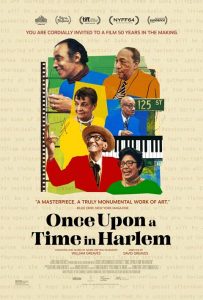 Some films entertain. Some educate. A rare few serve as a bridge between generations.
Once Upon a Time in Harlem belongs in that last category. More than a documentary, it is a time capsule, preserving the voices of Black artists, writers, musicians, and intellectuals whose work helped shape American culture.
The film arrives in theaters more than fifty years after filmmaker William Greaves first picked up a camera to record what he believed was one of the most important moments of his career. Shot during a gathering in 1972 and completed decades later by his son, David Greaves, the documentary captures an extraordinary reunion of figures connected to the Harlem Renaissance, one of the most influential cultural movements in American history.
The Harlem Renaissance emerged in the early 1920s and flourished throughout that decade, centered in Harlem, New York. Black writers, artists, musicians, scholars, and activists created work that transformed American literature, music, visual art, journalism, and political thought. The movement produced some of the most important cultural voices of the twentieth century and helped redefine how Black life, identity, and achievement were represented in the United States.
That history makes the events of 1972 especially significant.
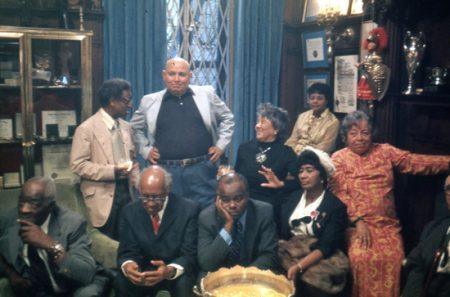
When William Greaves brought together surviving participants of the Harlem Renaissance at Duke Ellington’s Harlem townhouse, he was not assembling historians to discuss a distant era. He was gathering people who had lived it. Many had not seen one another in decades. They came together to remember, debate, laugh, disagree, and reflect on both the triumphs and unfinished work of a movement that had begun roughly fifty years earlier.
Among those appearing in the film are painter Aaron Douglas, artist Romare Bearden, poet Arna Bontemps, photographer James Van Der Zee, historian John Henrik Clarke, journalist Ted Poston, musicians Eubie Blake and Noble Sissle, and many others whose work helped define one of the most influential cultural movements in American history.
The footage remained unfinished for decades. Following William Greaves’ death in 2014, efforts continued to restore and complete the project. His wife and longtime creative partner, Louise Archambault Greaves, worked to preserve the material, while David Greaves, who had been one of the cameramen present during the original filming, eventually guided the documentary to completion.
What makes Once Upon a Time in Harlem so powerful is that it allows us to relive history through the shared stores of those who made it. The film places us inside a room filled with firsthand witnesses to one of America’s greatest cultural movements. Their memories create a vivid portrait of a generation that changed the nation’s artistic landscape.
The film also serves as a reminder that preservation matters. Too often, the achievements and experiences of Black artists and intellectuals have gone undocumented or unappreciated. By capturing these conversations in 1972, William Greaves preserved a priceless cultural record. Now, more than fifty years later, we finally have the opportunity to see it.
Once Upon a Time in Harlem arrives at a moment when questions about memory, representation, and cultural inheritance feel especially urgent. Across the country, we continue to debate how history is remembered, who gets recognized, and what stories are passed forward. This documentary offers a solid lesson: preserve the voices of our finest visionaries while they are still here, and listen carefully to what they have to say.
The Harlem Renaissance helped shape American literature, music, visual art, journalism, and political thought. More than a century after that movement began, this long-awaited documentary gives us the rare opportunity to sit in the company of those who built it.
Filmmaker William Greaves captured a 1972 party he engineered with the living luminaries of the Harlem Renaissance.
For four hours, this extraordinary group—many of whom had not seen each other in fifty years—reminisced, critiqued, argued, laughed, and drank while wrestling with their place in a rapidly shifting cultural landscape.
These artists and intellectuals help us understand how culture has been passed on from one generation to another and the role that the artist plays in keeping it alive.