Go‑Go’s Heartbeat Still Echoes
A story of music, memory, and a city fighting to stay whole.
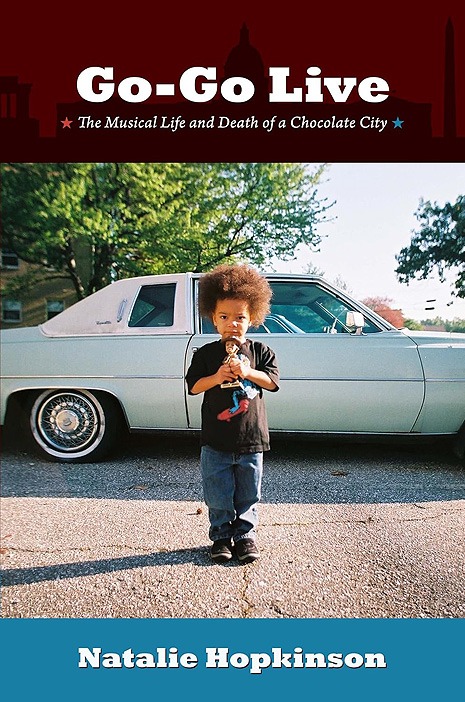 Go‑Go Live: The Musical Life and Death of a Chocolate City is a book that feels less like something you read and more like something you step into.
It carries the pulse of Washington, DC’s Go‑Go scene—the drums, the call‑and‑response, the sweat, the joy—and places it right in your hands. But it also carries the weight of a city reshaped by loss, displacement, and the slow erasure of the communities that built its sound.
The book, written by Dr. Natalie Hopkinson, follows the living neighborhood tradition of Go‑Go. It shows how the music grew from front porches, block parties, and small clubs where people gathered to feel connected. It explains how Go‑Go became a language of survival for Black Washingtonians, a way to claim space in a city that was changing around them faster than they could hold on. Reading Go-Go Live: The Musical Life and Death of a Chocolate City, you understand that Go‑Go wasn’t just entertainment. It was a form of protection. A way of saying, “We are still here.”
What makes the book powerful is how it treats everyday people as the center of the story. Musicians, fans, club owners, and families all become part of a larger portrait of a community trying to keep its rhythm steady. Their voices remind you that culture doesn’t disappear all at once. It fades when the places that hold it, corner stores, music halls, and familiar streets, are pushed aside for something shinier, something meant for someone else.
The book also sits with the grief of watching Chocolate City become something different. It doesn’t rush past that feeling. It lets you hear the echoes of what used to be, while still honoring the creativity and resilience that remain. There is tenderness in the way Dr. Hopkinson describes the people who kept the music alive even when the city’s landscape shifted under their feet.
At its core, “Go‑Go Live” is a reminder that a city’s soul is carried by the people who love it. It asks us to think about what happens when those people are pushed out, and what is lost when their stories are no longer centered. It also celebrates the fact that Black culture has a way of surviving. It adapts. It insists. It keeps playing.