Provisional Ballots Cast in NC Following 2026 General Election
More than 36,000 ballots await review before election results are finalized.
 Following North Carolina’s November 3 general election, county election officials have begun reporting the number of provisional ballots cast across the state.
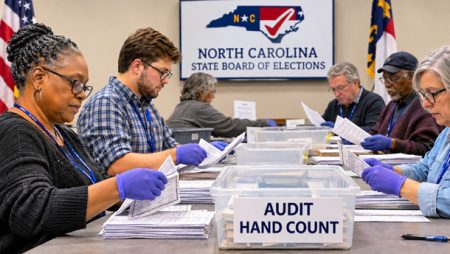
The North Carolina State Board of Elections reports that 36,799 provisional ballots were cast statewide, with county election boards now reviewing those ballots during the canvass process.
The reported numbers represent provisional ballots that were cast, not the number that will ultimately be counted. Many voters hear the term “provisional ballot” during election coverage but may not realize that these ballots are a routine part of the election process designed to protect a voter’s opportunity to participate while questions about eligibility are resolved.
According to the State Board of Elections, a provisional ballot may be issued when a voter’s name does not appear on registration rolls at a voting location or when other questions arise regarding eligibility. Voters participating in the state’s Registration Repair process also vote provisionally when casting ballots in person.
Among North Carolina’s largest counties, Wake County reported 3,338 provisional ballots, Mecklenburg County reported 3,142, Durham County reported 2,176, Forsyth County reported 1,943, and Guilford County reported 1,606.
Other counties with high totals included Cumberland County with 1,153 provisional ballots, Pitt County with 1,116, New Hanover County with 1,036, Cabarrus County with 1,020, and Johnston County with 990.
The State Board’s county-by-county report is available at s3.amazonaws.com/dl.ncsbe.gov/Legal/Provisionals%20Cast%20Reports/2026_November_Provisionals_Cast_By_Voting_Method.pdf
One of the most common reasons a voter receives a provisional ballot involves North Carolina’s photo identification requirement. Voters who do not present an acceptable photo ID at the polls may cast a provisional ballot and later provide identification to their county board of elections, or they may complete a Photo ID Exception Form at their voting site.
For voters who qualify for an exception, the provisional ballot will generally be counted unless county election officials unanimously determine that information provided on the form is false.
After Election Day, county boards of elections examine each provisional ballot individually. The board may approve the ballot, partially approve it, or disapprove it. In some cases, a voter may be eligible to participate in only certain contests appearing on the ballot. When that occurs, votes for eligible contests can still be counted even if other portions of the ballot cannot.
This review process takes place during the canvass period, the official post-election verification phase during which counties reconcile records, review provisional ballots, and add eligible ballots to the totals.
As a result, the 36,799 provisional ballots reported this week should not be interpreted as rejected votes. The figure represents ballots that require review before counties determine whether they can be fully counted, partially counted, or rejected under state election law.
Voters can learn more about the Registration Repair process at www.ncsbe.gov/registrationrepair
North Carolina’s unofficial election results remain available through the State Board’s Election Results Dashboard, er.ncsbe.gov
County canvasses are scheduled for November 13, 2026, with the State Board of Elections scheduled to conduct its statewide canvass on November 24, 2026. Until those reviews are completed, provisional ballots will remain an important part of the process that determines North Carolina’s final certified election results.