The SAVE Act and the People It Leaves Behind
A closer look at who gets burdened most.
By Ebony Emerson –
North Carolina has long kept voter registration simple.
You sign a form, you attest that you’re a US citizen, and you provide basic identifying information. It’s a system built on trust, accountability, and the belief that voting should be within reach for every eligible person. The SAVE Act would change that by adding new layers of paperwork that sound small on paper but land heavily on real people’s lives.
The heart of the concern is about neighbors, family members, and community elders who already navigate more than their share of obstacles. The SAVE Act would require documentary proof of citizenship for federal elections, documents many people don’t have on hand, can’t easily replace, or never received in the first place. For some, meeting these requirements would be simple. For others, it would be a long and prohibitively expensive road.
Married women are one example. Many changed their names when they married, leaving them with birth certificates that no longer match their driver’s licenses or voter registrations. The SAVE Act will require married women to produce additional legal documents simply to prove that Jane Smith and Jane Jones are the same person. That mismatch isn’t about citizenship. It’s about paperwork. And it’s one more hoop to jump through for people who have been citizens all their lives.
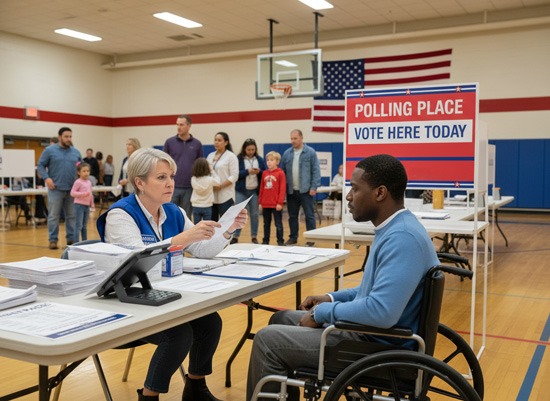
Disabled voters face a different kind of challenge. Voting is already harder for many people with disabilities. Transportation barriers, mobility issues, and the need for assistance can make the process feel heavier than it should. Adding new documentation requirements means adding another step, another errand, another moment where someone might decide it’s simply too much.
Older Americans carry their own history of recordkeeping. Many were born before standardized birth certificates were common. Some have lost documents over time or never had them in the first place. Older folks often struggle to obtain documents that younger voters take for granted. For someone who has lived, worked, paid taxes, and voted for decades, being told they must now track down old paperwork can feel like a door closing instead of opening.
Americans living overseas, teachers, military families, retirees, missionaries, and people working for US companies abroad, remain citizens with every constitutional right, but the SAVE Act could make those rights harder to exercise. Obtaining replacement documents from abroad often requires international travel, embassy appointments, or costly shipping. A constitutional right that requires hundreds or thousands of dollars to exercise begins to resemble a privilege. Voting shouldn’t depend on whether someone can afford a plane ticket.
Low‑income voters, rural residents, and people without reliable transportation would also feel the strain. A birth certificate might cost twenty or thirty dollars. A marriage certificate might cost more. The nearest government office might be hours away. These aren’t small things when money is tight or mobility is limited. Equal rules don’t always create equal access.
North Carolina’s current system recognizes these realities. It asks voters to affirm their citizenship under penalty of perjury and verifies identity through existing state and federal databases. It’s a process that election officials say works well, and one that has consistently shown non‑citizen voting to be exceedingly rare. The SAVE Act would replace that approach with a stricter one that treats every voter as a potential exception until they prove otherwise.
The deeper question is what kind of democracy we want to be. A confident democracy trusts its people and removes unnecessary barriers. A shaky one adds hurdles and hopes no one notices. When a law applies the same rule to everyone but places heavier burdens on some, it’s worth pausing to ask who gets left behind and why.
Voting is one of the most personal acts of belonging we have. It’s also the most fundamental right of US citizenship: the right of the people to choose our own government. It’s how we show up for our communities and shape the future we share. Any change that makes that act harder deserves careful attention, especially when the people most affected are the ones who already carry the weight of distance, disability, age, or limited resources.