Culture Fragments™ – A Coalition of the Willing
Building the place behind the destination.
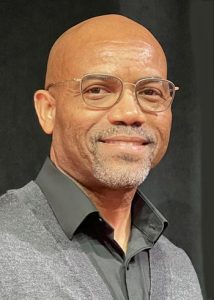
by Otis T. Lindsey, Jr. –
In my previous columns, I reflected on a conversation at Junior’s Barbershop and suggested that resilience is measured not only by what a community has survived, but by what it is capable of becoming.
Since then, one question has continued to occupy my thoughts.
How do communities move from conversation to collective action?
The answer, I believe, begins with something much simpler than another strategic plan. It begins when people recognize that they may be pursuing the same future from different directions. I have come to think of that as a coalition of the willing.
The idea returned to me while reflecting on my conversation with Junior. Although we grew up in different parts of Black Asheville and experienced our city somewhat differently early in life, we repeatedly arrived at many of the same conclusions as adults. His perspective had been shaped by years behind the barber’s chair, where conversations with customers from every walk of life offered a unique window into Asheville’s changing identity. Mine had been shaped by economics, community economic development, and public leadership. Different experiences had produced remarkably similar insights.
That conversation reminded me of something I have observed throughout my career: communities rarely fail because they lack ideas. More often, they struggle because their ideas remain disconnected from one another. Every neighborhood has people with vision. Every institution has resources. Every entrepreneur has aspirations. Yet too often those ideas remain isolated, each moving in a different direction. The challenge is not generating more ideas. The challenge is creating the relationships that allow existing ideas to reinforce one another.
Leadership, therefore, is not simply about making decisions. It is about translation. It is the ability to listen to lived experiences and communicate them in ways that residents, business owners, artists, educators, elected officials, and civic leaders all recognize as part of the same conversation. Communities move forward when people begin to see that their individual interests are not competing priorities but complementary contributions to a larger purpose.
Looking back, I realize Asheville itself became my first classroom. Growing up on Circle Street, developing an appreciation for downtown architecture, running cross-country along the Blue Ridge Parkway, and experiencing the mountains, arts, and neighborhoods from an early age taught me that places shape people. Later, attending a Historically Black College and University helped me understand that my Asheville experience had been unique. Exposure to different cultures, landscapes, and ideas had quietly broadened my understanding of what communities could become.
Perhaps that is Asheville’s greatest opportunity. We already possess remarkable assets—our history, creativity, neighborhoods, entrepreneurs, cultural institutions, and one of the nation’s most distinctive visitor economies. The question is not whether these assets exist. The question is whether we are willing to connect them around a common vision for the future.
Visitors come to Asheville for many reasons, but they return because they experience something authentic. Authenticity cannot be manufactured. It grows from communities that know who they are while remaining confident enough to imagine what they can become.
That is the place behind the destination.
A coalition of the willing is not another organization waiting to be created. It is a way of thinking. It begins when conversations become understanding, understanding becomes alignment, and alignment becomes action. History gives us our identity. Vision gives us our direction. Together, they allow communities not only to preserve their legacy, but to build the future that legacy makes possible.
Otis T. Lindsey Jr. is the Founder and CEO of LINDEX, LLC, a civic intelligence and community analytics firm focused on measuring community vitality and transforming data into actionable insights. He holds degrees in Economics and Community Economic Development and has spent more than 25 years working in housing, economic development, and community revitalization.
He is the creator of the Vitality Ecosystem Theory (VET) and the Vitality Ecosystem Index (VEI), frameworks designed to help communities measure, mobilize, and transform local assets. Through the Culture Fragments™ series, he explores the people, places, and institutions that shape community identity and opportunity. Visit www.lindex.ai.