Bishop Barber Returns from Germany
Inspired to begin worldwide Moral Monday Movement and to work harder in the American South.
By Cash Michaels –
When Bishop William J. Barber II, president and senior lecturer of Repairers of the Breach and professor in the Practice of Public Theology and Public Policy at Yale University Divinity School, returned from an eight-day trip to Germany with his wife, Pastor Della Owens-Barber, he was tired, but he also felt renewed.
“In some strange way, being in a place with so much history and death … really has renewed me,” said the former president of the NC NAACP and father of the Moral Monday Movement phenomenon that was born here in North Carolina in 2013, and has spread across the nation ever since.
After this trip, Moral Monday now has a chance to spread across the world.
Among the leading clerics who invited Bishop Barber to Germany was Bishop Heinrich Bedford-Strohm, Moderator of the World Council of Churches, who shared with Barber initial “serious conversations” for a world conference possibly happening in Geneva, Switzerland next year to discuss current world issues and how the church must come together and speak with one voice against tyranny wherever it exists.
Bishop Barber also met with other religious leaders who told him how much they respected his history of social activism against repressive authority in the United States. They shared stories of Germany’s dark Nazi past—what happened when Christianity there was used to prop up an authoritarian regime, how the mainstream German Christian Church surrendered its moral authority, and how Germans today wish there had been more Christians then who would have stood up to authoritarian Nazi leader Adolf Hitler before he ushered in his shameful extermination of millions of Jews in his quest for world power.
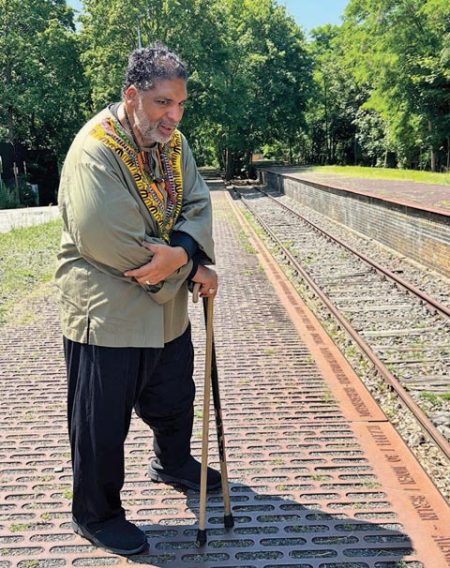
Based on those stories, Bishop Barber took the time to visit the Holocaust Memorial in Berlin to learn more. He also visited Track 17, the actual train tracks on which the Nazis loaded up freight cars to send helpless Jewish families to death camps.
German Christian leaders told Barber they deeply believe Hitler could have been stopped, and fear that history is repeating itself now, especially in America with ICE agents detaining at least 2,000 undocumented immigrants a day.
“We met with people in Germany about why can’t we have a worldwide Moral Monday for a month where churches come together and challenge authoritarianism and neofascism across the world,” Bishop Barber said. He noted that the same type of “strong-man mentality to dismiss, push away and push down” many observers say is happening here in the United States under President Donald Trump, is also happening across Europe, Africa, the Middle East, and Latin America, among other regions.
Trump is on record as saying he admires the “strong man” dictator model of leadership of figures like Hitler and former Hungarian Prime Minister Viktor Orban.
The church has a significant role in standing up, and standing strong for the rights of the poor, for immigrants fleeing persecution, and for those who seek freedom, Bishop Barber said. In fact, that was his message during his “Sermon from Berlin,” delivered from the Holy Cross Church there.
During his sermon, Bishop Barber quoted famous German theologian Jurgen Moltmann, who said, “Resistance is the protest of those who hope, and hope is the feast of people who resist.”
But Bishop Barber’s renewed commitment to justice for the poor and the afflicted isn’t just global in nature. Since he left North Carolina years ago to co-chair the Poor People’s Campaign: A National Call for Moral Revival, he’s traveled across the country to help build up the Poor People’s Campaign in almost all 50 states.
“But in the years I have left, [and] I hope [to] have many of them, I’m going to really focus my attention on the South, and why the South is going to have to rise to lead the reconstruction … America must have if it is to have a chance holding on to the democracy that we claim we want,” Barber said.
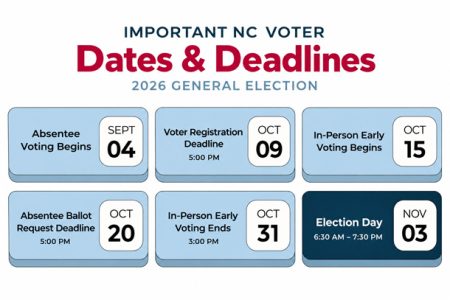
And that starts by doing everything possible to empower those in poverty and lead them to the polls when early voting starts in North Carolina and throughout the South to make sure their voices are heard during the November midterm elections.
“I’m a son of the South,” Bishop Barber added, “…and the German people I’ve met taught me that you have to battle at home if you intend to make a difference anywhere [else].”