Don’t Touch My Hair
Black hair has always been tied to identity, resistance, and liberation.
Black hair carries history.
It carries memory, creativity, and a quiet brilliance that has survived centuries of pressure to shrink, hide, or conform.
When two different authors choose the same title, Don’t Touch My Hair, it signals something important: this message is not only timely, it’s generational. One book speaks to adults, the other to children, but together they form a fuller picture of what it means to be seen, respected, and understood.
 Emma Dabiri’s Well-Researched Book
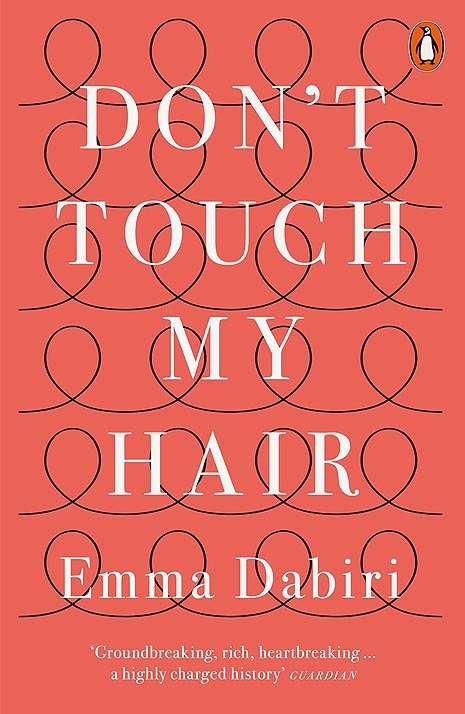
Emma Dabiri examines the history of black hair with a calm, steady confidence that makes complex ideas feel close and human. Her book blends cultural history, personal reflection, and social insight without ever slipping into heaviness. She traces Black hair from pre‑colonial Africa to the present, showing how styles like braids, locs, and twists are not simply aesthetic choices but living links to ancestry, community, and resistance.
She captivates us by examining how Black hair became a site of control under slavery and colonialism, and how it later became a source of pride, creativity, and political expression. She writes about beauty standards, workplace bias, and the emotional weight of being touched—or judged—without consent. Through it all, she keeps the tone compassionate and clear.
Dabiri reminds us that Black hair has been celebrated, stigmatized, appropriated, and misunderstood, yet it remains a site of creativity and community. Her work feels like an invitation to see Black hair as a map of where we’ve been and where we’re going.
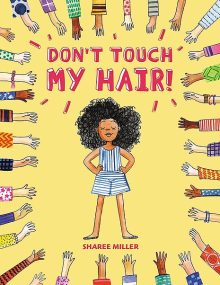 Sharee Miller’s Children’s Book
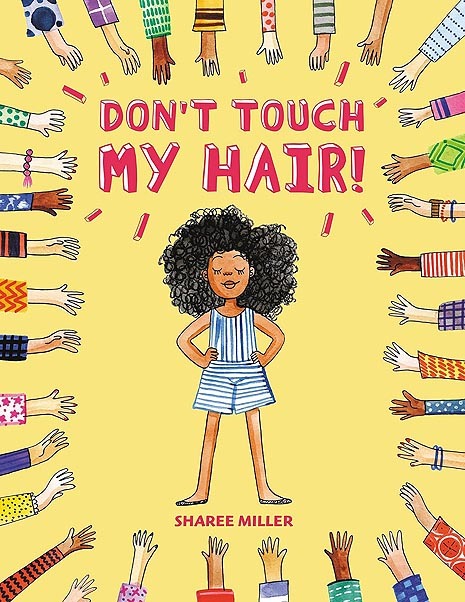
Sharee Miller’s picture book carries the same truth, but in a way children can hold. By including bright illustrations and Aria, a joyful young girl, Miller shows how exhausting it can be when people reach for a child’s hair without asking. The story is playful, but the message is firm: curiosity is fine, but respect is necessary.
Her illustrations carry so much joy. Aria’s hair is drawn with texture and pride, and every page feels alive with color. Children can see themselves in Aria—especially Black girls who rarely see their hair celebrated so openly. The story doesn’t try to convince them their curls are beautiful; it simply treats that beauty as a given. That quiet affirmation is part of what makes the book feel so loving and necessary.
Miller gives children language for boundaries. She gives Black children a mirror that reflects pride instead of scrutiny. And she gives adults a gentle way to talk about consent, culture, and personal space without fear or heaviness. Her book is a small, bright tool for helping children feel seen, valued, and empowered.
A Larger Story
Read side by side, these books show how Black hair is both personal and political. They show how a child’s experience on the playground connects to a global history of identity, resistance, and self‑definition. They remind us that hair is not “just hair.” It is art. It is inheritance. It is a record of survival and imagination.
Dabiri offers the deep roots. Miller offers the early lessons. Both offer care.
Black hair has always been more than texture. Whether it is braided, twisted, wrapped, or free, it carries stories that deserve to be protected, celebrated, and passed down. These two books, in their own ways, help readers understand that truth. They invite us to honor the beauty of Black hair without policing it or treating it like something strange.
More importantly, both books celebrate the brilliance of Black hair—its shapes, its textures, its mathematics, its symbolism, its artistry. They honor the ways Black people have used hair to communicate identity, build community, and resist erasure. They show that Black hair is not a trend or a curiosity. It is a living archive.