ETSU Unveils Monument Honoring Pioneers of Campus Integration
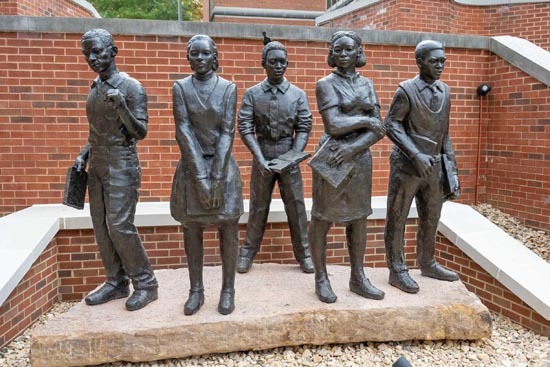
East Tennessee State University has introduced a powerful new landmark to its campus landscape: a life‑size bronze monument honoring the first five African American students who helped integrate the university in the late 1950s.
Unveiled in Borchuck Plaza outside the Sherrod Library, the installation—titled The Path—commemorates Eugene Caruthers, Elizabeth Watkins Crawford, George L. Nichols, Mary Luellen Owens Wagner, and Clarence McKinney. Their enrollment marked a turning point in ETSU’s history, challenging segregation and opening doors for future generations.
Created by Detroit-based sculptor Austen Brantley, the monument features five bronze figures positioned as if walking forward together. The composition evokes both movement and momentum, a visual metaphor for the courage and persistence that defined the students’ experience. Brantley, known for work that blends realism with emotional depth, said the piece aims to honor “the quiet bravery of individuals who changed the course of a community.”
University officials described The Path as a tribute not only to the students’ historic role but also to the values they embodied. In a statement, ETSU said the monument symbolizes “strength, resilience, and progress,” reflecting the institution’s ongoing commitment to fostering a more inclusive and equitable campus.
The five honorees entered ETSU at a time when the South was still deeply segregated, and their presence on campus represented a significant step toward educational equality in the region. Though their stories are not widely known outside the university, ETSU leaders hope the monument will help ensure their legacy becomes a visible and lasting part of campus life.
Students, faculty, alumni, and community members gathered for the unveiling ceremony, held on October 25, 2025, during ETSU’s Homecoming festivities. The monument arrives at a moment when universities across the country are reexamining their histories and expanding efforts to recognize those who pushed for change.
Standing at the heart of campus, The Path now offers a daily reminder of the individuals who helped reshape ETSU nearly seven decades ago—and of the work that continues today to build a more just and welcoming future.