Rules for a Powerful, Peaceful Protest
A modern guide rooted in constitutional rights and civil rights history.
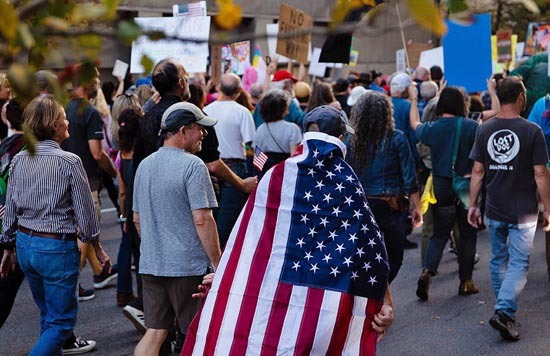
In the wake of recent demonstrations across the state, legal advocates and historians are underscoring a familiar message: peaceful protest remains one of the most powerful tools available to Americans seeking change.
Drawing on guidance from the American Civil Liberties Union and lessons refined during the Civil Rights Movement, experts say today’s protesters can strengthen both their safety and their impact by following a set of time-tested principles.
At the heart of both frameworks is a shared conviction: nonviolent protest is not only a constitutional right, but a disciplined practice that protects individuals, movements, and democratic values.
Knowing Your Rights
The ACLU emphasizes that the First Amendment protects peaceful assembly in traditional public spaces such as sidewalks and parks. While permits may be required for large marches or amplified sound, spontaneous demonstrations often remain protected under local law. Police may regulate logistics—the time, place, and manner of a protest—but cannot restrict speech based on its message.
Civil Rights organizers treated legal knowledge as essential training. Understanding constitutional protections allowed activists to expose unlawful enforcement and hold authorities accountable.
Nonviolence as a Discipline
Legal experts warn that violence, threats, or property destruction can lead to arrest and weaken legal protections. Nonviolence, they note, extends beyond physical actions to include tone, posture, and verbal conduct.
For Civil Rights leaders, nonviolence was a moral and strategic foundation. Figures such as Dr. Martin Luther King Jr. taught protesters to remain calm even when confronted with hostility.
Following—and Challenging—Lawful Orders
Police may issue dispersal orders, but those orders must be clear and lawful. Protesters are permitted to ask for clarification, though physical resistance is discouraged. Documenting interactions, including badge numbers, is recommended.
During the Civil Rights era, activists sometimes engaged in civil disobedience intentionally, accepting arrest to challenge unjust laws. These actions were coordinated, collective, and designed to highlight inequities.
Protecting One Another
Modern protest organizers often rely on safety marshals, legal observers, and de-escalation teams. Avoiding confrontation with counter-protesters is a key part of maintaining safety.
Historic movements used similar structures: medics, marshals, and jail-support networks helped sustain long campaigns and ensured no participant faced the system alone.
Avoiding Weapons and Dangerous Items
Even legally owned weapons may be restricted at demonstrations, and objects that could be interpreted as weapons can lead to arrest. Civil Rights organizers deliberately avoided anything that could justify repression or distract from their message.
Preparing for Possible Arrest
The ACLU advises protesters to write the number of a legal aid group or attorney on their body, assert their right to remain silent, and decline consent to searches.
For earlier generations of activists, arrest was often expected. Legal defense funds and jail solidarity were central to sustaining momentum.
Maintaining Message Discipline
Clear, consistent messaging strengthens legal protections and public understanding. Signs and chants fall squarely under protected speech.
Civil Rights campaigns were known for their disciplined, values-driven messaging, crafted with national audiences in mind.
Documenting Without Escalating
Protesters have the right to record police in public spaces, provided they do not interfere with operations. During the 1960s, images of peaceful demonstrators facing violence became catalysts for national reform.
Protesting With Purpose
Advocates note that the most effective protests are tied to broader community goals. Civil Rights campaigns paired demonstrations with voter registration drives, lawsuits, boycotts, and negotiations—a reminder that lasting change comes from sustained, strategic pressure.
A Tradition of Peaceful Power
Together, the ACLU’s legal guidance and the Civil Rights Movement’s moral framework offer a roadmap for today’s demonstrators. Peaceful protest, they argue, is not only a right but a responsibility—one that requires preparation, discipline, and a commitment to the collective good.