Postpartum Doulas Help New Mothers Transition, Breastfeed
 |
| Molly Rouse holds a newborn while parents rest. |
By Molly Rouse
The disconnect between this ideal and reality leaves many new mothers feeling lost, sad, and alone during what should be a joyous transition to parenthood. Doulas seek to change this.
The Greek word “doula” means “a woman who serves.” There are two types of doula: birth and postpartum. Birth doulas offer emotional support, encouragement, and wisdom throughout labor and birth. Postpartum doulas support women and families through the transformation that a new baby brings to a family. Both perform non-medical tasks and do not replace physicians or midwives.
Postpartum doulas come to the home during the first three months of a
baby’s life to educate and assist new families. Research has shown that
“women who experience support…have greater breastfeeding success,
greater self-confidence, less postpartum depression, and a lower
incidence of abuse than those who do not.” (www.dona.org)
Cooking meals, doing laundry, listening to a birth story, or
holding a baby so the new mother can shower or nap can make all the
difference in getting parenthood and a young life off to a good start.
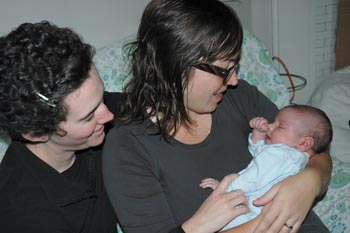 |
| Rouse checks in with new mom and baby during a postpartum visit. |
Postpartum doulas are also trained as breastfeeding community
educators. Numerous studies show that breastfeeding exclusively can
reduce a baby’s chances of developing diabetes, obesity, ear infections,
and respiratory illness.
For mothers, breastfeeding has been connected with lower risk of
three types of cancer as well as fewer postpartum mood disorders; also,
unlike formula, it’s free (www.askdrsears.com). Still, many women choose
not to breastfeed. A 2006 CDC study found that, three months after
their child’s birth, less than 20 percent of black women breastfed
compared with 35 percent of white women.
These percentages are sadly low for a society with scientific
studies acknowledging breastfeeding’s benefits. Often women do not
breastfeed because it is unfamiliar, they don’t have community support,
or it simply hurts. Postpartum doulas assist with all of these issues.
If a problem proves serious, doulas can make referrals to specialists.
While most doulas and doula clients nationwide are white, both
birth and postpartum doulas seek to work with a greater diversity of
clients, and to count women of other racial and cultural backgrounds
among their ranks working to make the world a better place, one family
at a time.
 |
| New mother and baby share a sweet moment. |
In celebration of May as International Doula Month, visit WNC’s
local doula association website (www.wncdoulas.com), and pass it on.
Molly Rouse is a mother, cultural
anthropologist, and postpartum doula living in Asheville, NC. Find out
more at www.nurtureyourfamily.net.