President-Elect Obama Must Address Flaws in Healthcare System
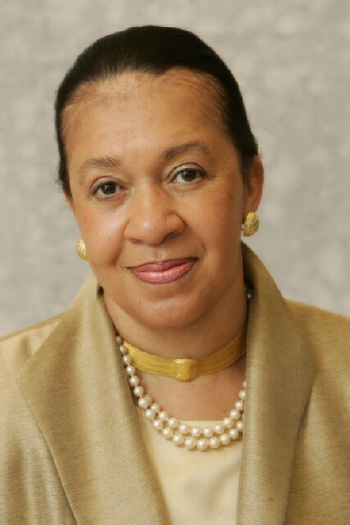 |
| Dr. Henrie M. Treadwell |
President-elect Obama will have a variety of economic, domestic and foreign policy issues to confront when he takes office in January, but it is crucial that he follow through on his promises to address the flaws in the nation’s healthcare system.
The healthcare issue is frequently discussed in terms of the 46 million uninsured Americans, but in communities of color there is another crisis raging: African Americans, Hispanics, and Native Americans experience daily the devastating impact of health disparities that prematurely disable and kill men, women, and children. We live in a nation where 12.2 percent of all Native Americans over age 19 suffer from diabetes, where 9.6 percent of all Hispanics are in poor or fair health, and where prostate cancer mortality is twice as high among blacks compared with whites.
Clearly, Senator Obama broke a barrier with his historic win on Election Day, sending an African American to one of the most powerful positions in the world. But people of color in communities across the country still face many barriers, and few are as destructive as health disparities and the lack of quality healthcare: 20% of African Americans are uninsured, as are 35% of all Hispanics under age 65.
Consider the pain and suffering caused by infant mortality. Recent data
show the infant mortality rate for blacks at 13.5 per 1,000 live
births, compared with 5.7 for non-Hispanic whites and Hispanics. But
when the government’s infant mortality data are evaluated, they show
that in pockets of the South the infant mortality rate for African
Americans has reached even higher levels. In Mississippi, for instance,
infant deaths increased from 14.3 per 1,000 in 2004 to 17 per 1,000 in
2005. Similar increases were found throughout the South. But the
problem is not restricted to the poor; middle-class and wealthy African
American women also have infant mortality rates far higher than their
white counterparts.
Still, health officials cite cutbacks in government social and health
programs as the most likely reason for the increases in infant
mortality.
What’s clear is the need for a new approach to addressing infant
mortality, one that takes into account the socio-economic conditions
that blacks face in the United States, as well as the broad, stressful
impact of racism and discrimination. When people in communities of
color hear about the “change” that is supposed to come to Washington
with the Obama administration, they are hoping it includes a new
approach to the infant mortality problem and other health disparities.
Another problem that needs immediate attention is health conditions in the nation’s correctional institutions.
African Americans comprise 44 percent of the nation’s prison
population, or about one million people, many of whom suffer from
mental conditions that go largely untreated. Moreover, the prisons are
incubators for infectious diseases ranging from HIV to tuberculosis,
staph infections, and hepatitis. When inmates return to their families
and communities, these diseases are spread to their family and friends.
If the prisons provided comprehensive healthcare, these diseases could
be better treated and even prevented, and ex-inmates would not be such
health threats to their communities upon release. Flawed public policy
is at the root of the problem.
Does it make sense that inmates lose their Medicare and Medicaid
benefits once they are incarcerated? To be sure, prison wardens would
like to operate more healthful institutions, but they lack resources.
Their institutions could vastly improve healthcare services for
prisoners if the federal government allowed inmates to receive Medicare
and Medicaid benefits.
The shortsighted policy allows the government to
initially save a little money on both programs, but there is a costly
human toll and an eventual financial burden on the government. If
inmates received better medical treatment in prison, the cost of later
treating advanced stages of many diseases and conditions would be
reduced.
This is another example where an enlightened approach to public policy can make a difference in communities of color.
While many Americans are celebrating Senator Obama’s victory, his
administration must bring about meaningful change. It will be
disappointing if business as usual continues in Washington. The people
voted for change, a change that gives America a government that takes
comprehensive approaches to improving healthcare and addressing the
health disparities in communities of color.
That’s the change we need.
Dr. Henrie M. Treadwell is director of Community Voices, a nonprofit working to improve health services and healthcare access for all Americans.