Does Racism Make Us Sick?
|
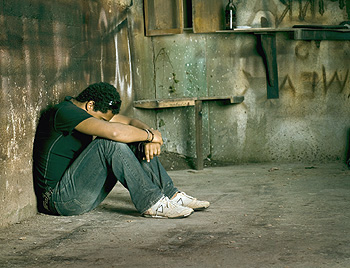
| “Internalized” racism affects educational opportunity, contributes to poor nutrition, limits access to exercise and medical care. |
The 13th Annual
Summer Public Health Research Institute and Video Conference on
Minority Health was held at the MAHEC facility in collaboration with
Mission Hospital.
By Bill Moore
The primary theme addressed by the conference was, “Does Racism Make Us Sick?” The conference, televised from the Sonja Hanes Stone Center at UNC-CH was a wide ranging discussion of recent literature and research into the effects of racism has had on the mental, physical and emotional health of minorities including Native Americans, Asian Americans, Latino Americans and African-American populations.
“Our primary
purpose for this conference,” according to Randell Richardson,
Diversity and Multicultural Affairs Officer for Mission Hospital, “is
to review current research into the effects of racism on health, to
bring awareness of the problem to the public at-large and to confront
the challenges in the disparity of medical care provided to minorities
generally.”
The conference format, a panel discussion, was chaired by four
distinguished scholars: Katrina Walters, PhD., University of
Washington, Gilbert Gee, PhD., University of Michigan, Luisa Borrell,
DDS, PhD., Columbia University and David Williams, PhD, MPH, Harvard
University.
Dr. Walters led off the discussion. Herself a Native American, she shed
light on recent research relative to that particular population as well
as Native Alaskan peoples. A primary source, the Turtle Island Wellness
Study indicated, interestingly, a link between grief and loss and
multigenerational historical trauma.
Examples such as the slaughter of the buffalo in the late 1800’s, a
“spiritual wound” as described by the study, forced removal to
reservations and enrollment of Indian youth into “white schools” such
as Carlisle to reprogram them to white culture were all claimed as
elements of Post Traumatic Stress Disorder (PTSD). This trauma, Walters
believes, is passed on from generation to generation.
Another element which the study found pervasive for all minorities
studied was the tendency to “rob” Native Americans in particular of
their identity thus making them, in effect, “invisible.” This
micro-aggression as Walters termed it came in numerous and subtle
forms: Questions such as, “Are you a real Indian?”, use of Indians as
mascots or unflattering caracatures and stereotypes, a higher incidence
of sterilization among Native American women. Other examples included
alcohol abuse, smoking, nutritional deficiencies and lack of health
insurance.
Dr. Gee, in his discussion of health effects on Asian American and
Pacific Islanders, called this population “perpetual foreigners” to
most non-Asians. Most alarmingly according to Dr. Gee, and referencing
the DSM-IV, a listing of mental illness disorders, Asian Americans had,
at 18%, a higher degree of mental disorders than other minorities
assessed.
According to studies cited by Dr. Gee, other factors bearing on Asian
American health studies included a willingness to abide both physical
and emotional pain and underreporting of health issues to preserve
personal dignity and “save face.”
Dr. Borrell of Columbia University addressing the issue of health care
among the Latino population quoted studies indicating that many in this
community felt they had “no control over or mastery of their lives.”
Borrell also noted that of 100 studies, 86 of which were done in the
United States, Latino’s tended to resort to coping mechanisms to
compensate for feelings of powerlessness and that these mechanisms
included smoking, alcohol abuse and other risk factors similar to those
in the African American community.
Interestingly, many of these studies indicated a higher degree of
mental health issues in Latino women than men relative to
discrimination.
Finally, Dr. David Williams of Harvard University in discussing studies
relative to the health effects of discrimination on African Americans
directly addressed the ‘“institutional discrimination” relative to
residential segregation and its pervasive and negative effect on
socioeconomic and educational levels.
Studies referred to by Williams provided many direct correlations
between “residential segregation” and that this “internalized” racism
affects educational opportunity, contributes to poor nutrition, limits
access to exercise and medical care. Dr. Williams also said many
studies indicated that there has been little improvement in these areas
since the 1950’s.
In addition to health factors unique to the ethnic minorities cited,
things such as unsafe sex, TB, low birth weight babies, smoking,
excessive alcohol or drug use and pervasive feelings of distrust of the
health care system crossed all ethnic and racial lines. Dr. Gee, in
closing his portion of the conference stated, “Policies designed to
preserve human rights might have an effect on physical and mental
health.”