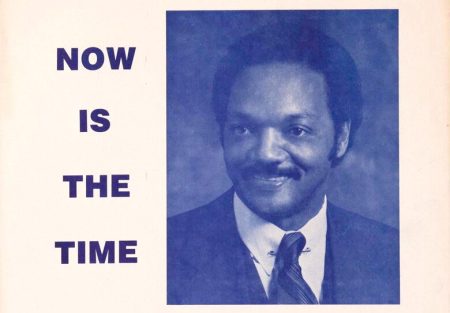
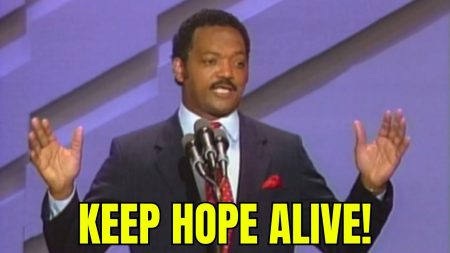
Mt. Zion Missionary Baptist Church Celebrates 25 Years of Progress Under the Pastorate of Rev. Dr. John H. Grant, “The Visionary”

Mt. Zion Missionary Baptist Church, organized in 1880, will celebrate 134 years of Christian witness and service in October. The church is located at 47 Eagle Street in downtown Asheville.
Reverend Dr. John H. Grant is the fifth pastor in Mt. Zion’s long history, having served the church and community since 1989. Each of his predecessors lives on with a sobriquet reflecting his ministry: “The Founder,” Rev. Robert Parker Rumley (1880-97); “The Builder,” Rev. Jacob Nelson (1897-1926); “The Organizer,” Rev. John W. Hairston (1926-47); and “The Dedicator,” Rev. Dr. John W. White (1947-89).
Dr. Grant is called “The Visionary,” and for good reason. The central thrust of his vision and ministry is leading the church in preaching, teaching, and witnessing to the gospel. Understood holistically, this commitment to Christ was the main motivation for the organization in 1997 of the Mt. Zion Community Development, Inc. (MZCD), one of the signature accomplishments of his vision for up-building and transforming our community.
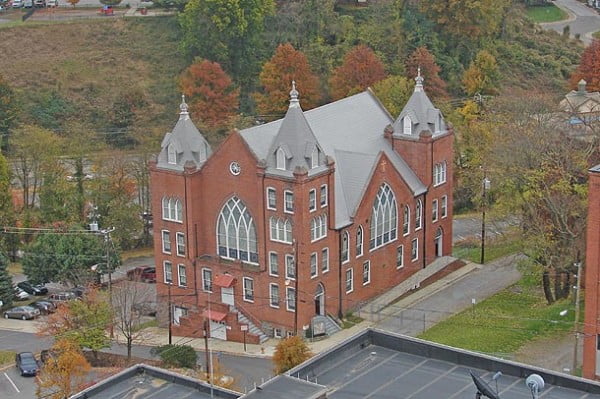
Photo: Urban News
The 501(c)3 nonprofit corporation now has four staff positions and operates four widely acclaimed programs:
Project Nurturing Asheville and Area Families (NAF) – “working to help African American women have healthy babies and reduce the minority infant mortality rate;”
Teen Pregnancy Prevention Initiative (TPPI) – “working to reduce the rate of teen pregnancies;”
The Elizabeth Grant-Hill Campus of Learners: Center for Health, Technology, and Entrepreneurship – “working to bridge the digital divide in our communities;” and
Real Estate Development for housing, office, retail – “working to provide economic opportunities and eliminate blight.”
MZCD has raised and invested millions of dollars for its community projects, as well as provided part- and full-time jobs with full-time benefits, including medical insurance, retirement, etc. Project NAF has been showcased as a national model program.
The Elizabeth Grant Hill Campus of Learners (currently in relocation) was made possible by the generosity of Dr. Grant’s cousins – former NFL great Calvin Hill and his wife Janet, and former NBA All-Star Grant Hill and his wife, R&B recording star Tamia Hill. Campus of Learners was cited as the “2001 Faith-Based Initiative of the Year” by the North Carolina Association of Community Development Corporations.
Dr. Grant also served as founding president, chairman, and CEO of Eagle-Market Streets Development Corporation, another 501(c)3 corporation, which was housed at the church from 1994-97. Under his leadership EMSDC acquired its IRS tax-exempt status, secured more than a quarter of a million dollars in grant funding, and became a development partner with the City of Asheville.
EMSDC recently began construction of Eagle Market Place, a $12 million project which will provide 62 affordable/workforce apartments, more than 6,000 square feet of community and neighborhood space, and almost 7,000 square feet of commercial, retail, and office space. Email [email protected] or visit www.eaglemarketsts.net for more details on the project.
Dr. Grant was instrumental in the rescue of the iconic YMI Cultural Center, which was more than $30,000 in debt and facing foreclosure. Established in 1893, the YMICC is thought to be the oldest African American community center in the nation.
He also led in organizing and directing the Interdenominational Ministerial Alliance’s first Community Summer Day Camp, still in operation today under a different name. By converting idle summer time into meaningful educational and recreational activities, the Camp serves children and families of the community with an enriching Summer Day Camp experience which they may not otherwise be able to afford. The Camp also provides summer jobs with pay above minimum wage.
Dr. Grant’s interest in education, personal growth and development, and self-sufficiency has also led him to teach classes on money management, debt-free living, investments, setting up endowment funds, and other financial subjects.
His vision has been to lead the church in exemplifying what is taught and preached. For example, in the mid-1990s, he led the church to purchase three adjacent properties as an investment for a future mixed-use development for housing, office, administrative, retail, and supportive services.
To date, the church has invested in those properties approximately $600,000. However, those same properties were appraised in June of 2013 for $4 million. Also, because of their siting (location, location, location, as they say in real estate), several developers have made offers to either purchase the properties or join the church in a joint-venture development partnership.
Each of the initiatives just mentioned is anchored in the church and addresses the spiritual, physical, emotional, and financial health of families. The acronym “T.E.A.C.H” summarizes Dr. Grant’s vision for the up-building and transformation of our community:
T = Teach and Train to provide Tools with the goal of
E = Educating, Equipping and Empowering so that persons can become
A = Advocates for the good of themselves and others, and
C = Not be merely Consumers but Contributors who make
H = Healthy lifestyle choices, spiritually, physically, emotionally, socially, and financially.
Dr. Grant’s Vision
One of the many reasons Black churches like Mt. Zion will remain relevant in the 21st century is because of the particularities of the Black experience: the uniqueness or “speciality” which has characterized, and still characterizes, the situation of Blacks in the New World from the time of the Middle Passage to the present.
“Speciality,” as certain historians have pointed out, does not mean better than or inferior to others, it means particularity, a difference born out the unique experiences through which Blacks have passed and continue to pass in this country.
To the extent this difference persists into the 21st century, the Black church will remain relevant. In every segment of society, whether education, economics, health, housing, etc., the disparities which exist for Blacks and other minorities are well documented. It remains true to this day that in virtually every category one looks, Blacks generally are worse off. Numerous studies and statistics corroborate this unfortunate reality.
Throughout America’s history, from slavery to Jim Crow to integration, the Black church played vital roles in the upward mobility of Black America. Historically, the Black church has been poised to address the special status of Black people in ways that are unique from any other institution in the Black or White community.
As the Rev. Dr. Charles Adams put it in a sermon heard by Dr. Grant at Hampton University Minister’s Conference:
The church—inspired, empowered and equipped by the Risen Savior—is all we own and control. It’s the preserver of our culture. It’s the producer of our genius. It’s the power base for our political ascendancy. It’s the parent of our music and art. It’s the sponsor of our creativity, versatility and ingenuity. It is the incubator for our leadership.
It is the storehouse for the disinherited. It is the power base for the disfranchised. It is a hospital for wounded souls. It is a love tabernacle for the hated and exploited. It is an open door to the least, the lost, the unlucky and the left out. It is the biggest enemy to the status quo. It is a cultural agency for anti-defamation. It is a rock in a weary land. It is a shelter from a stormy blast of bigotry. It faces a frowning world and says, “We Shall Overcome!”
Some contend that the Black church is outdated, irrelevant, and obsolete. Those who make such contentions, as Dr. Grant observes, are usually those not involved in any church and are particularly ignorant of the history and role the Black church has played, and continues to play, in the history and uplift of our people.
For more details contact Mt. Zion Missionary Baptist Church, (828) 350-9821 and visit www.mtzionasheville.org