Hood Tours

The past, present, and future of African Americans in Asheville is a story of resilience and ingenuity.
When it comes to the history of Asheville, what you don’t see is as important as what you do. Historically Black areas require intentional and intense interpretation and narration because they often don’t exist anymore—at least not in the way they used to or in the form of physical buildings or historical markers.
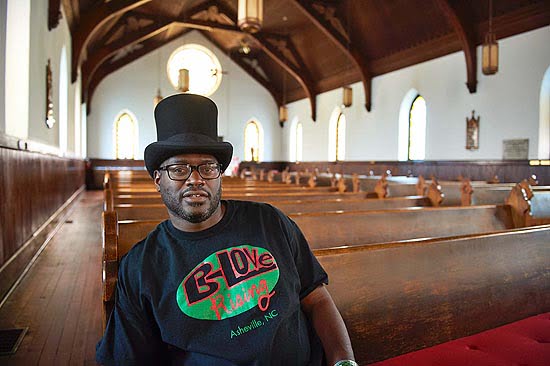
DeWayne Barton, who lives in the historic African American Burton Street community a few miles from downtown, is a serial entrepreneur. He is also the cofounder of the neighborhood’s peace garden, where colorful sculptures and canvases (many of them Barton’s) share space with plants that yield produce for area residents.
Barton’s tours cover Asheville’s downtown and describe life in historically Black neighborhoods like the East End. To take one of his excursions is to reckon with Asheville’s past, present, and future. Barton’s talks include oral histories from community elders as well as thoughts on recent policy initiatives, such as the city’s intention to offer some form of reparations to Black residents.
Tours take visitors to Eagle Street, a once-bustling Black business district that is slowly repopulating with small businesses. It’s an area that Jim Crow built, forcing Black residents to create their own community filled with restaurants, barbershops, hotels, and stores.
Visit the community center located in the gymnasium of the school that was once called “The Castle on the Hill.” Stephens-Lee High School opened in 1923 in the hilly East End as the only Black school in the region; some students were bused from as far as 80 miles away. It closed in 1965 due to integration and everything but the gym was bulldozed. The mural in Triangle Park, also part of the tour, depicts Stephens-Lee High School’s celebrated marching band, along with other scenes of Black businesses on the Block.
Discover the craftsmanship of James Vester Miller, a gifted construction worker who was born enslaved. Miller’s bricklaying skills grace the YMI (Young Men’s Institute) Cultural Center and at least 9 other buildings in Asheville. So many of Asheville’s properties hold stories of a past that only exist now in memory, photographs, and old maps.
Learn more about Asheville’s historically Black areas on walking, driving, and specialty tours led by artist, poet, and visionary DeWayne Barton. Book your tour now at www.hoodhuggers.com/tours.
For more information, call 828-275-5305 or visit www.facebook.com/hoodhuggersintl.